The front door to college now opens with a single AI generated answer. Prospective students meet your institution in answer engines long before they reach your homepage. Winning that moment requires radical clarity on programs, outcomes, and costs, paired with fast, personal follow up. AI shapes discovery, but human conversation still closes the loop. Schools that merge visibility with credibility will own the first impression.
This week’s theme is precision, content that machines can trust and students can scan. Canonical pages, atomic facts, clean sitemaps, and even downloadable JSON make you citable in AI and searchable everywhere. On the human side, billboard style program pages hook teens on mobile in seconds, while content led site migrations keep SEO intact and journeys intuitive. Design for skimmers first. Push depth later in the path. If a paragraph fills a phone screen, it effectively says nothing.
Beyond discovery, the articles push a shift from vanity metrics to enrollment outcomes. Diversified graduate pipelines, intent verified channels, and behavioral early warning signals align spend with what actually converts. International growth hinges on student centered value, flexible hybrid options, and tighter alignment across marketing, admissions, and academics. Ethical models and empathetic follow up matter as much as dashboards. With that lens, let’s distill the week’s biggest takeaways.
Key Takeaways
- Treat AI as the new discovery layer. Earn trust with authoritative, transparent data on programs, outcomes, and costs. Measure success by qualified demand, applications, visits, and conversion, not traffic alone.
- Make content machine readable and canonical. Map each common question to one authoritative page with atomic facts, tables, named anchors, and a central data index. Keep sitemaps clean. Mirror key data in downloadable formats to become a source AIs can cite.
- Turn program pages into mobile first billboards that surface three clear differentiators and route interested visitors deeper. Save dense details for later in the journey to keep teens moving.
- Diversify graduate lead generation beyond search. Cap any single source at roughly half your volume. Prioritize intent verified channels and review messaging and mix against enrollment outcomes monthly.
- Use behavioral signals from LMS and registration systems to trigger proactive nudges and supportive human outreach. Tighten timing and policies where needed to lift completion while auditing models for bias.
- For international growth, lead with student centered value, affordability, and flexible hybrid or online delivery. Align marketing, admissions, and academics around career outcomes and service tiers that extend lifelong.
Controversial Ideas
- Homepages are losing relevance. Answer engines now decide your first impression and may make or break consideration before a click.
- Depth on program pages can hurt teen engagement. Less detail and more clarity may convert better than thorough content up front.
- Pull budget from your top performing channel if it exceeds 60 percent of volume to reduce systemic risk.
- Publish raw, machine readable outcomes and cost data. It could outperform brand campaigns for awareness in an AI first world.
AI is the new college front door
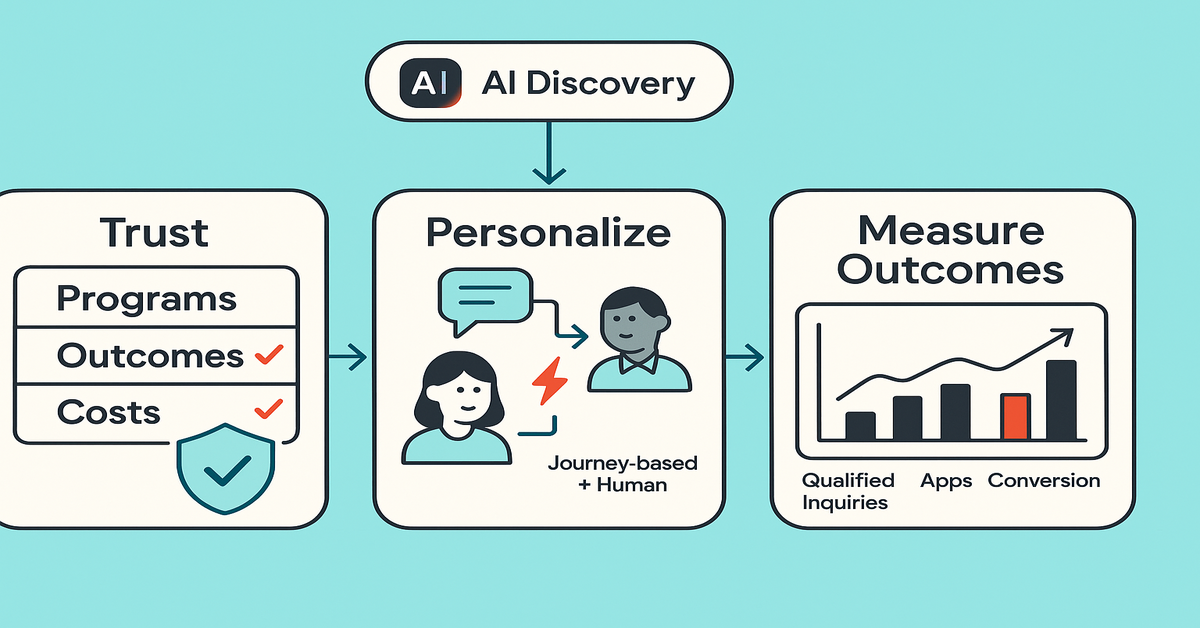
AI has become the starting point for college discovery, shifting the first impression from homepages to answer engines. To win, institutions must pair high visibility in AI results with credible, student centered content and fast, tailored follow up. The playbook centers on three pillars. Build trust by surfacing authoritative facts on programs, outcomes, and costs. Personalize outreach and nurture flows to each student’s interests and stage. Define success through enrollment outcomes, qualified demand, application lift, and conversion, rather than vanity traffic metrics. AI shapes awareness, but human interaction still drives conversion.
Read the article here (Author: Will)
Top Takeaways
- Treat AI answer engines as the new discovery layer. Publish clear, authoritative data on programs, outcomes, and costs to earn trust and visibility.
- Respond quickly with personalized, journey based messaging, reinforced by human follow up to move students from interest to action.
- Measure impact by enrollment metrics such as qualified inquiries, visits, application starts, and conversion rather than traffic or rankings.
AI is new college search. Share data on programs outcomes and cost, personalize follow up and track enrollments not traffic. #HigherEd #AI

Make College Content AI Ready
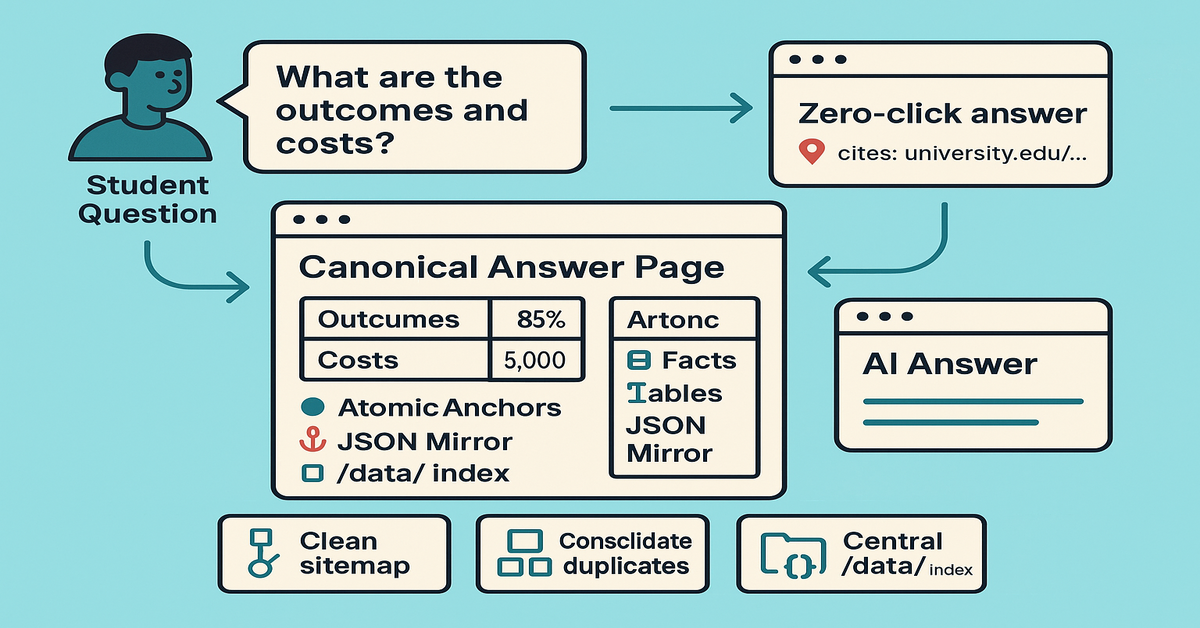
The article argues that the real AI readiness challenge for colleges is not adoption. It is ensuring content is clear, canonical, structured, fresh, and machine readable so AI systems can cite it. With students asking full questions and getting zero click answers on TikTok, YouTube, and AI views, visibility now means being a trusted source referenced by AI. Practical steps include mapping each prospective student question to a single authoritative page, using atomic facts, tables, named anchors, downloadable JSON mirrors, and a central /data/ index. Consolidate duplicates and clean sitemaps. Future proofing hinges on transparent outcomes and costs, clear definitions and sources, and stronger data literacy to connect marketing signals to enrollment.
Read the article here (Author: oho.com)
Top Takeaways
- Prioritize clear, canonical, structured, fresh, and crawler readable content so AI can parse, trust, and cite your pages.
- Map every student question to one authoritative page with atomic facts, tables, named anchors, and downloadable JSON, and maintain a central /data/ index.
- Consolidate duplicates, keep sitemaps clean, surface outcomes and costs with sources, and build data literacy to link marketing signals to enrollment decisions.
AI visibility for colleges means clear canonical machine readable pages AI can cite. Map every question to one page with JSON #HigherEd #AI
Hook Teens on College Sites
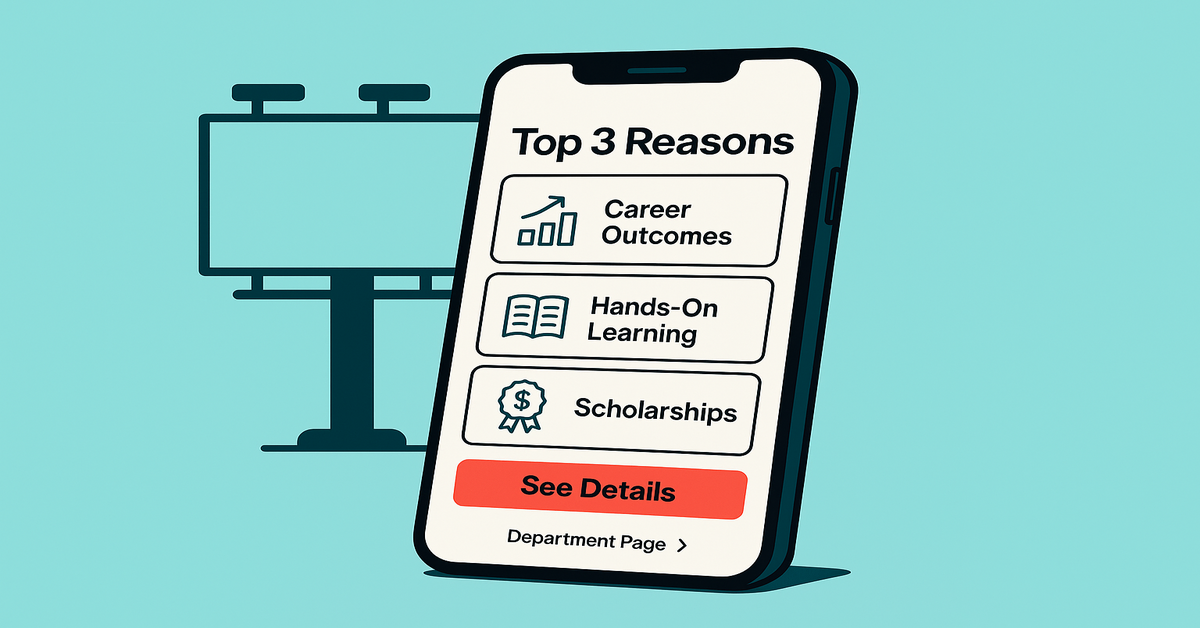
Teens skim college websites quickly, so program pages must act as top of funnel hooks, not encyclopedias. Lead with your clearest differentiators and make the top three selling points unmistakable. Treat the page like a roadside billboard that stops the scroll and earns a click to more detailed department content later. Design mobile first and keep copy ultra brief. If a paragraph fills a phone screen, it effectively says nothing. Keep details deeper in the journey. Use program pages to capture attention and drive visits.
Read the article here (Author: Stamats Insights)
Top Takeaways
- Surface your top three differentiators prominently on program pages so teens instantly see why your school fits them.
- Use program pages to hook interest and route clicks. Reserve in depth details for department pages later in the journey.
- Write billboard style, mobile first content with short, scannable copy. If a paragraph fills a phone screen, move it off the program page.
Hook teens with program pages. Lead with top 3 reasons and keep copy short and clear to drive clicks to dept pages. #HigherEd #MobileFirst
Diversify and Protect Graduate Lead Generation
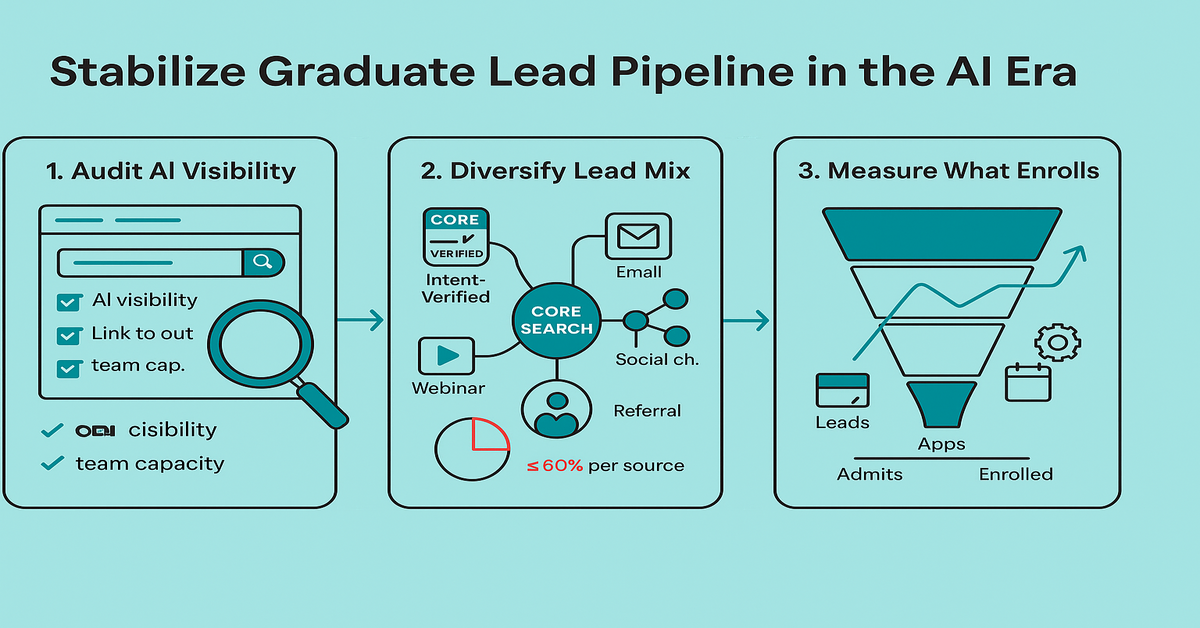
AI is reshaping how prospects discover graduate programs, raising risk for institutions that rely on a few lead sources. This article outlines a three step plan. Assess AI visibility and lead risk. Diversify lead generation beyond search. Track performance to enrollment outcomes. Protect coverage across core search. Expand demand through multiple intent verified channels. Ensure no single source exceeds 50 to 60 percent of volume. Review messaging, segmentation, channel mix, and timing regularly. Build capacity to adapt as AI and student behavior evolve. Implementing these steps stabilizes the pipeline and improves the quality of high intent graduate leads.
Read the article here (Author: @EAB)
Top Takeaways
- Audit your position. Verify accurate AI search visibility, link marketing to applications, admits, and yield, and assess team capacity to respond to change.
- Diversify your lead mix. Protect core search, expand beyond search, prioritize intent verified channels (e.g., Appily Advance), and keep any single source under 50 to 60 percent of volume.
- Measure what enrolls. Track channels through the full funnel, review and adjust messaging and mix regularly, and build capacity to react quickly to AI driven shifts.
AI is reshaping graduate leads. Audit AI visibility, diversify beyond search, cap any source at 50 to 60 percent. #HigherEd #AI #Enrollment
Student Centered Global Enrollment
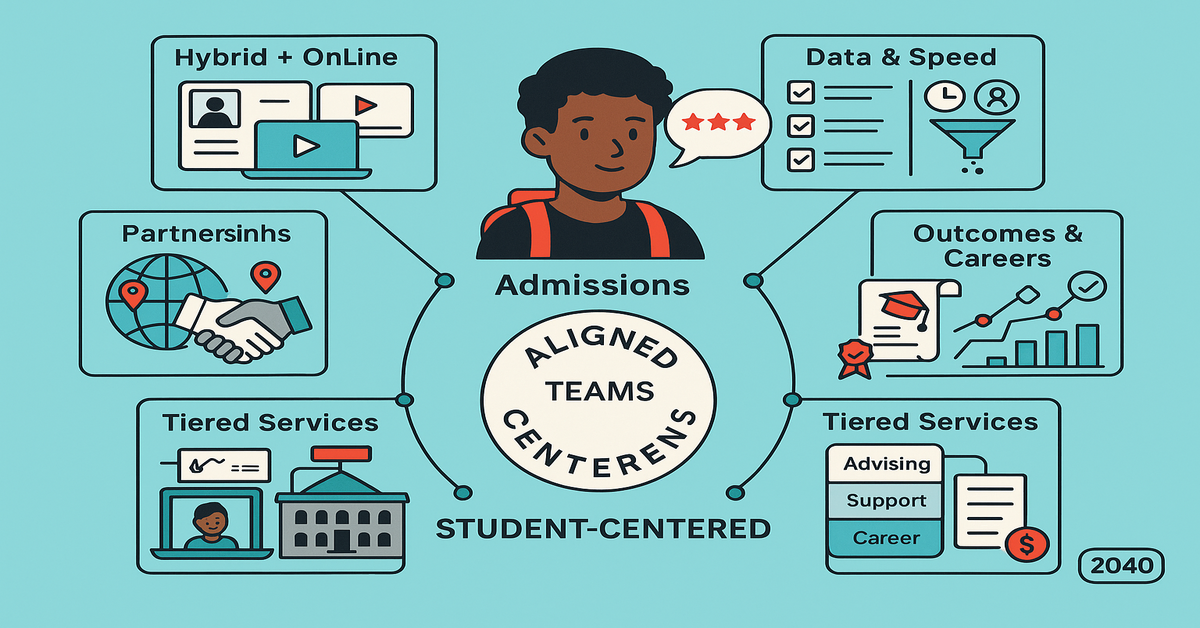
The piece argues the future of international enrollment management hinges on shifting from volume driven recruitment to student centered value propositions, personalized engagement, and flexible delivery through hybrid and online models. Success will require tighter alignment across admissions, marketing, and academics to support retention, career readiness, and measurable outcomes. While international branch campuses evolve toward jointly run models and wider geographic footprints, growth is tempered by high setup costs, profitability pressures, processing complexity, and accessibility concerns. Institutions should adopt data informed, inclusive strategies and unbundle services into tiered offerings that build lifelong partnerships with learners by 2040. Technology, affordability, and market validated quality will define competitive advantage.
Read the article here (Author: evolllution.com)
Top Takeaways
- Prioritize student centered value, personalized engagement, and flexible hybrid or online options to attract and retain diverse international learners.
- Align admissions, marketing, and academics around outcomes and career readiness, using data to improve processing speed, accuracy, and accessibility.
- Pursue selective partnerships and jointly run branch campuses. Unbundle services into tiered, lifelong offerings to balance growth with cost and profitability pressures.
Win global enrollment by 2040 with student centered value career ready outcomes hybrid online and tiered services #HigherEd #IntlEd
Smarter Recruitment Through Behavioral Insights
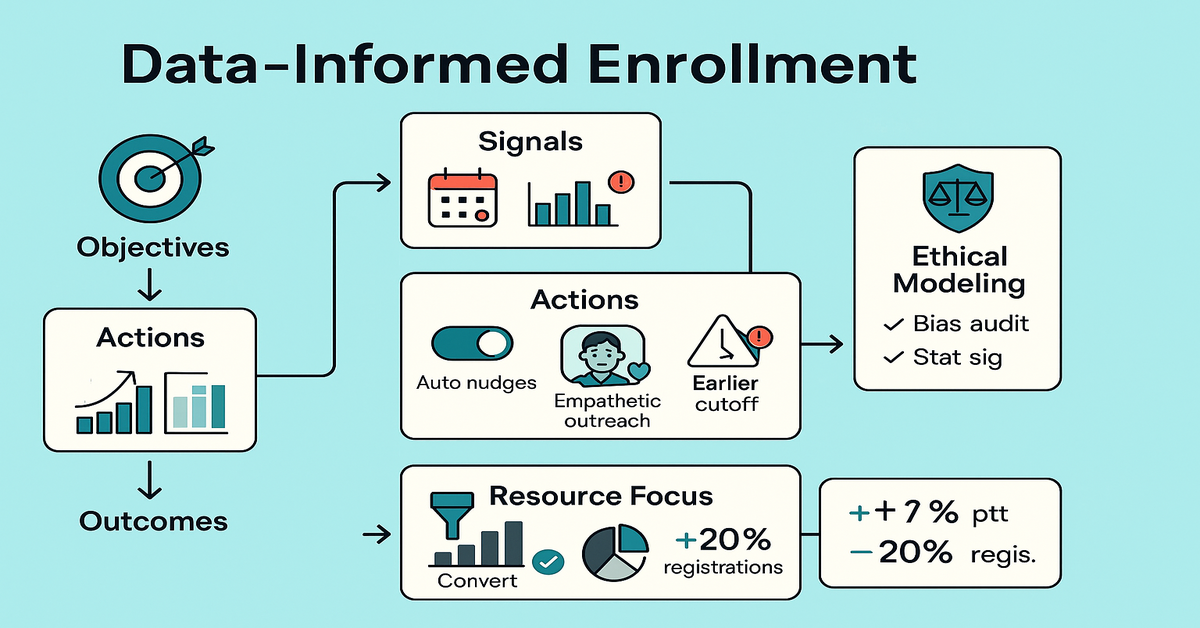
The article argues that institutions can boost enrollment outcomes by using behavioral data to shape recruitment actions, not just report results. Leaders should define objectives first to select the signals that matter, like login gaps or last minute registration. Then use LMS and registration data to flag risk early and trigger proactive outreach. Automated nudges paired with empathetic human follow up keep students engaged while avoiding reactive remediation. Targeting resources to channels and audiences that actually convert enables growth with lower spend. Ethical, bias aware modeling is essential to avoid pigeonholing students. Case examples show measurable gains, including a 7 point rise in completion and 20 percent more registrations alongside 20 percent lower costs after tightening enrollment timing and using dashboards.
Read the article here (Author: evolllution.com)
Top Takeaways
- Define recruitment goals first, then track behavioral indicators, like late enrollment or engagement gaps, to measure progress and predict risk.
- Deploy early warning triggers to deliver automated, empathetic outreach. Adjust policies, such as earlier enrollment cutoffs, to improve completion.
- Direct spend to channels and segments proven to convert, while auditing models for bias and statistical significance to ensure ethical, inclusive analytics.
Behavioral data turns insight into action. 7 point higher completion and 20% more registrations with 20% lower cost. #HigherEd #Enrollment
School Website Migration Playbook
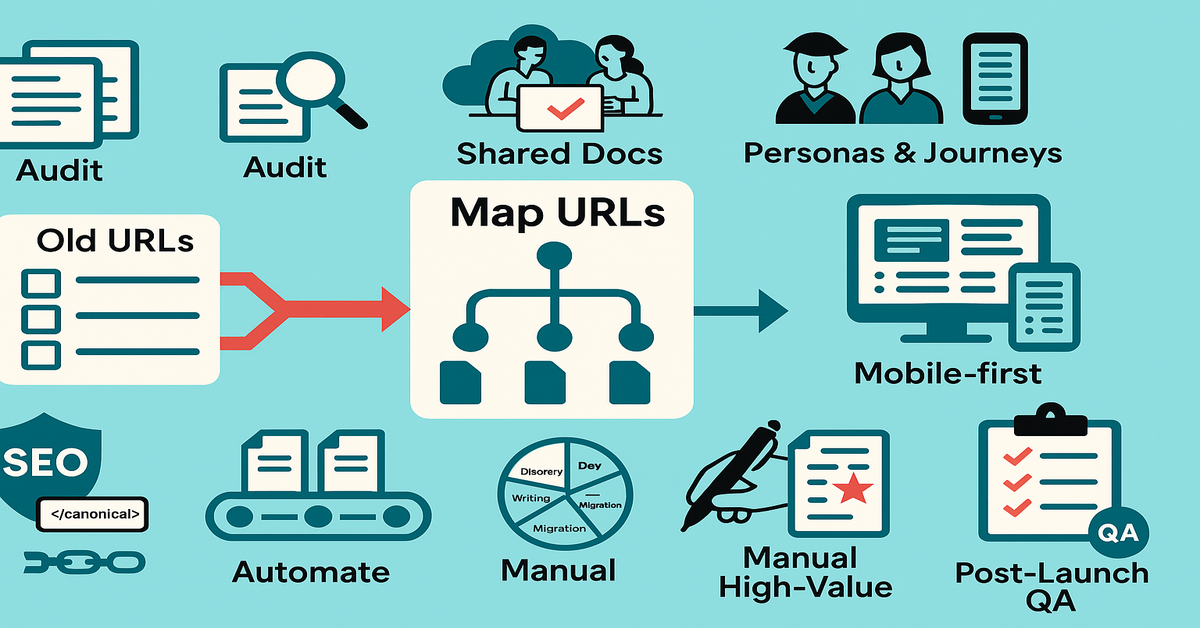
Successful school website migration hinges on early content auditing, mapping legacy URLs to a new information architecture, and engaging cross functional teams. Centralize content in shared platforms to prevent version chaos. Let user needs drive structure over visual polish. Create scannable, plain language, mobile friendly content tailored to key personas, using concise copy and visuals. Protect SEO by using official migration and import tools that set canonical links, strengthening navigation, and auditing templates for stackable, device ready layouts. Budget across discovery, design, development, writing, and migration. Use analytics to choose automated moves for repeatable items and manual migration for high impact pages. Post launch, verify links, maintain consistent messaging, and ensure the content led architecture supports recruitment and institutional goals.
Read the article here (Author: Diana Salazar)
Top Takeaways
- Start early. Inventory content, translate old URLs into the new IA and sitemap, involve marketing, designers, and stakeholders, and manage drafts in shared docs for a single source of truth.
- Make content lead. Write for personas in clear, scannable, mobile friendly chunks. Use visuals to reduce copy. Prioritize user journeys over cosmetic redesigns.
- Safeguard SEO and delivery. Use official migration tools with canonical links. Update internal links and templates. Plan budget and workload. Automate repeatable items. Manually migrate high value pages. QA thoroughly post launch.
Get school site migration right. Start early, map URLs, write for personas, set canonicals, automate repeats, QA links. #HigherEd #SEO
Conclusion
Higher ed marketing is shifting from storytelling at the homepage to proof, precision, and speed at the AI driven front door. Audit your AI visibility, stand up a central data index, rewrite program pages for mobile scannability, and set guardrails for channel mix and early warning dashboards. Pair automated nudges with empathetic human follow up and align every tactic to enrollment outcomes. The institutions that move on these basics this month will own next year’s inquiries and enrollments. Start with one high impact program today.