Prospects are not clicking. They are deciding.
AI overviews and answer engines now compress research into a few sentences. This makes first impressions happen off your site. That shift puts a premium on program pages that are clear, structured, and citable. Machines and humans should reach the same conclusion. Generative engine optimization sits on top of solid SEO. It rewards institutions that answer real student questions with consistent terms, schema, and clean technical foundations.
Reputation is also moving from narrative to evidence. The most resilient brands link objectives, stakeholder perceptions, and institutional performance to visible signals and behavioral outcomes. A unified dashboard tracks awareness, associations, quality, trust, and advocacy alongside applications, yield, retention, giving, and partnerships. It keeps teams focused on impact, not activity. Mixed methods and segmented listening surface the why behind the numbers. They expose gaps a rankings chase will never fix.
Meanwhile, yield is increasingly won by those who move first. Engage students the moment they are admitted. Clarify steps and remove financial or logistical barriers to build momentum and reduce melt. Short, student centered messages and timely nudges generate commitments faster. Back them with data and pair them with authentic human touchpoints like advising and visits. Together, AI ready content and proactive outreach align discovery with decision. Below are the week’s takeaways to help you operationalize these shifts.
Key Takeaways
- Make every program page the canonical source, machine readable, and question led, consistent across channels, so AI can cite you and students can trust you.
- Shift success metrics from clicks to outcomes by tying perceptions, performance, and visibility to behaviors like applications, yield, retention, giving, and partnerships.
- Monitor and improve external signals, rankings, reviews, accreditation, career data, and forums, because AI synthesizes these with your site to shape recommendations.
- Engage admits immediately with concise, personalized outreach that identifies and resolves barriers early to accelerate commitments and cut melt.
- Pair AI ready information with human advising, tours, and timely check ins to convert interest into action and deepen trust.
Controversial Ideas
- Drop rankings from your core dashboard. They are a lagging, noisy signal that distracts from measurable outcomes.
- In a zero click world, your homepage is not the hero. Each program page is the brand.
- Respecting inboxes with low frequency messaging costs you yield. Proactive communication wins trust faster.
- If AI cannot accurately cite your programs, you have not earned the click. Fix data hygiene and third party listings before buying more media.
Be The Canonical Source For Programs
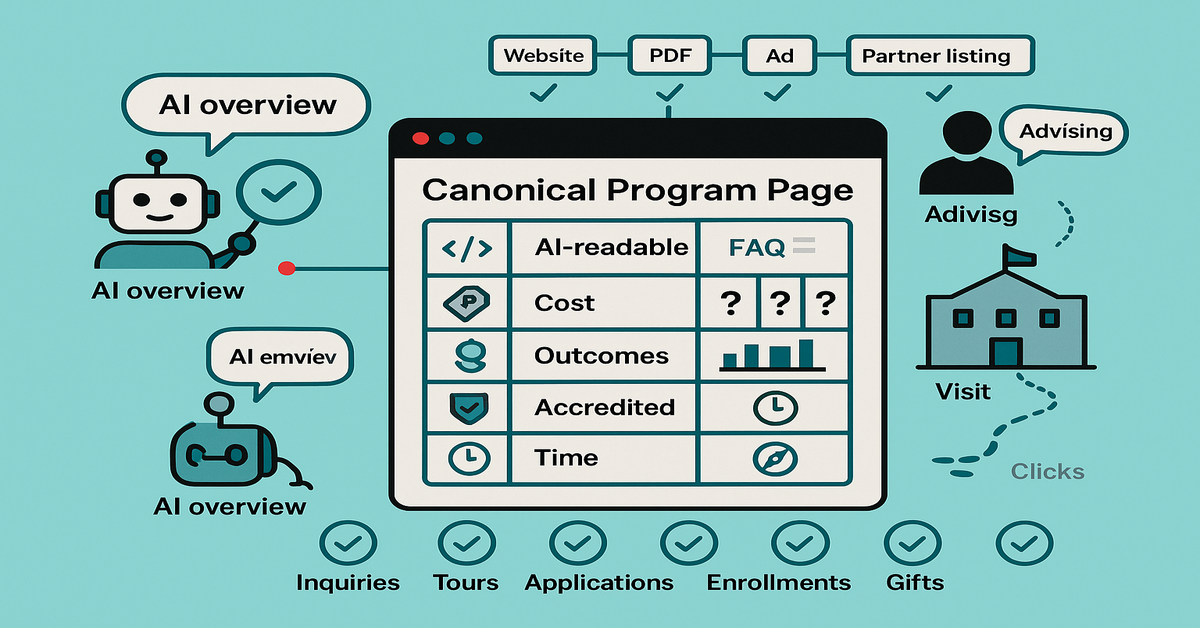
In a zero click landscape, AI overviews and answer engines prioritize institutions with clear, verifiable, and machine readable program pages. Make each program page the single source of truth by publishing structured data and schema, transparent costs and outcomes, and concise, question led content that can be cited. Pair AI ready pages with authentic human touchpoints like advising and visits. Measure success by real outcomes, inquiries, tours, applications, and gifts, rather than vanity traffic metrics. Consistency across websites, PDFs, ads, and partner listings builds trust with both AI systems and prospective students.
Read the article here (Author: Will)
Top Takeaways
- Make every program page the canonical source with structured data, question led FAQs, and verifiable details to earn AI citations and student trust.
- Lead with transparency on pricing, outcomes, accreditation, time to completion, and fit to reduce friction and improve decision quality.
- Shift measurement from clicks to meaningful outcomes, track inquiries, tours, applications, enrollments, and gifts, and pair AI ready content with human touchpoints.
Earn AI citations with AI ready program pages use schema clear costs and outcomes and measure inquiries and enrollments #HigherEd #SEO

Measure Higher Ed Reputation
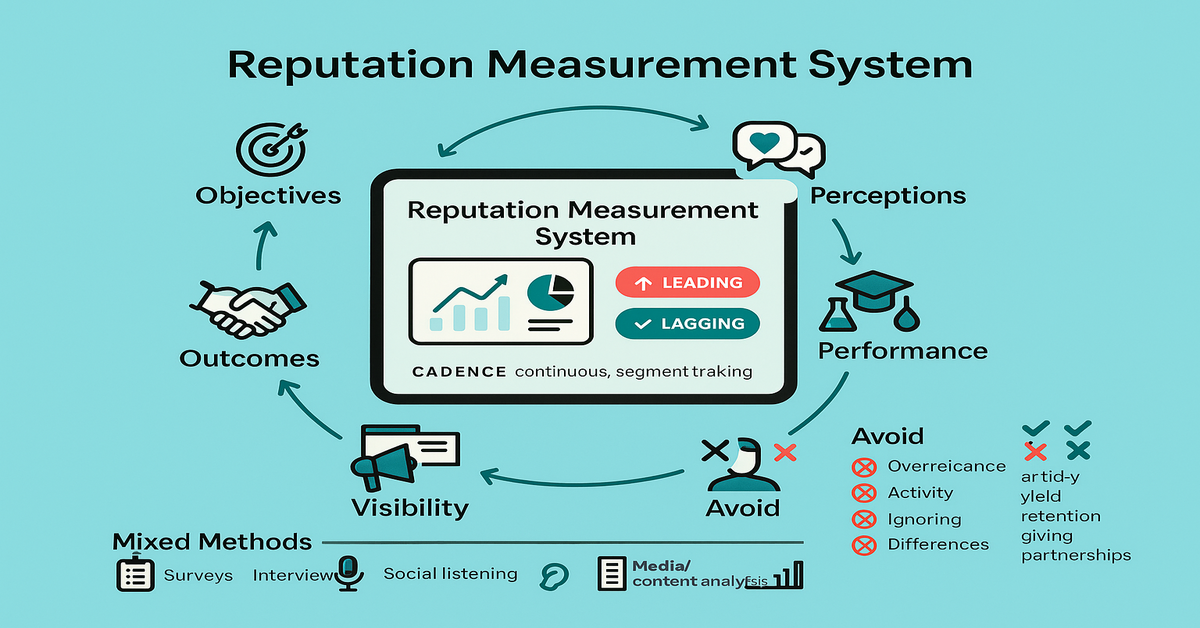
Higher education reputation is a multidimensional, stakeholder driven perception that must be anchored to real performance. This framework links five components, objectives, stakeholder perceptions, institutional performance, external visibility, and behavioral outcomes, into a cohesive system. It is guided by a dashboard of leading and lagging indicators. It outlines how to measure awareness, associations, quality, trust, and advocacy. Pair these with metrics on enrollment, outcomes, research, giving, and partnerships. Evaluate media, digital presence, and content effectiveness. A mixed method approach, surveys, interviews, social listening, media and content analysis, and benchmarking, supports continuous, segmented tracking on a set cadence. The model progresses from visibility to outcomes and stresses avoiding pitfalls such as overreliance on rankings, activity over impact, and ignoring stakeholder differences. This ensures evidence based decisions that strengthen trust and value.
Read the article here (Author: Ross Loehner)
Top Takeaways
- Start with clear reputation objectives and build a unified dashboard that tracks perceptions, performance, visibility, and behaviors against those goals.
- Use mixed methods and segment by audience, measure continuously on an appropriate cadence to surface changes early and understand the why behind the numbers.
- Prioritize impact over activity by linking leading indicators to outcomes like applications, yield, retention, giving, and partnerships, and address negative feedback rather than chasing rankings.
Build higher ed reputation with a 5 part framework linking perceptions and performance to outcomes #HigherEd #Reputation #Analytics
Boost Yield with Early Engagement
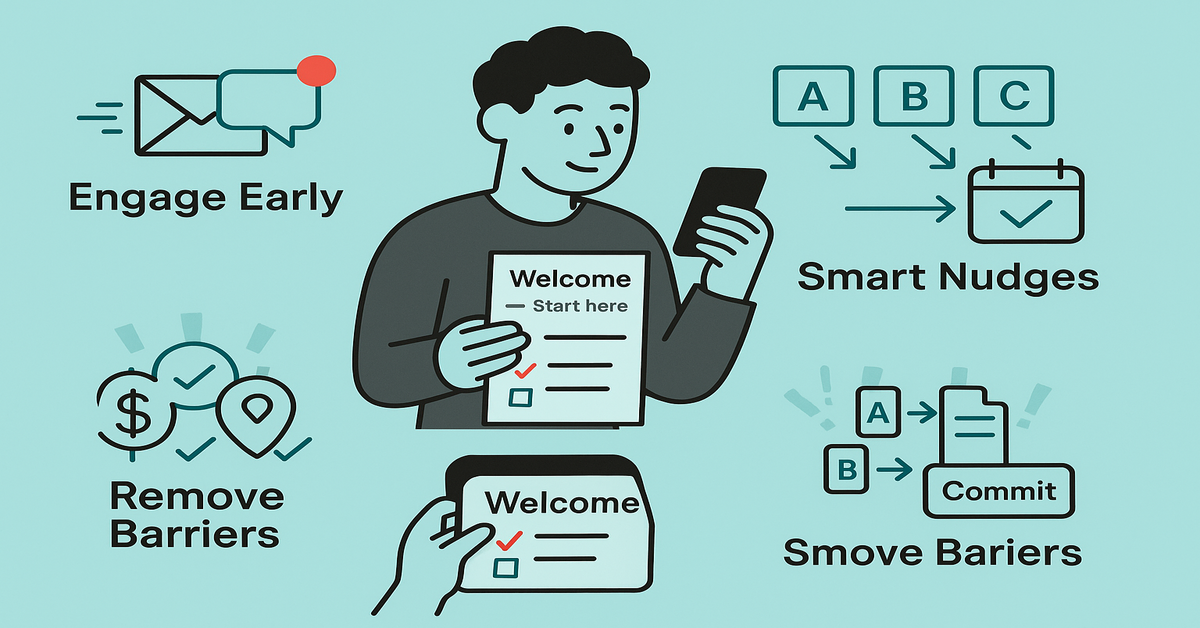
The article shares lessons from testing earlier yield engagement with admitted students. It argues that starting outreach immediately after admission, using concise, student centered communications, and systematically identifying barriers can accelerate commitments and reduce melt. By meeting students’ needs sooner, clarifying steps, surfacing financial or logistical hurdles, and personalizing support, institutions can improve conversion and build stronger relationships. The piece distills three tested strategies to engage sooner, uncover obstacles, and use smarter, data informed outreach to boost yield.
Read the article here (Author: @EAB)
Top Takeaways
- Begin engagement the moment students are admitted to build momentum, answer early questions, and reduce melt.
- Proactively surface and resolve enrollment barriers, financial, procedural, or sense of fit, through quick check ins and clear, personalized guidance.
- Use smarter, data informed outreach with segmented messages, timely nudges, and clear next steps to drive commitments.
Engage admits now to cut melt and raise yield. Quick check ins clear steps and data informed nudges drive deposits. #HigherEd #Enrollment
AI Is Reshaping Higher Ed Search
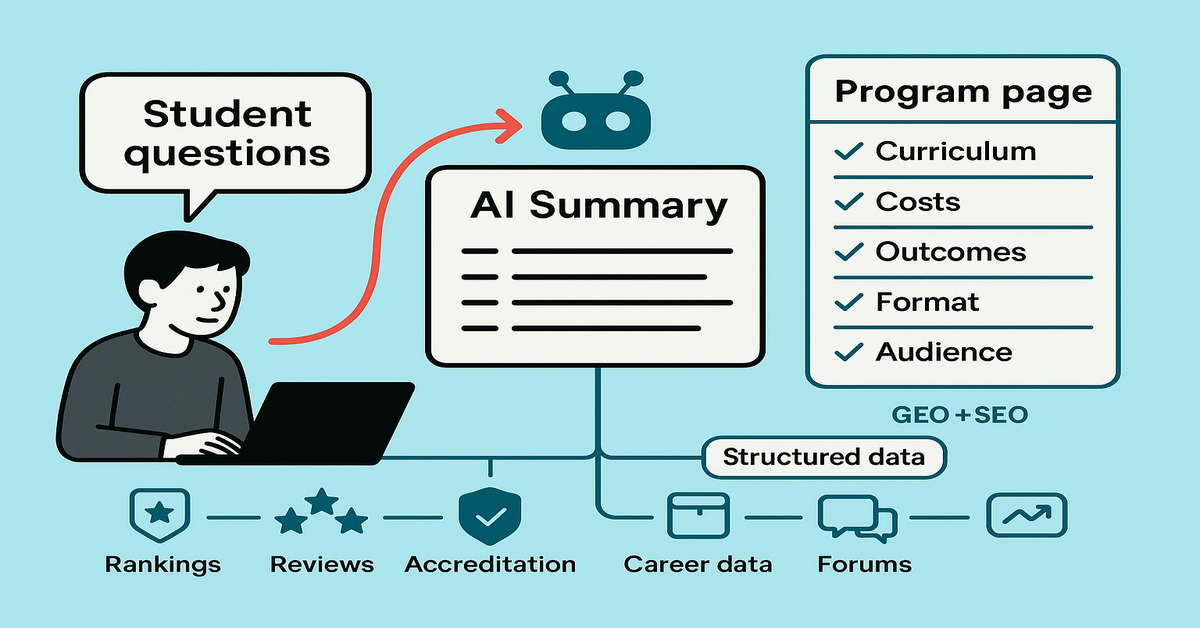
AI answer engines like ChatGPT and Google’s AI Overviews are changing how prospective students find and evaluate programs. Influence is shifting from traditional rankings and SEO to AI generated summaries. Institutions must present clear, structured, authoritative program information, curriculum, costs, outcomes, format, and audience, so AI can accurately extract and recommend it. Generative engine optimization complements SEO by organizing content around real student questions, consistent terminology, structured data, and accessible, crawlable pages. External signals, rankings, reviews, government and career data, and forums, also shape AI responses, so monitoring and correcting third party information is essential. As searches become conversational, universities should answer key questions across the journey and strengthen technical foundations. Track how AI tools describe programs.
Read the article here (Author: Rustam Irani)
Top Takeaways
- Structure program pages to be machine readable and answer real student questions up front, use consistent terms, clear headings, concise answers, internal linking, and structured data to support GEO alongside SEO.
- Monitor and improve external reputation signals, rankings, reviews, accreditation, career data, and forums, because AI systems synthesize these with institutional sites to form recommendations.
- Adapt to a conversational search journey by providing accurate, regularly updated content on fit, costs, outcomes, flexibility, and admissions, and track how AI tools summarize your programs.
AI answers now guide student choices. Make pages machine readable and track rankings and reviews. #HigherEd #SEO #GEO
Conclusion
The landscape is reordering around clarity, credibility, and speed. Stand up a single source of truth for every program, build a reputation dashboard that connects perception to performance, and start an admitted student cadence now. Audit how AI tools describe you and correct inconsistencies across your site, PDFs, and partner listings. Pick one change you can ship this week, and turn attention into enrollment momentum.