Search has changed overnight. Prospects now ask AI assistants for answers, not scroll through ten blue links. To win, institutions must become the single trusted source with clean, machine readable facts on programs, costs, and outcomes. The strategy shifts from keyword tricks to structured authority and frictionless clarity. It is a new admissions front door, where being cited beats being clickable.
Yet technology alone does not enroll students. People do. This week’s insights underscore that students do not crave generic personalization, they want to feel genuinely known. The most effective teams blend an always on AI concierge with timely, authentic human outreach that reflects each student’s goals, context, and timing. One stop advising, precise nudges like financial aid milestones, and communications that use a student’s actual details build trust and momentum.
Execution still relies on dependable channels, and email remains the quiet ROI powerhouse when paired with social, SMS, and the website. Segment by lifecycle and behavior, design for mobile, keep a steady cadence, and measure what matters across stages and retention. Governance, accessibility, and consistent structures make your content comparable and extractable for AI, while reducing friction for families. With that in mind, here are the biggest moves to carry forward from this week’s research and playbooks.
Key Takeaways
- Be the canonical source with structured, machine readable program facts that AI can parse and cite, reinforced by governance, audits, and consistent templates.
- Design frictionless journeys that surface price, eligibility, schedule, and outcomes early with clear CTAs. Optimize for enrollment and revenue metrics over vanity.
- Pair an agentic AI concierge with human advisors to deliver 24/7 verified guidance, using real time intent signals and known user personalization to time outreach.
- Build question focused, thorough pages for all audiences and deepen topical authority. Support with accessibility, granular metadata, and taxonomy.
- Run email as the high ROI glue in an omnichannel mix. Segment by stage and behavior, send every 7 to 10 days with mobile first design, and attribute to conversion and retention.
Controversial Ideas
- Traditional keyword SEO is fading. A canonical fact layer and structured program data will outperform long form blogs in AI led discovery.
- An AI concierge should not just triage. It can own most first response advising 24/7, with humans focused on complex decisions and yield.
- Email may beat viral social for real enrollment impact, and budgets that chase impressions are quietly leaving seats unfilled.
- If your site cannot publish program facts as downloadable JSON with consistent tables and anchors, you are effectively invisible to AI assistants.
AI Native Enrollment Playbook
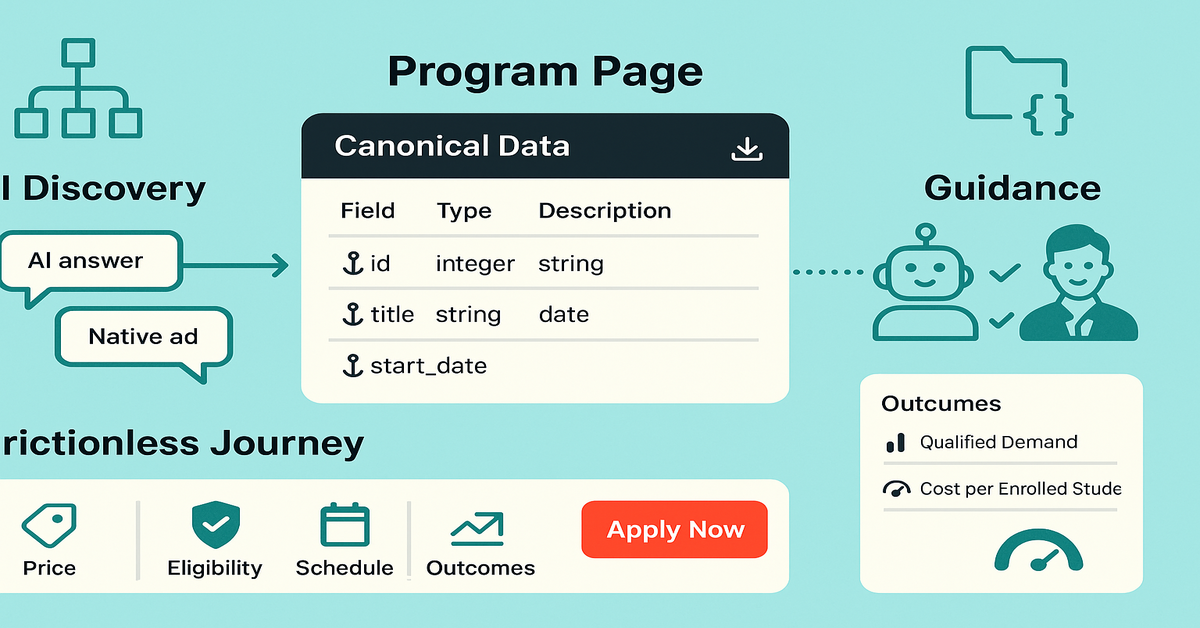
AI has shifted higher ed discovery from traditional search to AI answer engines and ChatGPT native ads, which forces institutions to become the canonical source with machine readable facts on programs, costs, and outcomes. The recommended playbook rests on three pillars. Publish trustworthy, structured data. Personalize outreach to intent and stage. Measure by enrollment outcomes, qualified demand, and conversion. Execution focuses on canonical, consolidated program pages that are AI friendly. Pair agentic AI concierges with human advisors for 24/7, verified guidance. Design frictionless journeys that surface price, eligibility, schedule, and outcomes early, with clear CTAs. Technical steps include atomic facts, named anchors, tables, downloadable JSON, a central data index, and clean sitemaps. Teams should run real time signal operations, optimize SEO, SEM, and AEO, and prioritize revenue metrics like cost per enrolled student.
Read the article here (Author: Will)
Top Takeaways
- Become the canonical source for programs, costs, and outcomes with structured, machine readable, consolidated pages so AI answer engines cite you. Use atomic facts, named anchors, tables, downloadable JSON, a central data index, and clean sitemaps.
- Personalize at scale by pairing an agentic AI concierge (24/7) with human advisors, grounded in verified data, RAG, and fact checking. Track real time intent signals to time outreach and accelerate decisions.
- Optimize for enrollment and revenue, not vanity. Fund high intent content, design frictionless journeys with early answers and prominent CTAs, and target ChatGPT users with native ads as a test and learn channel. Prioritize cost per enrolled student and qualified demand as core KPIs.
Win AI answers as the canonical source Structured data and an AI concierge 24 7 with humans Optimize cost per enrollee #HigherEd #AI

Prepare Higher Ed Sites for AI Search
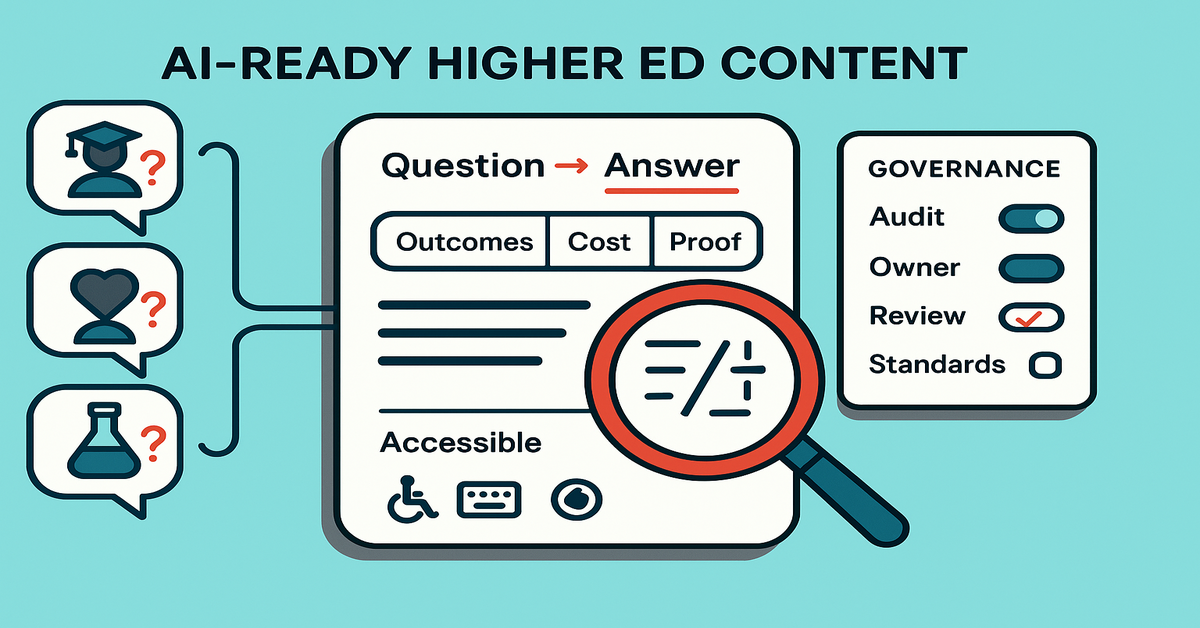
To compete in AI driven search, higher education websites should move beyond keyword optimization and become authoritative sources across subject areas. Create content that directly answers real questions from prospects, parents, researchers, alumni, and faculty. Structure information consistently across programs and services so AI can parse and compare details. Establish strong content governance through audits, page ownership, review cycles, and standardization, while deepening topical coverage of flagship programs. Invest in accessibility to ensure inclusive search and navigation across large, multi domain sites. Add granular metadata and taxonomy to surface outcomes, costs, modalities, and proof points.
Read the article here (Author: hannonhill.com)
Top Takeaways
- Prioritize question focused, thorough pages to build authority across subjects rather than chasing isolated keywords.
- Enforce consistent structures, governance, and regular audits so information stays accurate, comparable, and easy for AI to extract.
- Invest in accessibility and granular metadata and taxonomy to make program details discoverable, trustworthy, and inclusive.
Win AI search with answer first pages consistent structures governance and metadata surface costs outcomes and modalities #HigherEd #AI
Make Students Feel Known
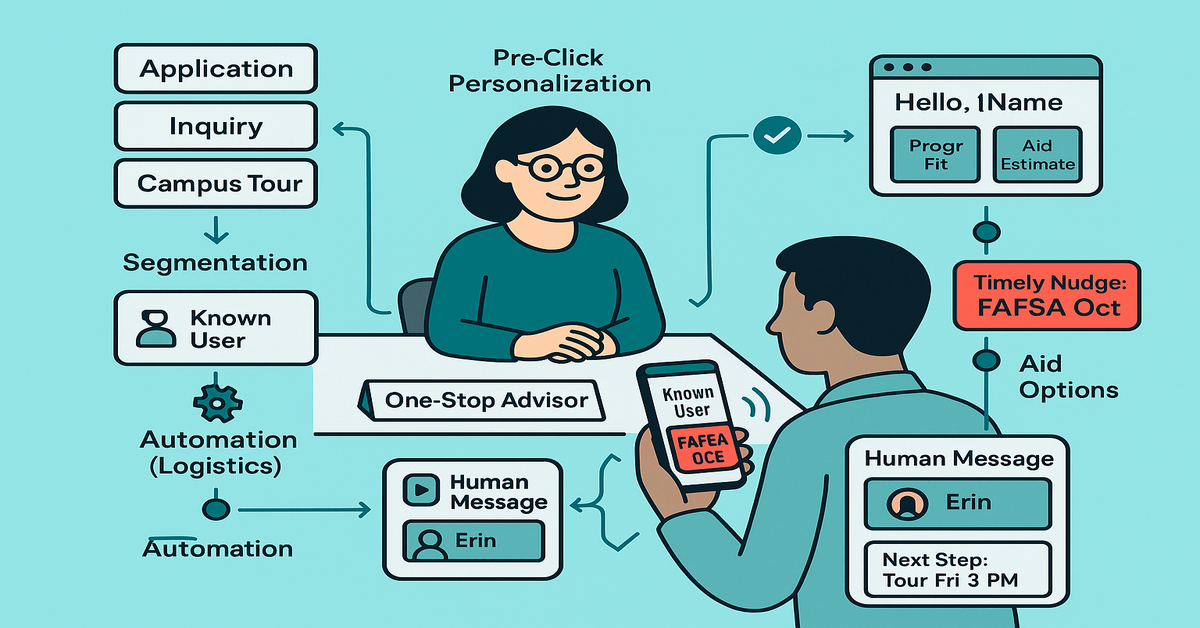
Students do not want algorithmic personalization, they want to feel known. Winning recruitment replaces more messages with experiences that show real understanding of each student’s goals, context, and timing. Use existing data, applications, inquiries, and tours to segment early, then deepen personalization as you learn more. Blend automation for logistics with authentic human outreach. Deliver timely, relevant nudges, for example FAFSA in October, personalized videos, and communications that embed each student’s actual details. Create a one stop experience where someone owns the relationship. Evolve to known user personalization that anticipates needs pre and post click through granular data and web analytics. Pair this with open communication, high touch advising, and friendly, flexible service to build trust, improve yield, and strengthen retention.
Read the article here (Author: evolllution.com)
Top Takeaways
- Lead with connection, not tech. Segment with known attributes, personalize progressively, time outreach precisely, and mix automation with genuine human messages.
- Operationalize known user personalization. Use granular and behavioral data to anticipate needs before inquiry, surface relevant aid and resources, and embed student specific details in every touchpoint.
- Build a service model that feels personal. Offer one stop advising, open cross campus communication, and friendly, immediate, accurate support to drive trust, enrollment, and persistence.
Boost yield and retention with known user personalization, FAFSA October nudges, and one stop advising. #HigherEd #Enrollment
Email Marketing That Drives Enrollment
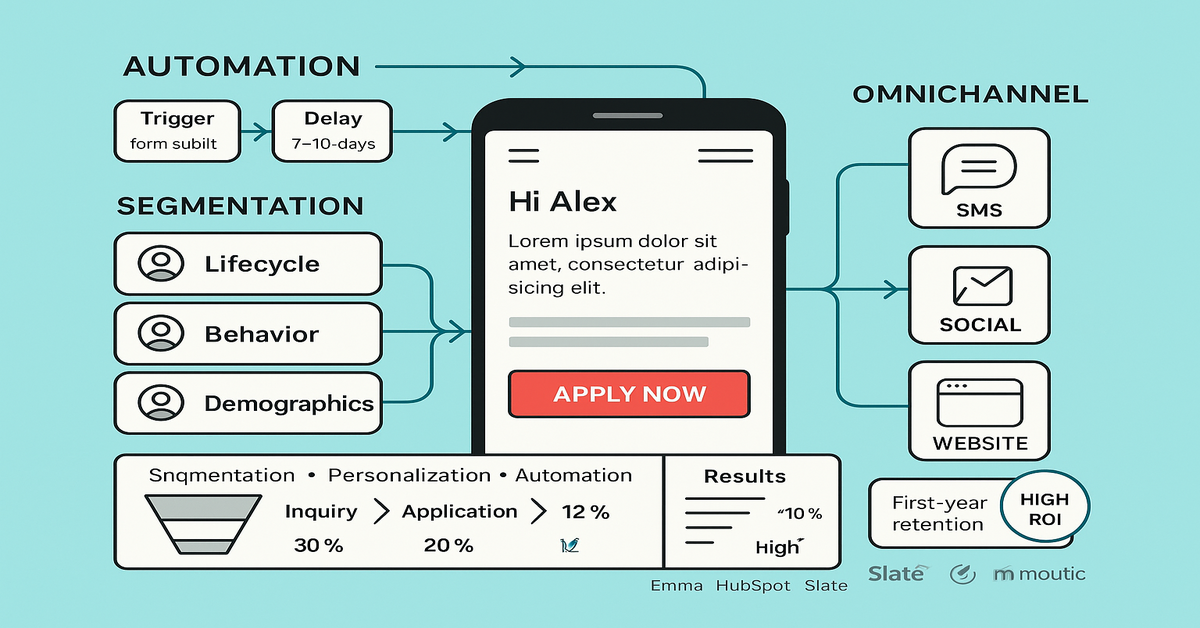
Schools and universities can use targeted, compliant email programs to move prospects from inquiry to application and enrollment, while improving student retention and alumni engagement. The playbook centers on segmentation by lifecycle stage, behavior, and demographics, persistent personalization using names and program interests, and automation via platforms like Emma, HubSpot, Slate, or Mautic for timely nudges and pre visit info. Email performs best as part of an omnichannel mix with social, SMS, and web content. The recommended cadence is one email every 7 to 10 days, with mobile first design and clear calls to action. Success is measured by conversion and retention rates with attribution, not vanity metrics. In higher ed budgets, email delivers strong ROI.
Read the article here (Author: Diana Salazar)
Top Takeaways
- Combine lifecycle, behavioral, and demographic segmentation with personalization and automation to guide prospects to enrollment and support retention and alumni engagement.
- Integrate email with social, SMS, and website content. Send about every 7 to 10 days using mobile friendly designs and clear CTAs, supported by tools like Emma, HubSpot, Slate, and Mautic.
- Measure what matters. Track conversion rates across stages and first year retention with attribution to channels, recognizing email as a high ROI lever within per student marketing spend.
Segmented personalized email plus social and SMS drives inquiry to enrollment Send every 7 to 10 days Track conversions #HigherEd #EdTech
Conclusion
Higher ed discovery now runs on two rails, machines that reward clarity and structure, and humans who reward empathy and service. Institutions that master both will shorten decision cycles, raise yield, and improve retention. Start by auditing program pages for authoritative facts, standing up an AI concierge tethered to verified data, and refreshing your email journeys with stage based segmentation and sharp attribution. Set cost per enrolled student and qualified demand as your north stars. Pick one move this week, ship it, and let the data tell you where to double down next.