Prospective students are acting like savvy consumers. AI is their new advisor. With skepticism about the value of college on the rise, they compare outcomes, costs, and credibility in seconds. Authentic voices now matter as much as rankings. Data transparency is the new trust currency. The institutions that win will make proof easy to find and stories impossible to ignore.
AI is not just a headline. It is baked into research behavior and content production. Nearly half of high schoolers consult AI to shortlist schools, decode jargon, and check ROI. Yet they recoil at outreach that sounds machine made. That duality raises the bar. Be discoverable in AI-driven search, but unmistakably human in your messaging. Pair hard metrics with real student narratives and you will clear both hurdles.
Operational discipline is the quiet edge. Chained AI workflows turn chaotic ideation into a consistent content pipeline. Program-centric site architecture lifts crawlability, topical authority, and conversions. Even with tight budgets, smart bets, like $10/day YouTube tests, freemium-to-paid funnels, and third-party platforms, validate demand without financial strain. The theme is efficiency that does not cheapen the brand.
Across these perspectives runs a single throughline. Design for intent, prove value, and let students lead. From hero’s-journey storytelling and lifecycle marketing to schema-powered program hubs, each tactic makes your promise clearer and your path to enrollment smoother. What follows distills the most actionable patterns. Use these takeaways to prioritize your next sprint with confidence.
Key Takeaways
- Lead with proof: publish program-level outcomes and alumni pathways. Then amplify them through authentic, peer-led stories.
- Architect around intent: build program hubs with clean internal links, breadcrumbs, and schema to win organic, rich, and AI-driven results.
- Treat AI as an operations engine, chain tools for ideation, drafting, and brand refinement, while keeping outward communications unmistakably human.
- Map the student as the hero and your institution as mentor, addressing objections early and backing emotion with ROI data to lift completion and yield.
- When budgets are tight, validate demand with low-cost YouTube tests, freemium content, and starter pricing before expanding into subscriptions or tiers.
Controversial Ideas
- Publish unvarnished program ROI, even for weaker programs, and fix or sunset offerings instead of hiding the data.
- Shift 30–50% of your content budget to student-created pieces and peer channels, even if it means fewer polished brand campaigns.
- Prioritize program-page architecture and structured data over a flashy homepage redesign if you want measurable enrollment impact.
- Use AI for first drafts and workflow speed, but ban AI-sounding outbound messages to protect trust, even at the cost of scale.
Outcome First Student Centered Higher Ed Marketing
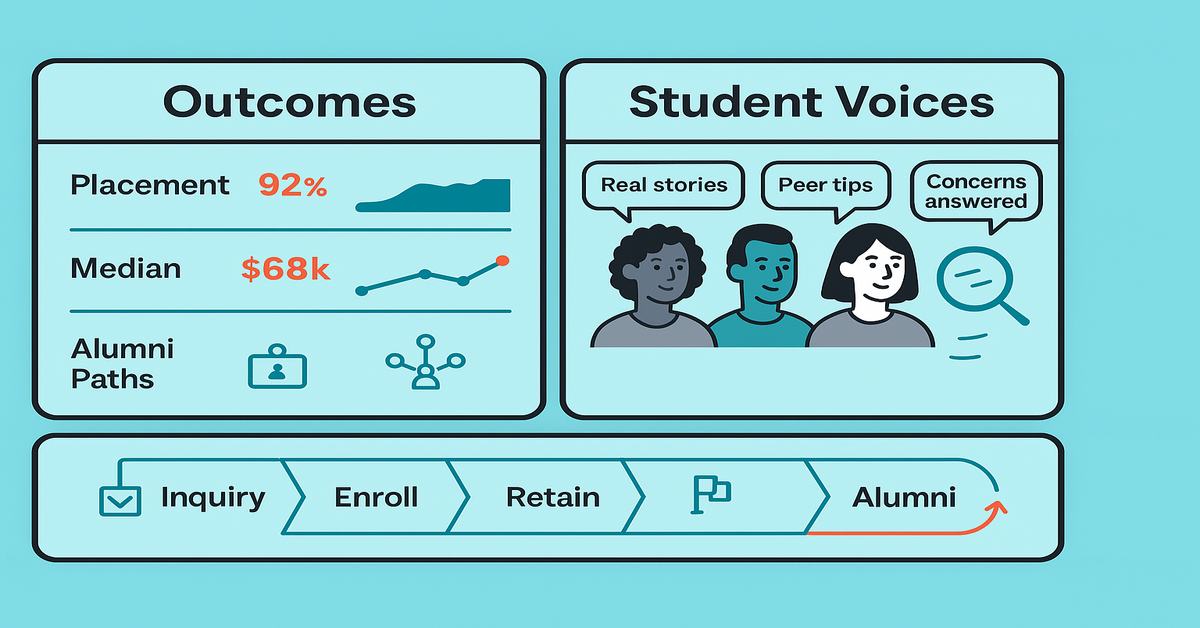
With growing skepticism about the value of college, higher ed marketing must lead with transparent outcomes and authentic student voices. Institutions should clearly present job placement, earnings, and alumni success data while pairing it with real stories from current students and graduates.
Effective strategies prioritize peer-to-peer communication, active social listening, and addressing concerns directly. A full-funnel approach sustains engagement from inquiry through enrollment, retention, and alumni relations, using remarketing and stage-specific messaging to reinforce value and ROI.
Read the article here (Author: Will)
Top Takeaways
- Prioritize outcome transparency by publishing program-level placement rates, earnings data, and alumni pathways that are easy to find, compare, and trust.
- Elevate student voices through peer-led content and testimonials, and practice active social listening to surface and address real concerns authentically.
- Adopt a full-funnel lifecycle strategy with tailored messaging and remarketing for each stage from inquiry to alumni to boost yield, retention, and advocacy.
Show program level placement rates and earnings data with student voices. Full funnel messaging boosts yield and retention #HigherEd #ROI

Smarter AI Content Workflows
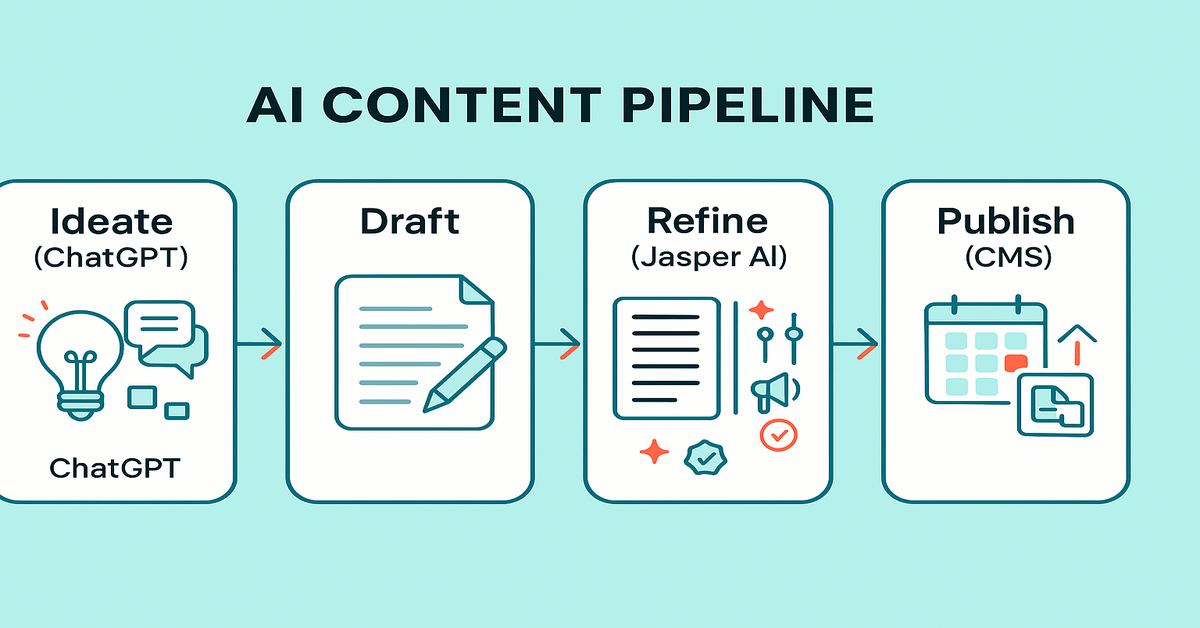
AI content performs best when tools are chained with clear roles instead of relying on a single platform. This article lays out a repeatable workflow that links strategy to execution by pairing ChatGPT with Jasper AI. Teams use ChatGPT to brainstorm topics, outline long-form pieces, explore tones, and produce rough drafts. They then hand off to Jasper AI to refine language, align brand voice, and optimize. The final step is loading assets into a CMS or calendar, turning ad hoc experimentation into a systematized, consistent content process.
Read the article here (Author: Annice Deweese)
Top Takeaways
- Chain AI tools with defined roles to turn creative experimentation into a reliable, scalable content pipeline.
- Use ChatGPT for ideation, outlining, tone exploration, and first drafts. Pass to Jasper AI to refine copy, match brand voice, and optimize.
- Operationalize the workflow by publishing through your CMS or content calendar to maintain consistency and speed.
Pair ChatGPT for ideas and drafts with Jasper AI for brand polish then publish via CMS for consistent content. #contentops #AIwriting
Program Page Architecture Wins SEO
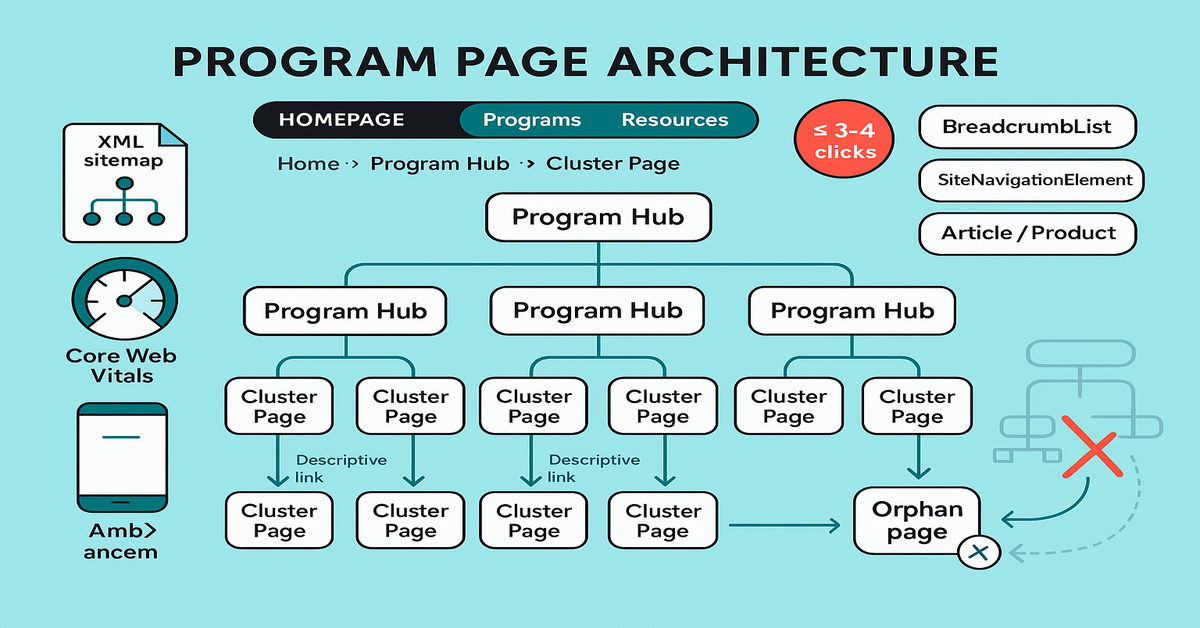
Program Page Architecture reorganizes websites around intent-driven program hubs with tightly linked subpages. This concentrates authority and clarifies context for search engines and users.
By keeping pages within three to four clicks of the homepage, using descriptive internal links, and applying schema, sites improve crawlability, indexing speed, and topical relevance. The approach enhances UX, scales cleanly as offerings grow, and supports rich results and AI-driven search.
Implementation focuses on mapping 3–7 core programs, structuring clean URLs, adding mega menus and breadcrumbs, maintaining sitemaps, and fortifying technical SEO with Core Web Vitals and mobile-first design. Avoid deep hierarchies, fix orphan pages and broken links, and use structured data to signal hierarchy and content types.
Read the article here (Author: RGI Team)
Top Takeaways
- Build 3–7 program hubs with cluster subpages and use descriptive two-way internal links to concentrate PageRank and align with user intent.
- Keep the site flat within three to four clicks using mega menus, breadcrumbs, and XML sitemaps, and routinely audit to remove orphan pages and broken links.
- Add schema (BreadcrumbList, SiteNavigationElement, Article or Product) and strengthen Core Web Vitals and mobile-first design to speed indexing and earn rich results and AI overviews.
Build 3 to 7 hubs, keep pages 3 to 4 clicks, use internal links, add schema to speed indexing and earn rich results #SEO #TechnicalSEO
Low Budget Course Marketing
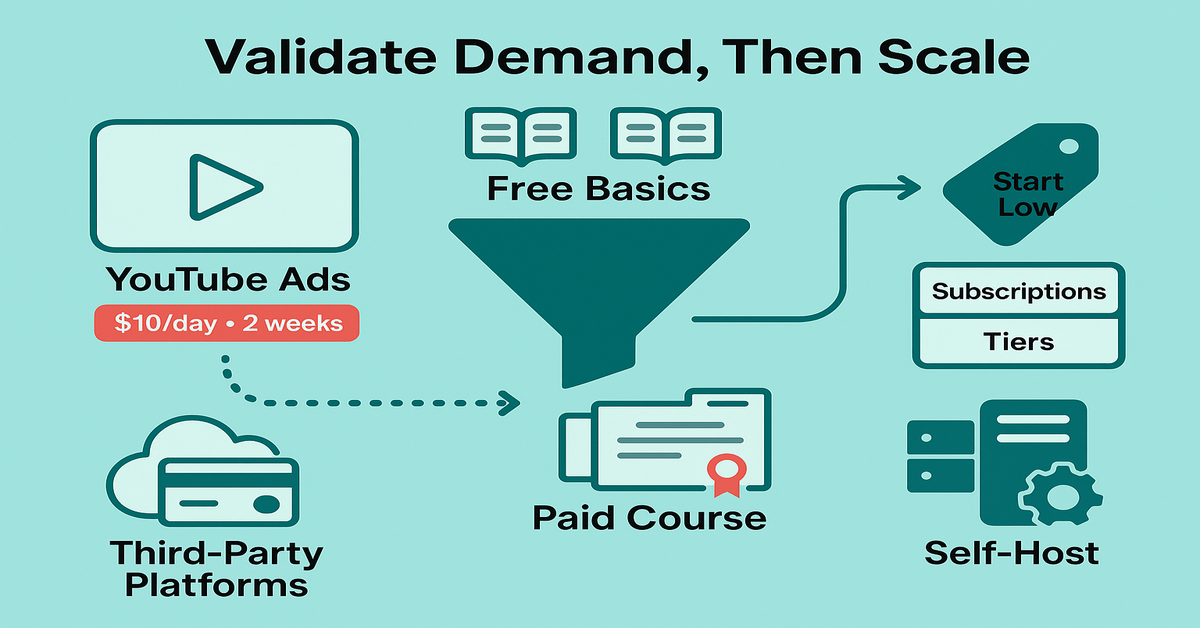
When funds are tight, prioritize tactics that validate demand and scale efficiently. Use low-cost, pay-per-view YouTube ads, about $10 per day for at least two weeks, to gain traction and data. Start with a lower price to test interest and benchmark against competitors. Then evolve into subscription or tiered pricing for steadier revenue and broader appeal.
Offer foundational content for free to build trust and funnel engaged learners into paid courses. Keep costs down by leveraging third-party platforms for hosting, payments, and course management, or self-host if you can handle the technical setup.
Read the article here (Author: Manno Notermans)
Top Takeaways
- Start with low-cost YouTube ads that charge only when viewers engage, allocate about $10 per day and run campaigns for at least two weeks to gather data.
- Validate demand with a lower initial price and competitor benchmarking, then expand into subscription or tiered pricing to boost recurring revenue and accessibility.
- Publish foundational content for free to build trust and drive paid enrollments, and use third-party platforms to reduce setup and processing costs when starting out.
$10 a day for 2 weeks on YouTube ads. Start with a low price, offer basics free, then add tiers or subs. #YouTubeAds #OnlineCourses
Make Students the Heroes
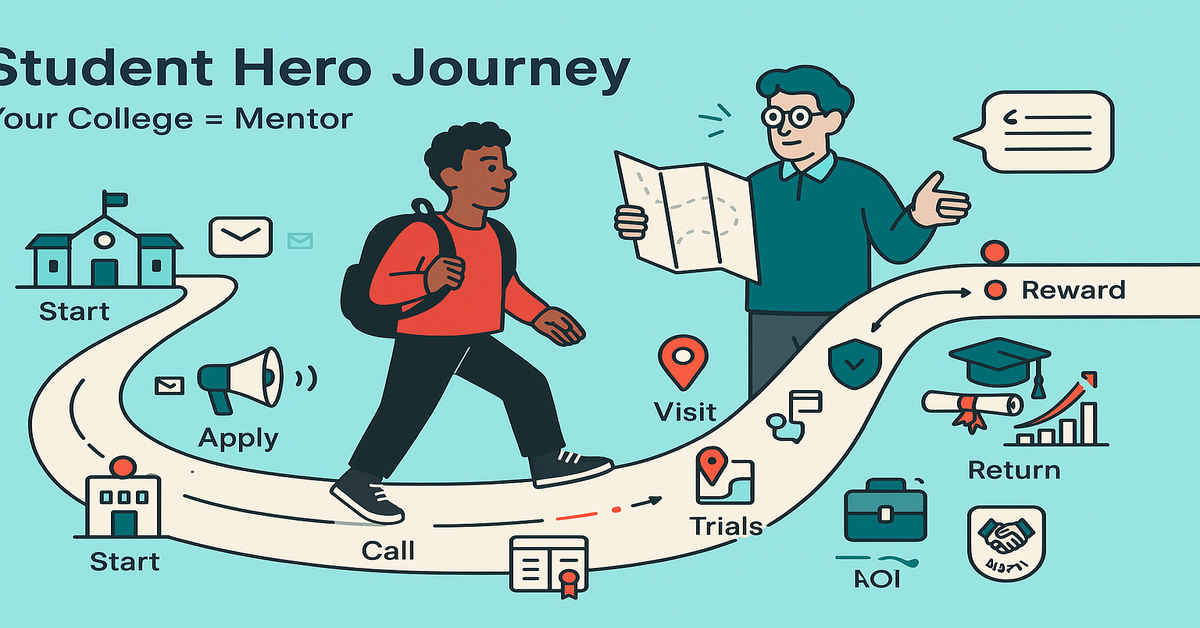
Use the Hero Journey framework to market your college by casting prospective students as heroes and your institution as the trusted mentor. Map key stages, ordinary world, call to adventure, threshold, trials, reward, and return, into emails, videos, landing pages, and social content. This humanizes the path from high school to graduation and career.
Address fears like cost or homesickness. Spotlight allies and resources. Pair emotional storytelling with proof such as testimonials, ROI metrics, and alumni outcomes. Execute with authentic student stories, selective 5–7 stage arcs, and channel-specific tactics. Then measure engagement. Story-driven journeys can significantly lift completion rates.
Start small by reframing one page or campaign. Scale as you see lower acquisition costs, higher applications, and stronger loyalty.
Read the article here (Author: @terminalfour)
Top Takeaways
- Position the student as hero and your institution as mentor to create emotionally resonant narratives that differentiate your brand and drive enrollment.
- Implement selectively: build 5–7 stage arcs across channels, address objections early, and make key thresholds like application and visits seamless.
- Be authentic and data driven: use real student stories plus ROI and alumni proof, track engagement, and start with one page or campaign before scaling.
Cast students as heroes, your college as mentor. Use 5 to 7 stages and proof to cut acquisition costs and boost apps. #HigherEd #Enrollment
AI reshapes college searches
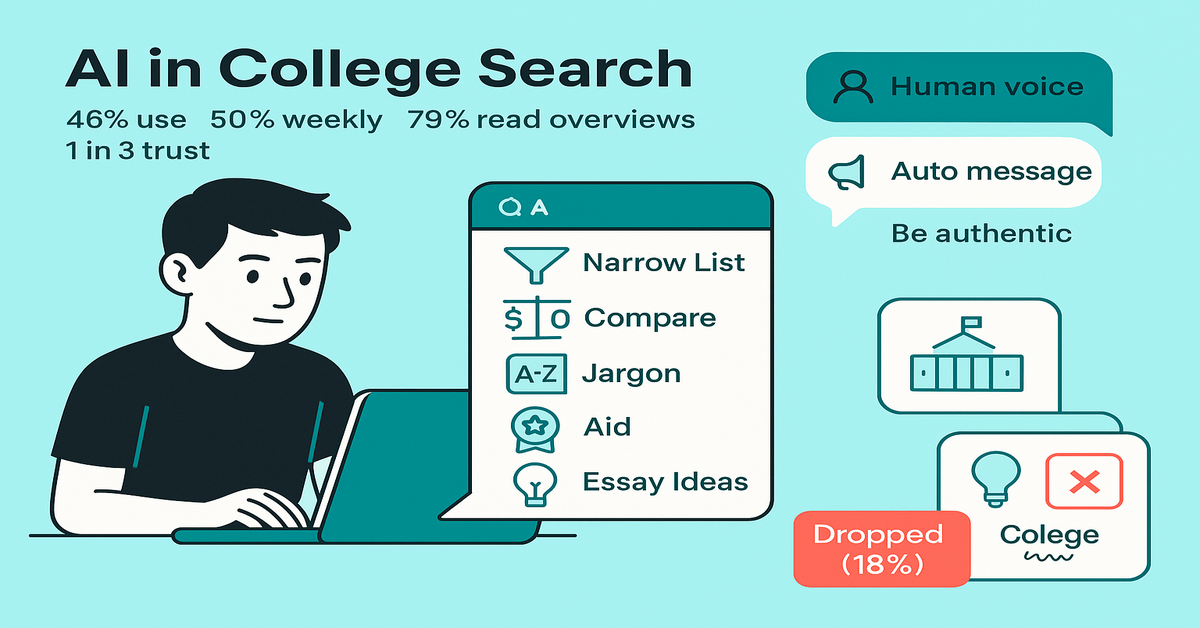
Nearly half of high school students now use AI tools like ChatGPT to research colleges, up from 26% in spring 2025. They rely on AI to narrow options, compare outcomes and costs, decode admissions jargon, find scholarships, and brainstorm application ideas. Trust is growing: one in three consider AI credible for program research, 79% read Google’s AI-generated overviews, and 50% use AI weekly.
AI also influences decisions, with 18% dropping a college based on AI-surfaced information. Yet students are wary of AI coming from institutions themselves. More than half react negatively to messages they believe are AI generated, making authenticity crucial.
Read the article here (Author: @EAB)
Top Takeaways
- AI is central to college research: 46% use it, 50% use it weekly, 79% read AI overviews, and one in three trust it for program research.
- Students use AI to narrow lists, compare metrics like costs and outcomes, translate admissions jargon, find scholarships, and shape essay ideas.
- Authenticity matters: 18% cut schools based on AI findings and most dislike AI-generated outreach, keep web data accurate and communicate with a human voice.
46% use AI for college research, half weekly, 79% read AI overviews. 18% dropped a school. Keep it human. #EdTech #HigherEd #Admissions
Conclusion
The institutions that pull ahead will do three things relentlessly: prove outcomes, let students carry the story, and engineer discoverability across human and AI touchpoints. Pair those pillars with disciplined content ops and test-and-learn media, and every dollar works harder from inquiry to alumni advocacy.
Now is the moment to audit your program pages, ship a hero’s-journey pilot, chain your AI workflow, and launch a $10/day demand test. Start small, measure fiercely, and scale what moves the needle.