AI now greets your prospects before your homepage does. Families are asking large language models which programs fit, what they cost, and how outcomes compare. If your content is vague, inconsistent, or buried, machines will miss your message and students will too. The dominant theme this week is clear. Make your value legible to both people and AI, and do it with urgency.
Across multiple perspectives, a common playbook emerges. Replace generic labels with specific program names, audiences, and outcomes that AI can classify and recommend. Use plain language, FAQ formats, structured program pages, and consistent terminology so systems can cite you accurately. Monitor how AI describes you. Then adjust content, markup, and metadata until your story is the one that gets repeated.
Beyond visibility, execution speed and student-centric design are nonnegotiable. Agile campaigns for adult learners show that fast testing and live pivots raise relevance and efficiency. This is especially true for short-term certificates validated by research. Ambassador programs work best when built before fall, with clear goals, training, KPIs, and staged rollouts. Across it all, AI should extend staff capacity while leaders fix friction points in the full student journey, not just the funnel. Here are the week’s top takeaways to guide your next moves.
Key Takeaways
- Treat AI as a primary discovery channel by publishing clear, structured, and up-to-date answers to the questions students and parents actually ask.
- Use consistent, specific terminology for programs, audiences, credentials, and outcomes so AI can classify and recommend your offerings.
- Build ambassador programs early with defined goals, a practical playbook, dedicated communications, and staged testing to ensure quality at peak demand.
- Adopt agile, data-driven campaigns for adult learners and lead with research-validated offerings like short-term certificates to match immediate goals.
- Map the end-to-end student journey, deploy AI to speed responses and create capacity, and prioritize initiatives that measurably reduce friction.
Controversial Ideas
- If AI cannot easily understand your programs, neither can humans. Rename and restructure before you buy more ads.
- Short-term certificates should outrank traditional degrees in adult-learner marketing until demand proves otherwise.
- Ambassador programs need guardrails more than charisma. Tight playbooks beat freewheeling spontaneity during peak season.
- When AI misrepresents your institution, it is a content problem first, not a model problem. Fix your signals before blaming the system.
Agile Data Driven Adult Learner Marketing
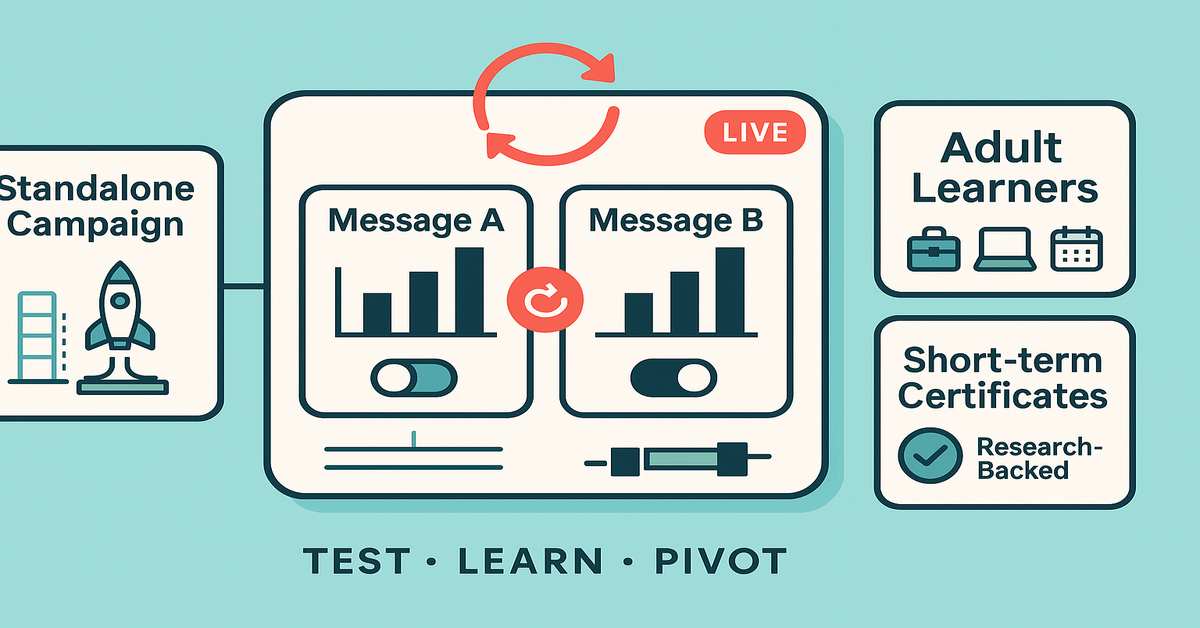
A dedicated, standalone campaign enabled rapid testing and real-time optimization for adult learner outreach. The team used live performance data to pivot messaging and ad delivery on the fly. Relevance and efficiency improved.
Initial efforts focused on short-term certificates, aligning with feasibility study insights into adult learners’ needs. The approach prioritized speed, data, and flexibility over rigid plans. This allowed quick setup, continuous learning, and better audience fit.
Read the article here (Author: Stamats Insights)
Top Takeaways
- Create a standalone campaign to enable fast setup, rapid testing, and agile adjustments without legacy constraints.
- Continuously use real-time data to pivot messaging, creative, targeting, and ad delivery for adult learner segments.
- Lead with offerings validated by research, such as short-term certificates, to match adult learners’ immediate goals and constraints.
Standalone campaign enables rapid testing and real time pivots. Lead with short term certificates for adult learners. #HigherEd #EdMarketing

AI Visibility Check for Schools
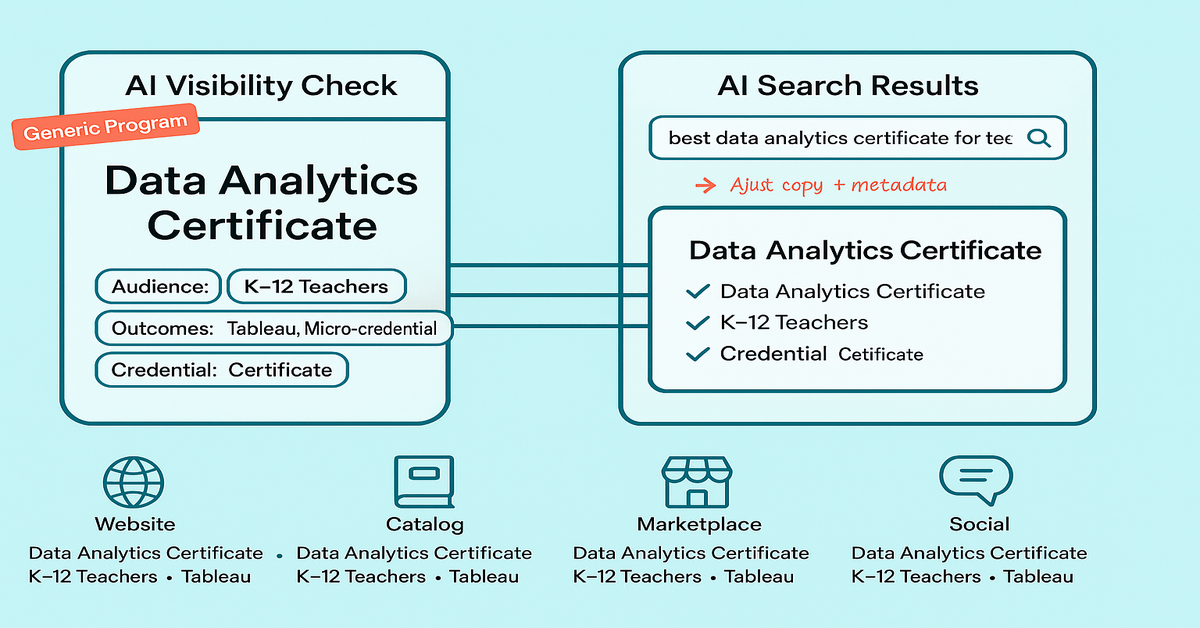
The article urges schools to run an AI visibility check so generative search and recommendation systems can understand and suggest their programs. It emphasizes replacing generic labels with specific, audience-defined descriptions and clearly stated outcomes to improve machine understanding.
Consistent language across websites, catalogs, third-party listings, and social channels strengthens the semantic signals AI uses. It outlines a simple audit. Verify specificity, define who each program is for, name the outcomes and credentials, and ensure the same terms appear everywhere. Do this so programs surface in relevant AI answers and comparisons.
Read the article here (Author: Annice Deweese)
Top Takeaways
- Be explicit about program names, target audiences, and outcomes so AI tools can classify and recommend your offerings accurately.
- Use consistent terminology across your site, catalogs, marketplaces, and social profiles to avoid confusing AI with mixed signals.
- Conduct an AI visibility check by testing common queries in leading AI tools. Then adjust copy and metadata to close discoverability gaps.
Make programs AI visible. Use clear names, audiences, outcomes, align terms across test queries and tune copy and metadata. #AI #HigherEd
Meet Families Where AI Lives
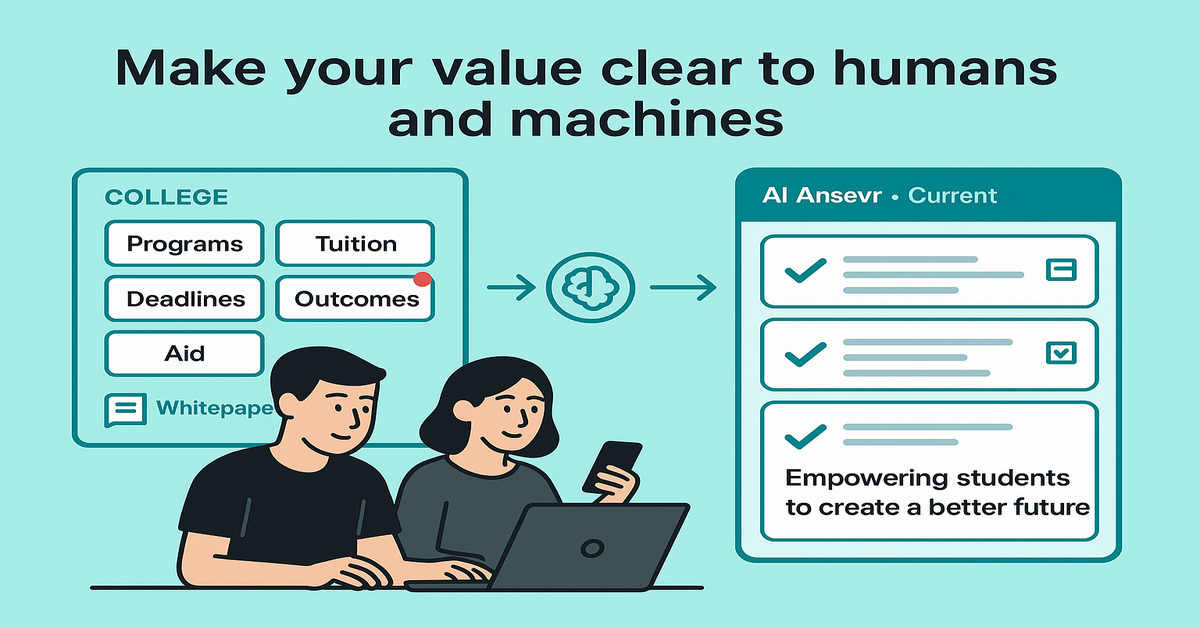
AI is now a routine part of how students and parents research schools. They use LLMs for homework help and to explore higher-education options. The piece urges institutions to adapt by publishing AI-readable answers to their most-asked questions. Your value should be clear in AI-driven searches.
A new whitepaper explains how to structure and surface information that both humans and machines can easily understand.
Read the article here (Author: Annice Deweese)
Top Takeaways
- Students and parents already use LLMs to evaluate options. Institutions must provide structured, AI-readable answers to common questions.
- Make your value proposition legible to both machines and humans to improve discovery, accuracy, and guidance across AI tools.
- Treat AI as a primary channel and keep FAQs and key data updated so LLMs surface current, reliable information about your institution.
Students and parents already ask AI about schools. Make FAQs AI readable so LLMs show your value with current facts. #HigherEd #AI #EdTech
Start Your Ambassador Program Before Fall
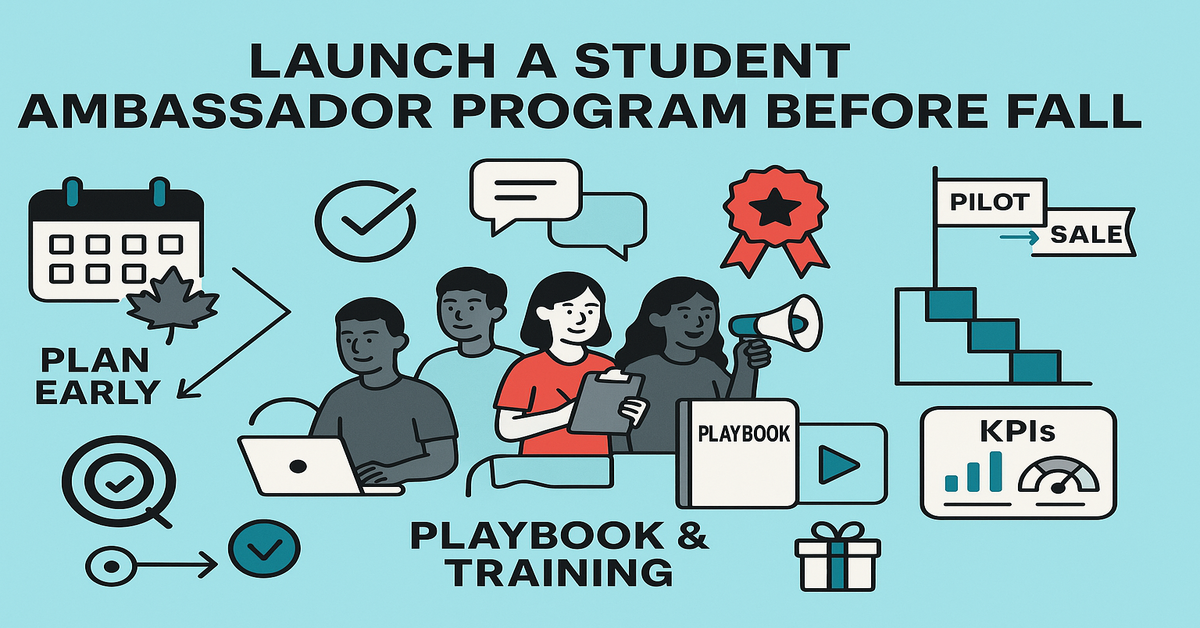
The article argues that the best time to build a student or brand ambassador program is ahead of the busy fall season. Set clear objectives, define the ideal ambassador profile and behaviors, and build the infrastructure, KPIs, tracking, and onboarding. This lets you recruit, train, and launch smoothly.
Create training materials and a playbook so ambassadors know exactly what to do. Establish steady communication through updates, channels, and check-ins. Use recognition and incentives to maintain engagement. Finally, roll out in stages and test before scaling to avoid high-stakes misfires when demand peaks.
Read the article here (Author: unibuddy.com)
Top Takeaways
- Start before fall by locking in goals, roles, infrastructure, and onboarding. Launch with a ready pipeline instead of scrambling at the last minute.
- Provide a clear playbook, training materials, and dedicated communication channels. Keep ambassadors motivated with recognition and meaningful incentives.
- Roll out in stages, track KPIs, and test and refine before full scale to safeguard quality during peak periods.
Start before fall Set goals roles KPIs and onboarding. Launch with a clear playbook plus staged test and scale. #BrandAmbassadors #HigherEd
Student First Strategy For Higher Education
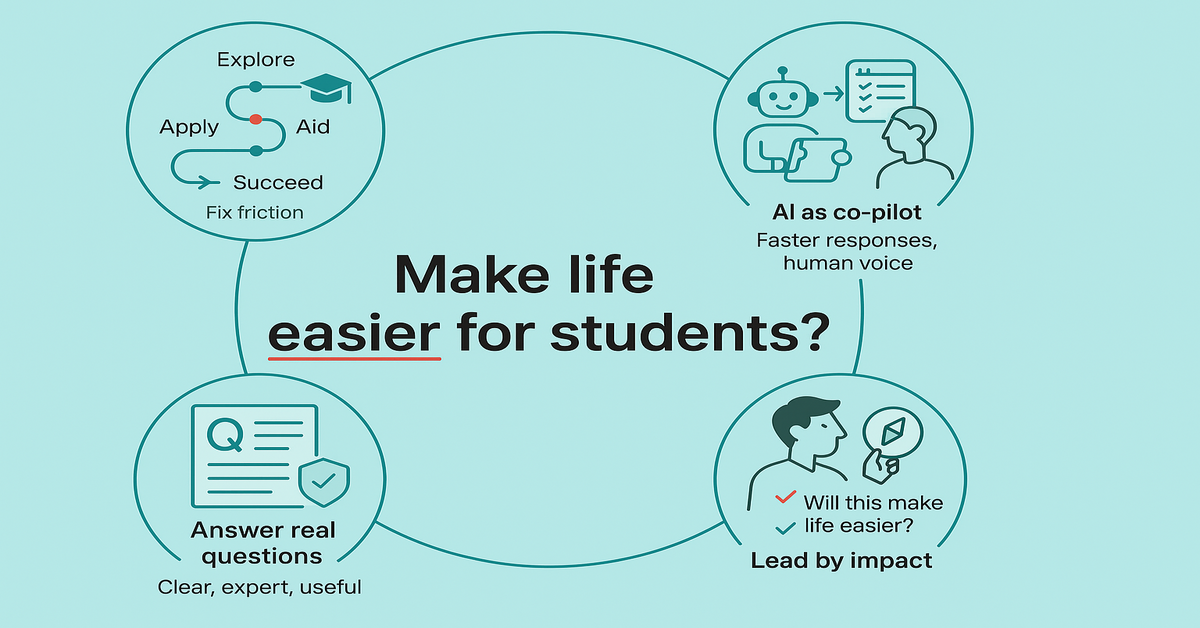
The Engage Summit presents four priorities for colleges. Design the full student experience beyond the enrollment funnel. Use AI to create capacity and faster responses while preserving authenticity. Adapt to shifting discoverability by producing clear, expert content that answers student questions. Ensure leadership choices directly improve student lives.
Institutions should audit journeys for hesitation and drop-off points. Deploy AI as a supportive tool for staff. Publish decision-helping resources instead of writing mainly for search engines. Vet initiatives with a simple test. Will this make life easier for students? Together these moves align operations with what students actually need and feel.
Read the article here (Author: Chris Rapozo)
Top Takeaways
- Map and redesign the end to end student journey. Find where students hesitate or drop off, and fix those friction points, not just the conversion steps.
- Use AI to extend team capacity and speed responsiveness while keeping human connection. Automate tasks, not relationships.
- Publish clear, authoritative content that answers real questions. Have leaders prioritize initiatives that measurably make students’ lives easier.
4 priorities to boost student success Map journeys use AI for faster replies publish clear answers lead with student needs #HigherEd #AI
Own Your AI Narrative
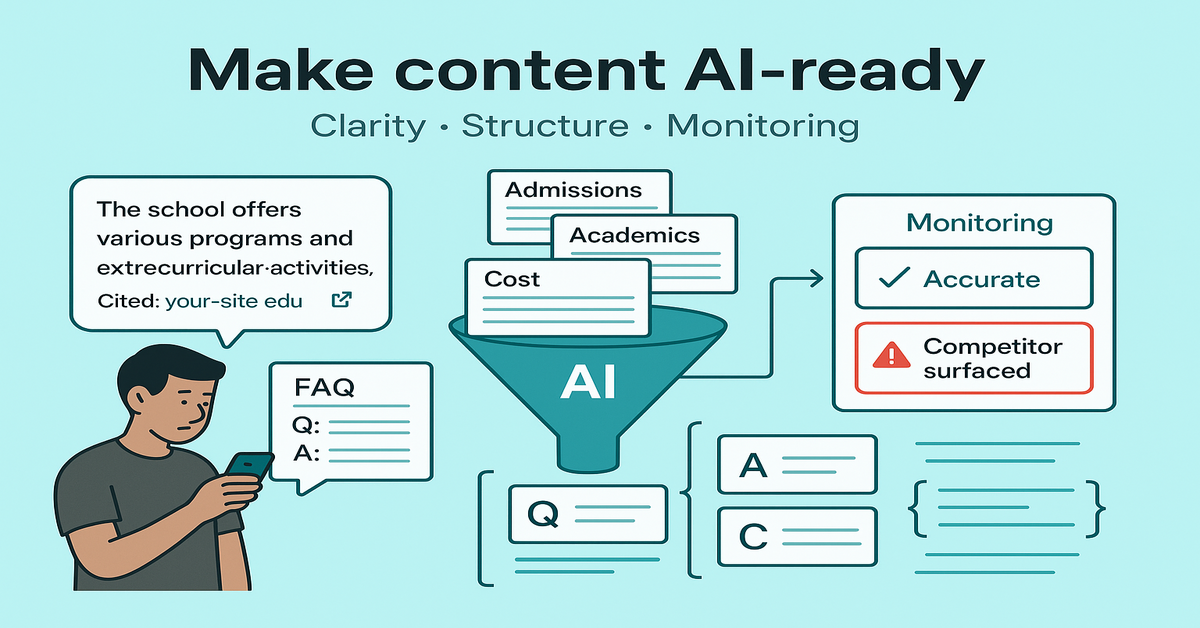
AI now shapes early brand perception as students use it to discover and compare schools. If your site is unclear or outdated, AI may generate incomplete or misleading summaries. To be accurately represented, institutions need current, well-structured, plain-language content on admissions, academics, cost, and student life.
Use clear page titles and headings, FAQ-style answers, structured program pages, schema markup, and consistent terminology across related pages. Monitor whether AI cites your site and when competitors are surfaced instead. Differentiation increasingly hinges on how AI interprets your information. Make your story easy for both people and systems to find, understand, and repeat.
Read the article here (Author: @EAB)
Top Takeaways
- Treat AI as a primary discovery channel by ensuring enrollment-critical content is current, clear, and structured to prevent misinterpretation.
- Adopt technical and content best practices. Use clear titles, plain-language headings, FAQ formats, structured program pages, schema markup, and consistent terminology.
- Monitor AI citations of your institution and note when competitors are elevated. Iterate content to strengthen authority and accuracy in AI-driven results.
AI shapes impressions Keep admissions cost and programs current Use clear FAQs and schema Track if AI cites you or rivals #HigherEd #AI
Conclusion
Winning the next recruitment cycle means showing up where decisions begin and removing friction where they stall. Run an AI visibility check, tighten your program language, and structure pages so machines and families reach the same, accurate story. Stand up your ambassador playbook now, and pilot an agile adult-learner campaign that iterates in real time.
Finally, audit one high-impact student journey and remove two blockers this month. Pick one of these moves today and ship it. Momentum compounds.