This week’s enrollment conversation boils down to a paradox. Win with AI, and win with humans. As discovery shifts to AI-generated answers, the institutions that grow will be the ones engineering trustworthy signals that machines can read and people can believe. That means canonical program pages, structured data, and downloadable proof of outcomes and costs, plus content that plainly states why your program wins. The bigger theme is simple. AI may open the door, but authenticity invites students in.
Clicks and impressions will not fill seats. Qualified demand, visits, applications, and conversion will. The playbook pushes teams to tie AI SEO and channel spend directly to enrollment outcomes. Then cap reliance on any one source at 50 to 60%. Monthly reviews of mix and messaging keep momentum aligned to intent, not vanity. It is a disciplined, outcome-first mindset fit for an AI-first market.
At the same time, students are unmistakably human in how they choose. They respond to relevant, program-specific stories, faculty outreach, and messages that mirror their goals and circumstances. Turning program pages into mobile-first billboards with three clear differentiators, then triggering timely nudges from real people based on behavior, bridges trust to action. Tie it all to career readiness and lifelong mobility, and marketing stops selling and starts guiding. Here are this week’s key takeaways.
Key Takeaways
- Treat AI as the new front door by publishing machine readable, canonical program pages with structured data, FAQs, and downloadable, verifiable outcomes and cost datasets to earn citations in AI answers.
- Shift success metrics from traffic to qualified demand, visits, applications, and conversion, tying AI SEO and channels to seat yield. Review your mix monthly and cap any single source at 50 to 60% to reduce risk.
- Turn program pages into mobile-first billboards with three clear differentiators and clear CTAs. Use behavioral signals from LMS and registration to trigger timely nudges and human outreach.
- Personalize with authenticity by sending program-specific stories and voices that mirror each student’s goals and context. Relevance builds trust, belonging, and commitment faster than volume.
- Align everything to career readiness and lifelong mobility, not marketing polish. Establish AI guardrails and require citations to maintain credibility across channels.
Controversial Ideas
Controversial Ideas:
- Traffic is a vanity metric. If it does not move applications and conversion, cut it from dashboards and bonuses. Enrollment teams should be comped on seat yield, not sessions.
- Generic nurture sequences do more harm than good. Send fewer, highly relevant messages instead of blanket campaigns. If content cannot be program specific, do not send it.
- Publish transparent outcomes and cost datasets even if the numbers are not perfect. Openness earns AI citations and student trust faster than branding. Hiding data is now a competitive disadvantage.
- Cap dependence on any one lead source at 50% even if it is overperforming today. Over reliance is a strategic risk in an AI reshaped market. Diversification beats marginal optimization.
AI First Enrollment Playbook
This playbook shows how higher ed can grow enrollment by optimizing for an AI-first discovery landscape while keeping humans at the center.
Engineer signals that both search engines and AI consume. Use structured, machine readable, canonical pages mapped to common questions, with downloadable, verifiable data on programs, outcomes, and costs.
Measure success by qualified demand, applications, visits, and conversion, not traffic. Tie AI SEO and channels to enrollment outcomes.
Diversify lead generation. Cap any single source at 50 to 60%, prioritizing intent verified channels and reviewing mix and messaging monthly.
Turn program pages into mobile-first billboards with clear differentiators. Then use behavioral signals from LMS and registration to trigger timely nudges and human outreach.
Establish guardrails for AI, require citations, and align teams around career outcomes and lifelong mobility.
Read the article here (Author: Will)
Top Takeaways
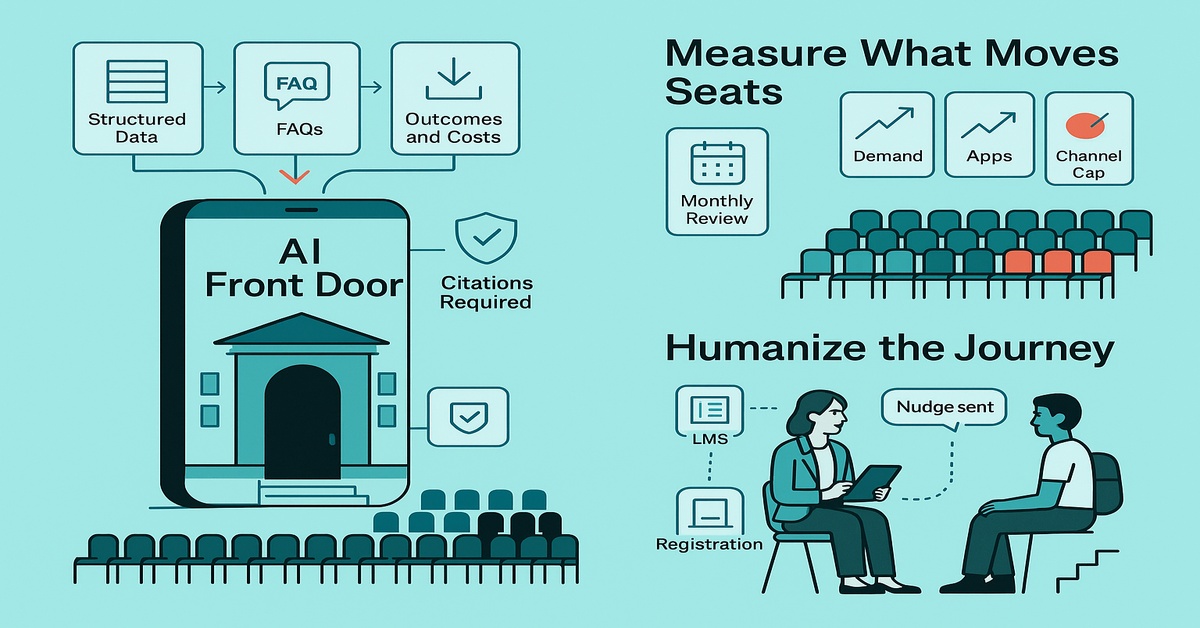
- Treat AI as the new front door: make content machine readable and canonical, optimize structured data and FAQs, and publish downloadable outcome and cost datasets to earn citations in AI answers.
- Measure what moves seats: track qualified demand, visits, applications, and conversion, tie SEO and channels to enrollment outcomes, and review mix monthly while capping any single source at 50 to 60%.
- Humanize the journey: turn program pages into mobile-first billboards with three clear differentiators, then use behavioral signals from LMS and registration to trigger timely nudges and personalized outreach built on transparent data.
AI is the new front door. Make pages machine readable with outcome and cost data, track conversion cap channel at 50 to 60. #HigherEd #AISEO

Authentic Personalization Drives Enrollment
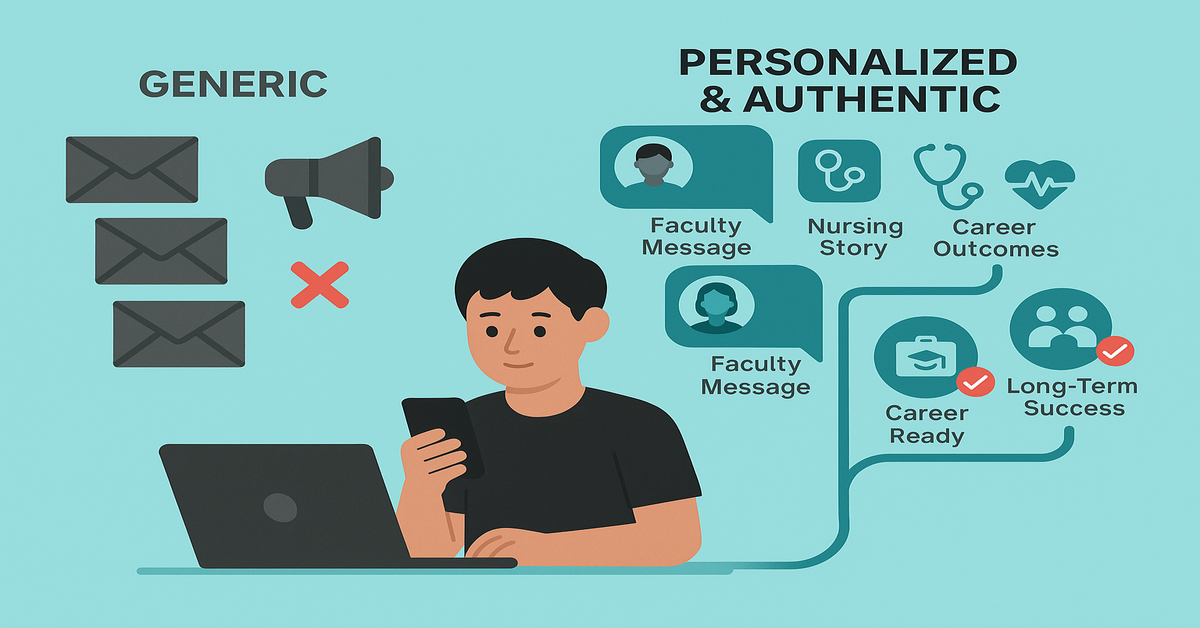
Students respond to recruitment that feels personal, genuine, and aligned to their goals. The article argues for balancing personalization with authentic, student centered engagement. Messages should reflect each student’s interests, needs, and circumstances to signal attention and build confidence. Inauthentic, generic outreach quickly turns students off. Relevant communication fosters trust, belonging, and commitment. Institutions that connect recruitment to career readiness and long term success create meaning beyond marketing polish. A simple example. A nursing prospect is more likely to engage with nursing specific stories and faculty outreach than with broad business program emails.
Read the article here (Author: evolllution.com)
Top Takeaways
- Personalize with authenticity: tailor messages to individual goals, needs, and circumstances to build trust and increase enrollment likelihood.
- Make relevance obvious: use program-specific content and voices (faculty, students, alumni) instead of generic messaging to show you are paying attention.
- Link value to outcomes: connect recruitment to career readiness, belonging, and long-term success so students see clear value in choosing your institution.
Personal and real outreach wins. Use program specific stories and voices and connect value to careers and belonging #HigherEd #Enrollment
Conclusion
AI is redrawing the map of discovery, but students still choose with their plans, priorities, and people they trust. Marry signal engineering with human centered authenticity, measure what moves seats, and keep your mix agile. This week, audit three program pages, ship structured data and a downloadable outcomes dataset, and rewrite one nurture stream to be program specific. Move first, measure hard, and earn both the citation and the commitment.