This week, enrollment marketing grew up. The common thread is simple and urgent. Engineer the signals that humans and AI consume, then measure what actually moves seats. Proof beats promise, and precision beats volume. If your strategy still orbits clicks or linear funnels, you are already behind.
Across the roundup, practitioners push a shift from guesswork to governed systems. You will find tactical playbooks for closing the loop on offline conversions, auditing AI search visibility, and designing program pages that hook teens in seconds. The message is consistent. Structure your content for AI and mobile, pair hard outcomes with real stories, and connect it all to CRM milestones. When strategy meets instrumentation, optimization gets real.
We also zoom out to the architecture level. Signal Engineering reframes brand and performance into one system, seen, trusted, chosen, so discovery connects cleanly to decisions. Meanwhile, government‑grade guidance on AI agent security offers a timely blueprint for any institution automating tasks with agents. Taken together, these pieces point to a future where governance, data integrity, and outcome‑based KPIs define growth. Let’s dive into the takeaways.
Key Takeaways
- Lead with proof: publish program‑level outcomes and transparent costs, and pair them with authentic student and alumni stories to turn credibility into conversion.
- Engineer your signal stack across seen, trusted, and chosen to unify brand and performance, guiding prospects from discovery to decision without relying on linear journeys.
- Design for AI and humans. Structure content with schema and consistent facts, and make program pages mobile‑first and billboard‑clear with two to three standout differentiators.
- Measure the AI layer. Track inclusion, citations, answer accuracy, share of voice, and AI referrals alongside SEO, engagement, and CRM‑linked enrollment outcomes.
- Close the loop with offline conversion tracking. Standardize CRM data, import milestones, validate match quality, and gradually bid toward deeper‑funnel events.
- Elevate governance as you automate. Treat AI agents as identities with least‑privilege access, continuous monitoring, and integration into existing SecOps.
Controversial Ideas
- Program pages should read like billboards, not brochures. Move most details deeper and keep only the sharpest differentiators up front.
- Ditch linear journey mapping and last‑click fixation. Optimize the signal layers, seen, trusted, chosen, and fund what improves enrollment milestones.
- Shift spend from protective branded search to winning citations in AI answers where undecided prospects form shortlists.
- Pause non‑governed AI agent rollouts. Treat agents like staff who need role definitions, audits, and incident response before touching live systems.
School Offline Conversion Playbook
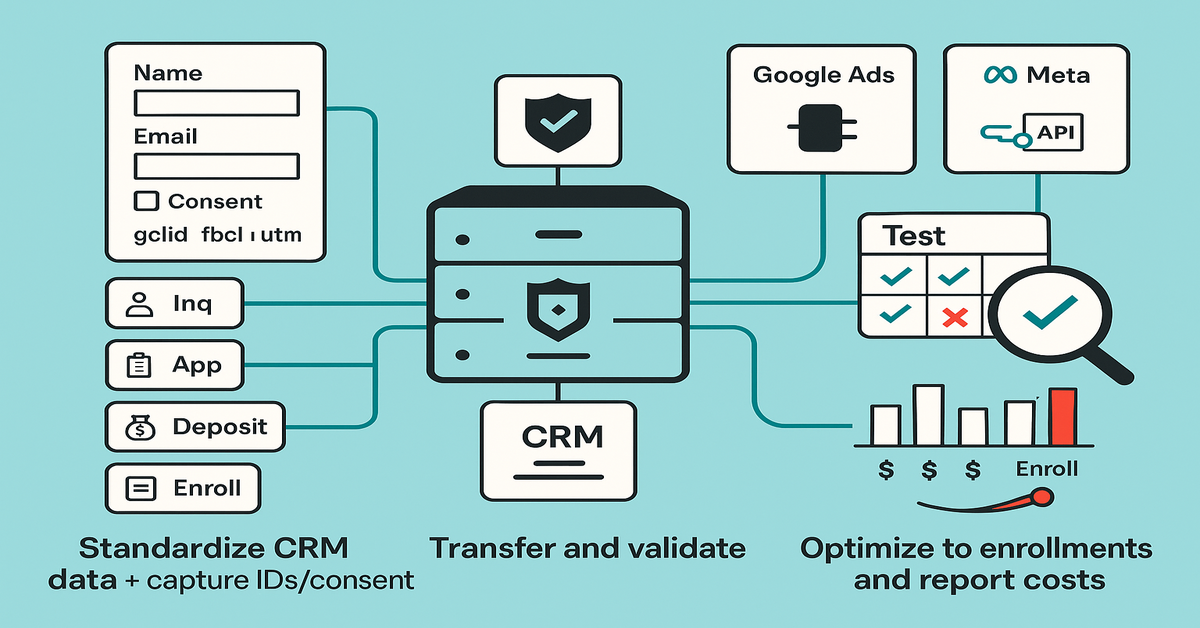
Offline conversion tracking lets schools send admissions milestones from their CRM, like qualified inquiries, applications, deposits, and enrollments, back to Google Ads or Meta. Campaigns can then optimize for real outcomes.
The process is clear. Define conversion events. Clean and standardize CRM fields. Ensure forms capture ad IDs, UTMs, and consent. Map CRM stages to platform conversions. Select a transfer method, for example Google Data Manager, API, integrations, server‑side, connectors, or uploads. Because Google’s import options evolve, confirm current setup paths.
Test with small datasets. Review diagnostics for match quality and errors. Shift bidding gradually toward deeper‑funnel events as volume grows.
Finally, report on cost per milestone and maintain the setup and compliance.
Read the article here (Author: Diana Salazar)
Top Takeaways
- Standardize CRM data. Capture ad identifiers and consent on forms, and map each admissions milestone to a corresponding Google Ads or Meta conversion.
- Pick a reliable transfer method. Validate with small tests, and monitor diagnostics to improve match rates and fix duplicates or missing IDs.
- Ramp bidding slowly toward deep‑funnel events. Track cost per qualified inquiry, applicant, deposit, and enrollment, and maintain integrations and compliance.
Send CRM milestones to Google Ads and Meta from inquiry to enrollment. Capture ad IDs and consent test small then scale. #HigherEd #AdTech

Lead With Outcomes Grow Enrollment
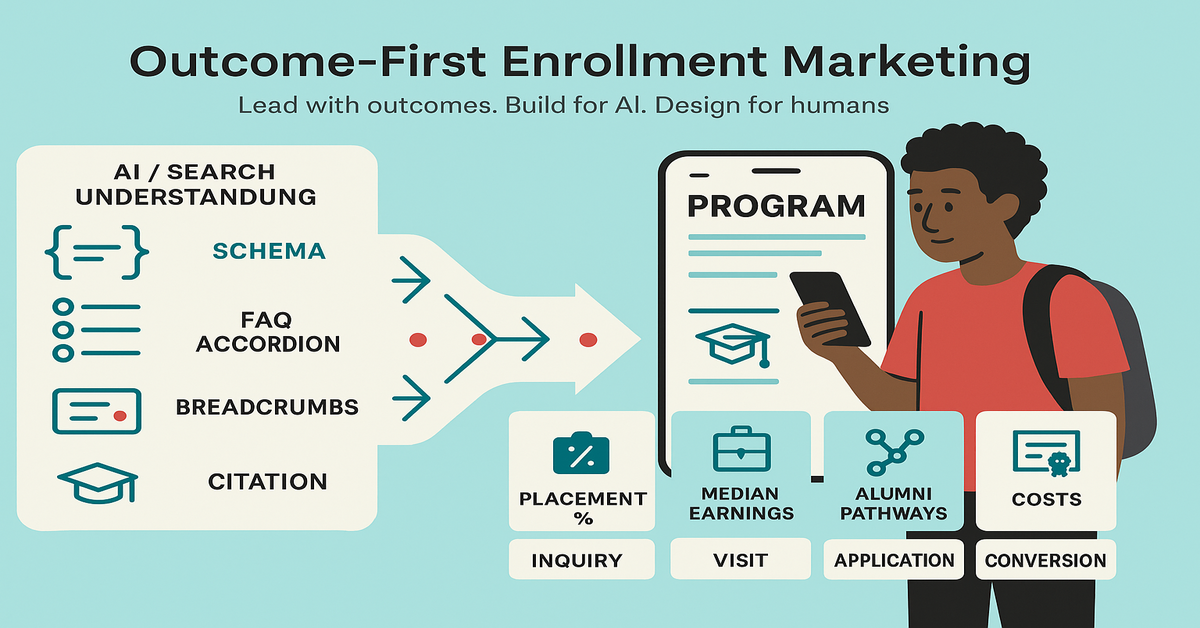
Outcome‑first enrollment marketing prioritizes clear proof of value and discoverability. Institutions should publish trustworthy program‑level outcomes, including placement rates, earnings, and alumni pathways, alongside transparent costs and credentials.
Content must be structured for AI and search with schema, consistent facts, FAQ‑style answers, and clean page architecture so engines can understand and cite it. Program pages should be mobile‑first and scannable, surfacing top differentiators early to help prospects assess fit quickly.
Pair hard data with authentic student, alumni, and peer‑led stories to make value credible and relatable. Shift success metrics from clicks to enrollment outcomes such as inquiries, visits, applications, and conversions. The strategy serves two audiences at once, AI systems and students seeking clear value and human voices.
Read the article here (Author: Will)
Top Takeaways
- Lead with proof by publishing program‑level placement rates, earnings, alumni pathways, and transparent costs and credentials in formats that are easy to find and compare.
- Build for AI discovery using schema, consistent facts, FAQ‑style answers, and clean page structure so search and AI can understand, rank, and cite your content.
- Design for humans and measure what matters. Optimize program pages for mobile with scannable copy and early differentiators. Pair data with authentic stories, and track inquiries, visits, applications, and conversions, not clicks.
Lead with outcomes placement rates earnings costs alumni paths. Build AI pages. Track inquiries visits conversions #HigherEd #Enrollment
Signal Engineering for Enrollment
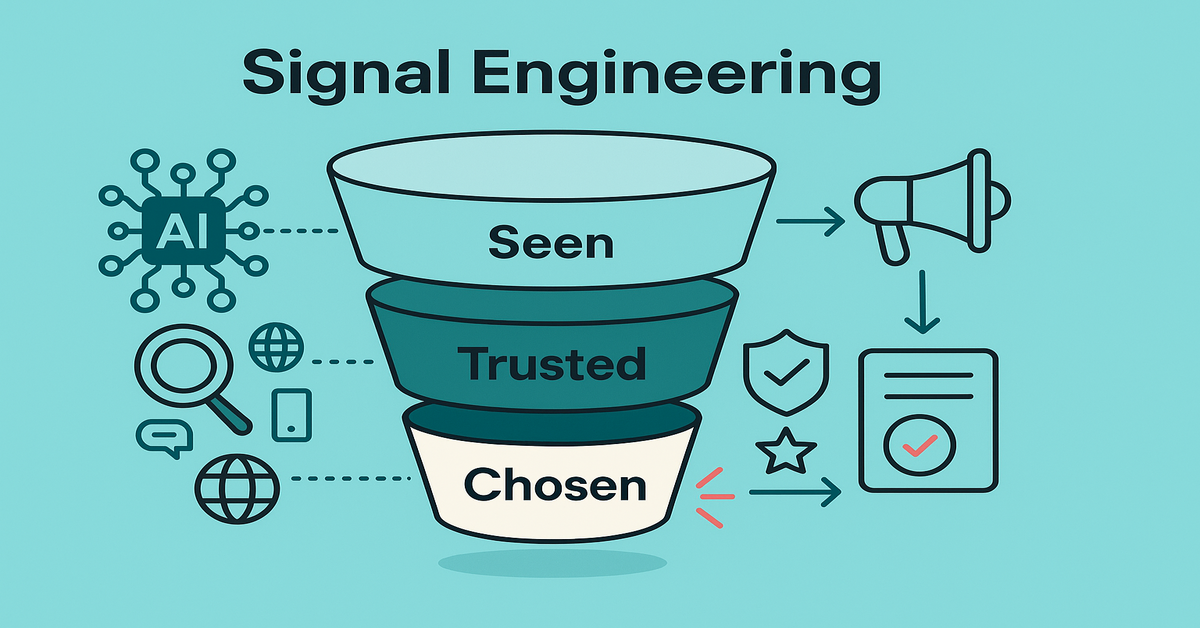
Signal Engineering is an EducationDynamics framework that intentionally architects the institutional signals modern learners and AI consume, unifying brand and performance marketing. Organized around three outcomes, seen (visibility), trusted (credibility), and chosen (conversion), it aligns efforts so prospects can find you, believe you, and enroll.
The article urges universities to stop optimizing for legacy linear paths. Instead, manage how signals are interpreted across channels and AI systems. By treating chosen as the conversion layer where brand proof meets performance intent, institutions can connect discovery to enrollment decisions. This reflects shifting student behavior and AI‑mediated discovery.
Read the article here (Author: Sarah Russell)
Top Takeaways
- Unify brand and performance into one cross‑channel signal system mapped to seen, trusted, and chosen. Measure optimization at each layer.
- Stop optimizing for a student journey that no longer exists. Architect signals so humans and AI can reliably find, interpret, and trust your institution across channels.
- Treat chosen as the conversion layer where brand proof and performance intent converge. Design touchpoints that move prospects from visibility to trust to enrollment.
Unify brand and performance via Signal Engineering across 3 outcomes seen trusted chosen. Design for AI to drive enrollment. #HigherEd #AI
Secure AI Agents In Government
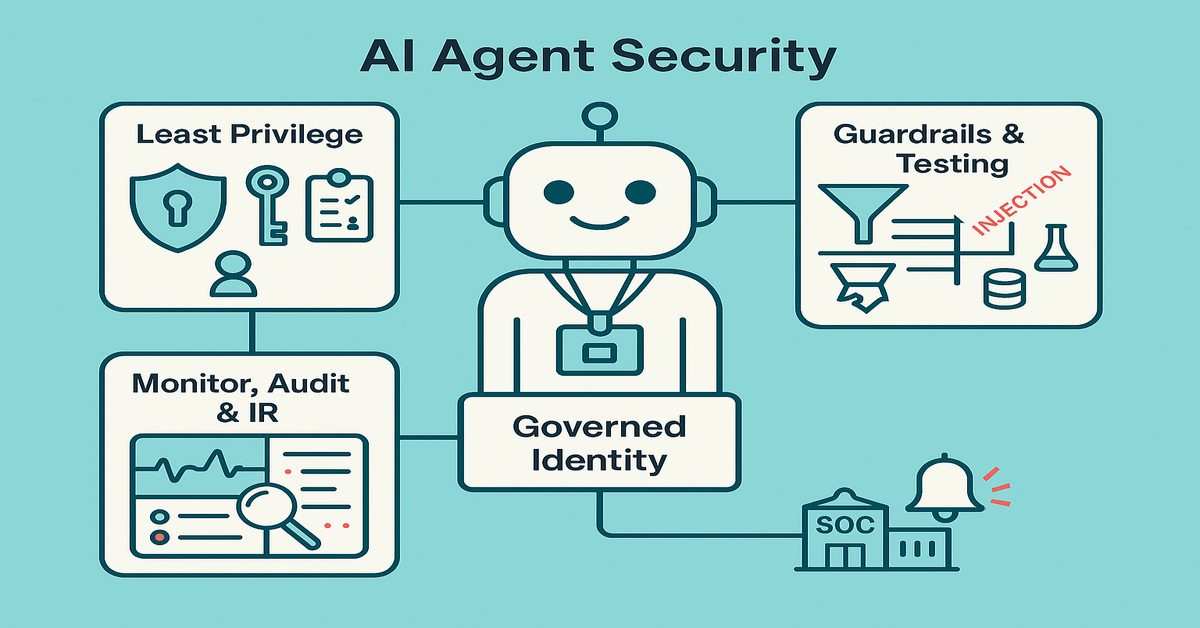
Government AI agent security hinges on treating every agent as a governed identity with tightly scoped permissions, continuous monitoring, and clear accountability. Agencies should inventory and register all agents, assign owners, and enforce least‑privilege access to tools and data with strong authentication and runtime guardrails to curb prompt injection, data leakage, and unauthorized actions.
Microsoft guidance and security research highlight adversarial testing before deployment, filtering inputs and outputs, and integrating agents into existing security operations and incident response. Standards bodies and public‑sector sources warn urgency. Agents are already used in critical sectors while many agencies lack confidence in securing them.
Read the article here (Author: Rutrell Yasin)
Top Takeaways
- Treat each AI agent as a governed identity with least‑privilege permissions, strict authentication, continuous monitoring, and full auditability of actions.
- Establish operational controls. Maintain an agent inventory and registry with clear ownership, apply runtime guardrails, filter inputs and outputs, and perform adversarial testing before deployment.
- Integrate agents into SecOps and incident response now, as critical‑sector use is growing while many agencies remain unsure how to secure them. Reduce risk of injection, leakage, and unauthorized actions.
Treat every AI agent as identity with least privilege, auth, monitoring and guardrails. Red team before deploy now. #AIsecurity #SecOps
Hook Teens On College Sites
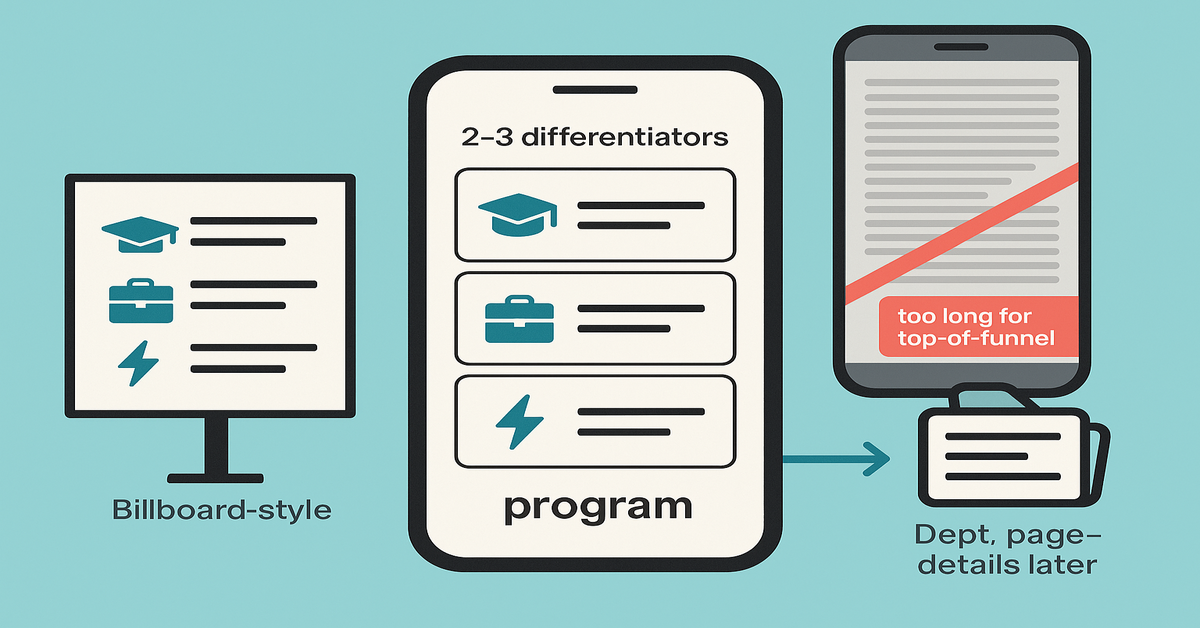
Teens skim college websites quickly. Program pages must capture attention instantly. Lead with your top differentiators (think two or three clear, specific benefits) to match what students are searching for.
Use program pages to hook interest like a fast, bold billboard. Reserve deeper details for department pages later in the journey. Design and test for mobile first. If a paragraph fills a phone screen, it is effectively invisible at the top of the funnel.
Read the article here (Author: Mariah Tang, Chief Content Marketing Officer)
Top Takeaways
- Lead with two or three differentiators and place them prominently to match student intent.
- Use billboard‑style content on program pages and move detailed information to department pages.
- Design for mobile. If a paragraph fills one phone screen, it is too long for top‑of‑funnel and should be shortened or relocated.
Teens skim. Lead with two or three clear benefits. Make program pages billboard simple. One screen paragraphs get ignored. #HigherEd #UX
School AI Search Visibility Playbook
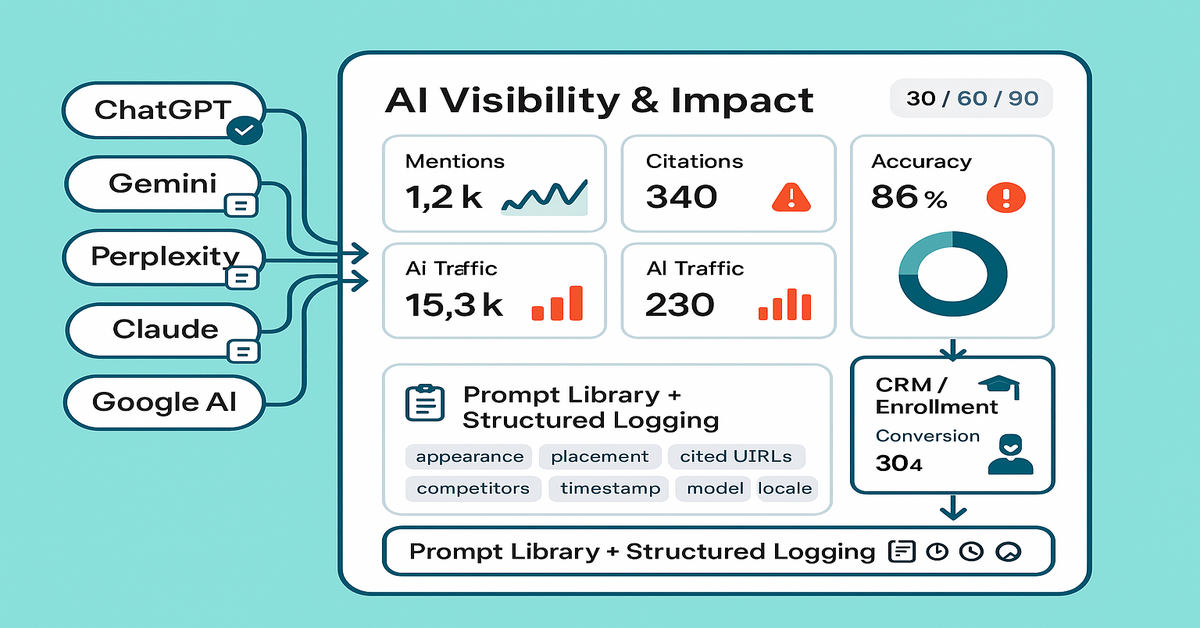
Schools can measure AI search visibility by tracking how often they appear and are cited in AI‑generated answers across ChatGPT, Gemini, Perplexity, Claude, and Google AI Overviews. Then assess whether that exposure drives engagement and enrollment.
Core metrics include AI visibility, citation frequency, answer accuracy, share of voice, sentiment, AI referral traffic, and downstream conversions. Institutions should test priority student queries across tools, maintain a prompt library, and log structured results, appearance, placement, cited URLs, competitors, timestamp, model, and locale.
Pair AI metrics with Google Search Console and GA4 to monitor impressions, clicks, engagement, and assisted conversions. Connect CRM and enrollment data. Track at the program level, benchmark over 30, 60, and 90 days, and compare pre and post content updates to understand impact.
Read the article here (Author: Diana Salazar)
Top Takeaways
- Combine AI‑specific KPIs with SEO and enrollment metrics to measure both visibility and downstream outcomes.
- Operationalize testing with a prompt library and structured logging across AI tools. Track inclusion, placement, citations, competitors, and program‑level differences over time.
- Prioritize a simple dashboard. Monitor AI mentions and citations, answer accuracy, share of voice, AI referral traffic, engagement and assisted conversions, and program performance benchmarked at 30, 60, and 90 days.
Track AI visibility, citations, accuracy and referrals to grow enrollment. Benchmark 30 60 90 with GA4 and CRM. #HigherEd #SEO #AI
Conclusion
Enrollment growth now hinges on orchestrating signals, proving value fast, and measuring what matters from discovery to deposit. The institutions that win will build AI‑ready content, mobile‑first experiences, governed automation, and end‑to‑end attribution tied to CRM milestones.
Start by auditing program pages, standing up an AI visibility dashboard, importing offline conversions, and setting agent governance. Then iterate with small tests and compound the gains. Your next application spike will not be an accident. It will be engineered.