Search is being rebuilt in real time, and the shoreline is moving. AI Overviews, conversational queries, and information agents are squeezing the space where links once lived. They are also raising the stakes for who earns that prime, top-of-page exposure. In this new landscape, churning out lookalike pages is not just ineffective. It is invisible. The winners will pair human expertise with machine-readable proof of credibility.
The biggest theme this week is clear: escape commodity content or get priced out of attention. Google’s guidance is not anti-AI. It is anti-interchangeable. Use AI to accelerate research and structure, then layer in real experience, proprietary data, and decisive answers that stand up to scrutiny. Credibility, clarity, and contribution now determine whether your work gets surfaced, cited, and trusted.
We also saw how paid acquisition pressures are forcing smarter choices, not bigger budgets. Rising costs demand precise positioning, stronger cross-channel presence, and frictionless conversion paths from inquiry to application. Meanwhile, AEO looks less like a hack and more like a return to research fundamentals: authoritative sources, coherent citations, thorough coverage, and structured hierarchy. Marketing and academic rigor are finally playing the same game.
Taken together, these shifts redefine what it means to be discoverable. You need content that reads like a definitive answer to people and parses cleanly for machines, backed by unmistakable trust signals. You need visibility metrics that go beyond clicks, because so many answers now live on the results page. With that in mind, here are the week’s essential takeaways.
Key Takeaways
- Differentiate or disappear: use AI for speed and structure, then add human experience, proprietary data, and clear perspective to escape commodity content.
- Optimize for conversational, AI-mediated search by answering questions directly, using clean schema, and surfacing verifiable trust signals like accreditation, rankings, and authentic reviews.
- Treat AEO like a research paper: build from primary sources, maintain credible citation chains, cover topics comprehensively, and organize with a clear hierarchy.
- Compete for shrinking SERP real estate by prioritizing on-SERP usefulness and measuring visibility and share of results, not just traffic and clicks.
- Rising media costs reward strategy over spend: sharpen positioning, strengthen multi-channel presence, and streamline the inquiry-to-application path to convert interest efficiently.
Controversial Ideas
- Publishing more with AI can hurt you. Fewer, deeper, research-grade pages may outperform a high-volume content factory.
- Traffic is a vanity metric in an AI-first SERP. Presence in AI Overviews and authoritative citations should be the primary KPIs.
- Third-party validations like accreditation and rankings can outweigh brand storytelling when machines decide which answers to trust.
- Cut paid search before fixing conversion paths. Every extra dollar is wasted if your inquiry-to-application flow leaks.
Escape Commodity Content
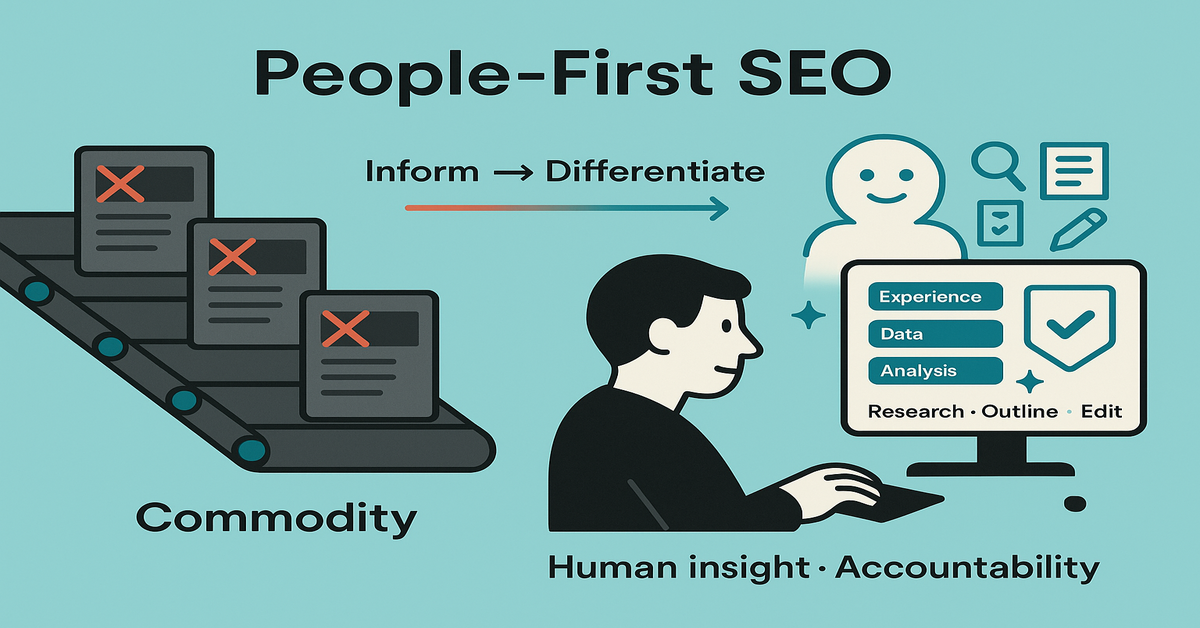
Google’s SEO AI guidance urges creators to move beyond mass-produced, interchangeable pages and prioritize people-first value. AI can accelerate research and drafting, but it does not generate originality on its own.
To earn lasting visibility, content must differentiate with real experience, clear analysis, proprietary data, distinct perspectives, or simply a better answer than what exists. The message is not anti-AI. It is anti-commodity.
Use AI to inform and refine, then add human insight and accountability to build trust and usefulness.
Read the article here (Author: Annice Deweese)
Top Takeaways
- Use AI for research, outlining, and edits, not as a shortcut to publish undifferentiated content at scale.
- Optimize for people-first quality signals by adding unique value, original experience, analysis, data, perspective, or a superior answer to the query.
- Sustainable SEO comes from differentiated, trustworthy work that stands apart from lookalike pages, not from volume or automation.
Sustainable SEO is not volume. Use AI for research add people first experience analysis data and better answers readers trust. #SEO #AI

SEO Becomes Beachfront Property
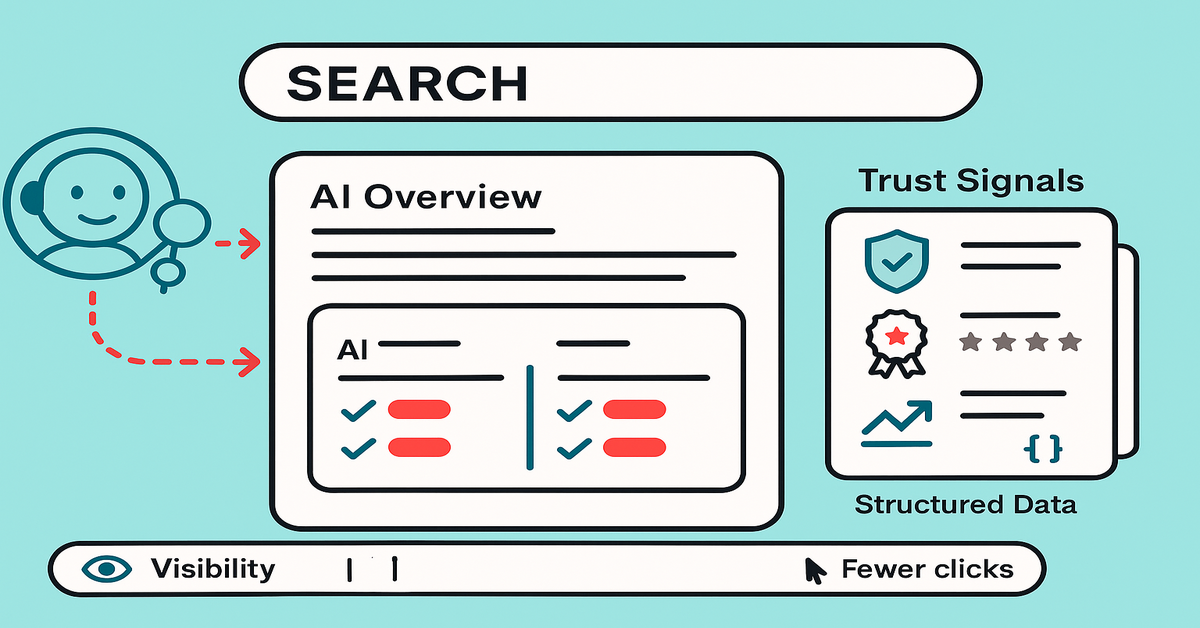
Google’s AI Overviews, conversational search, and agent-driven querying are transforming the SERP from a list of links into an interactive interface. Space at the top is shrinking while its value rises, making SEO more like premium beachfront property.
AI Overviews and a billion-user conversational mode now mediate many searches, and background information agents will soon do much of the searching for people. Generative UI increasingly answers, compares, and explains inside the results, which reduces clicks.
To win, brands must surface clear, verifiable trust signals such as accreditation, third-party rankings, authentic reviews, and outcomes, and embed clean structured data so machines can confidently select them. The strategy shift is clear, optimize for conversational intent and machine readers, claim high-visibility placements early, and measure presence as well as traffic.
Read the article here (Author: John Weaver)
Top Takeaways
- Treat search as conversational and AI-mediated. Create thorough, question-led content and add structured data so AI Overviews and agents can confidently use your answers.
- Make trust signals impossible to miss and easy for machines to parse. Surface accreditation, third-party rankings, authentic reviews, outcomes, and clean schema markup.
- Plan for fewer clicks as generative UI builds comparisons and tools inside results. Compete for top placements early and measure visibility and share of SERP, not just traffic.
Google AI Overviews now guides search as a billion users go conversational. Win with clean schema and bold trust signals. #SEO #AI #Search
Rising Search Costs Demand Smarter Strategy
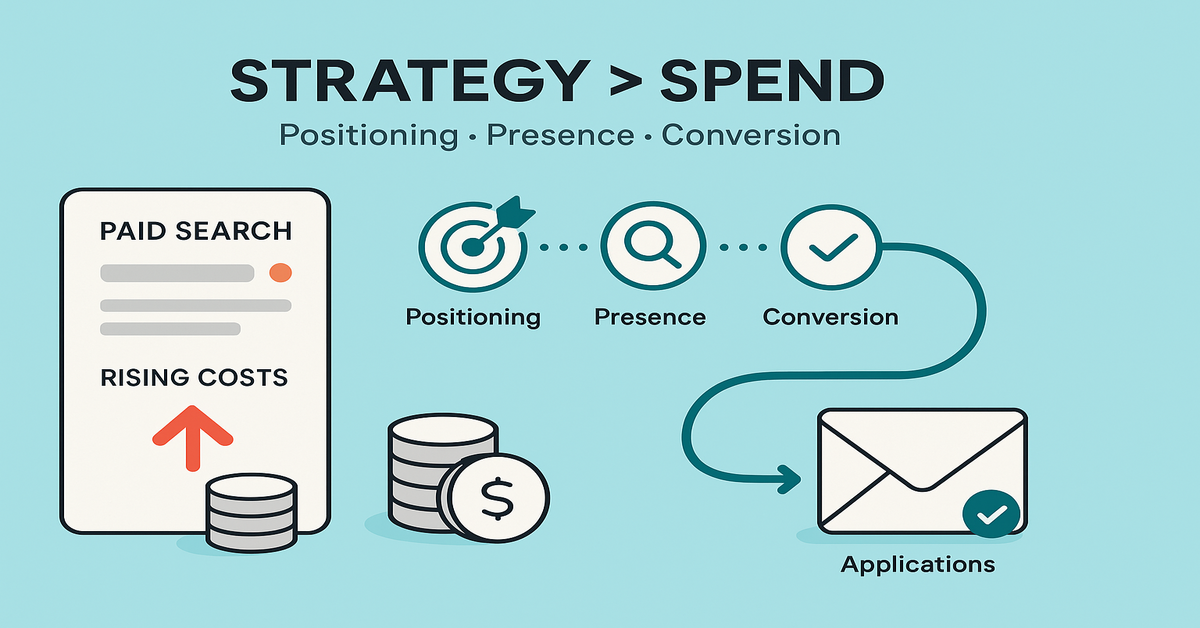
As paid search and digital advertising get more expensive, higher education marketers can no longer rely on budget increases to maintain results. The article argues for a strategic reset that prioritizes deliberate choices about where and how programs show up, what they say, and how interest is converted into enrollment.
Instead of chasing clicks, institutions should clarify positioning and messaging, strengthen visibility across channels, and optimize the path from inquiry to application. In a high-cost environment, disciplined strategy outperforms spend.
Read the article here (Author: Annice Deweese)
Top Takeaways
- Rising search and media costs are squeezing paid acquisition, so simply increasing spend delivers diminishing returns.
- Be intentional about visibility, messaging, and conversion to sustain growth.
- Align positioning, presence, and conversion paths to meet prospects where they are and turn interest into applications more efficiently.
Paid search costs rise and spend hits diminishing returns. Align positioning and conversion to turn interest into apps. #HigherEd #Marketing
Research Skills Power AEO
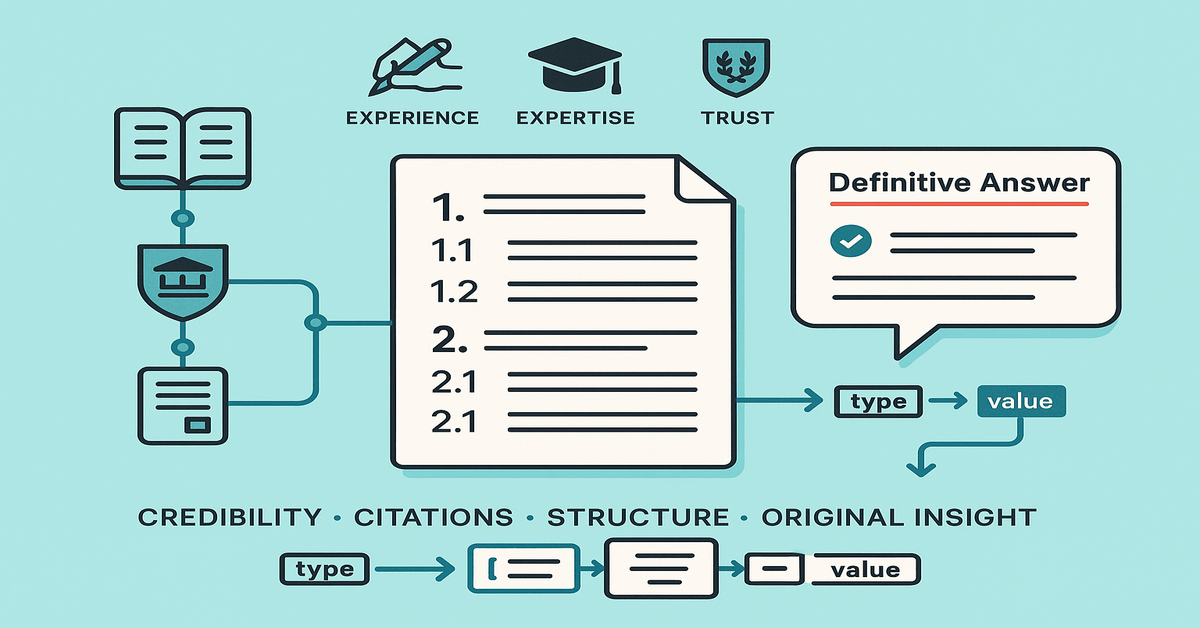
Jennifer Ravey argues that Answer Engine Optimization is a return to academic fundamentals, not a new game. The same rubric used to grade research papers, source credibility, citation chains, depth, clear structure, original contribution, and focused purpose, maps directly to what LLMs reward.
AEO favors E-E-A-T, being cited by reputable sources, thorough topical coverage, structured data and hierarchy, proprietary insights, and content that definitively answers questions. Viewing AEO through a research literacy lens makes it straightforward, build trustworthy, well-structured, deeply informed content that others cite. Marketing is finally aligning with what English instructors have long taught, credibility matters.
Read the article here (Author: Jennifer Ravey)
Top Takeaways
- Treat AEO like a research paper. Prioritize authoritative primary sources, coherent citation chains, and thorough, well-structured coverage to earn AI citations.
- Elevate E-E-A-T by contributing original research or proprietary insights and by becoming a source that credible publications reference.
- Write with purpose. Organize content to directly and definitively answer specific user questions using clear hierarchy and structured data.
Treat AEO like a research paper. Earn AI citations with trusted sources, hierarchy, structured data, and original insights #AEO #SEO #EEAT
Conclusion
The line between findable and forgettable now runs through credibility, structure, and differentiation. As AI reshapes how answers are assembled and delivered, the brands that win will look less like content mills and more like authoritative, well-cited sources with airtight value propositions.
Do not chase the algorithm. Align with research-grade quality, obvious trust signals, and frictionless conversion. Audit your top pages this week for unique contribution, schema, and proof of outcomes, and claim your share of the beachfront while it is still available.