The race to 2026 enrollment will be won by teams that blend algorithms with empathy. This week’s insights point to a single theme. Outcomes-first marketing powered by AI discoverability and brought to life with human-centered storytelling.
As prospects search beyond websites, institutions must be findable in AI answers and memorable in the moments that follow. The schools that translate intent into personalized experiences will turn attention into applications.
Practically, that means structuring content for answer engines, cementing authoritative facts, and making mobile program pages effortless to scan. It also means tracking the full journey with dashboards that spotlight inquiries, visits, application starts, and conversions, rather than vanity clicks. Behavior-based segmentation should guide spend and messaging, with automation accelerating, not replacing, timely human follow-up. Diversifying lead sources and testing channel mix against outcomes keeps pipelines resilient.
Finally, the narrative must shift from prestige to people. Audience-centered stories that reflect real needs, outcomes, and community impact beat glossy claims every time. Meeting learners where they are across digital platforms, and closing the loop with continuous feedback, builds trust at scale. Below are the week’s essential takeaways to help you turn this playbook into action.
Key Takeaways
- Start with outcomes and intent. Define enrollment goals, map signals, and align teams to metrics that matter across the funnel.
- Win discovery where searches now happen by optimizing for AI answer engines with structured data, canonical pages, and crisp authoritative facts.
- Design for mobile decisioning with scan-friendly program pages, clear differentiators, and simple paths to deeper info and action.
- Segment dynamically on behavior to personalize outreach, allocate budget precisely, and pair automation with timely, empathetic human follow-up.
- Shift messaging to audience-centered stories, invest in always-on digital engagement, and validate assumptions through continuous feedback.
Controversial Ideas
- Prestige is becoming a liability. In a filter-driven world, unproven claims get buried, while proof-of-outcomes wins attention.
- The homepage is no longer your front door. AI answers will introduce you, so canonical, structured content may beat brand campaigns.
- Clicks and impressions are distractions. If you are not instrumenting inquiries-to-enrollment, you are optimizing noise.
- Automation should reduce speed-to-human, not speed-to-robot. Over-automating early touchpoints can depress conversions and erode trust.
Win 2026 Enrollment with AI UX and Segmentation
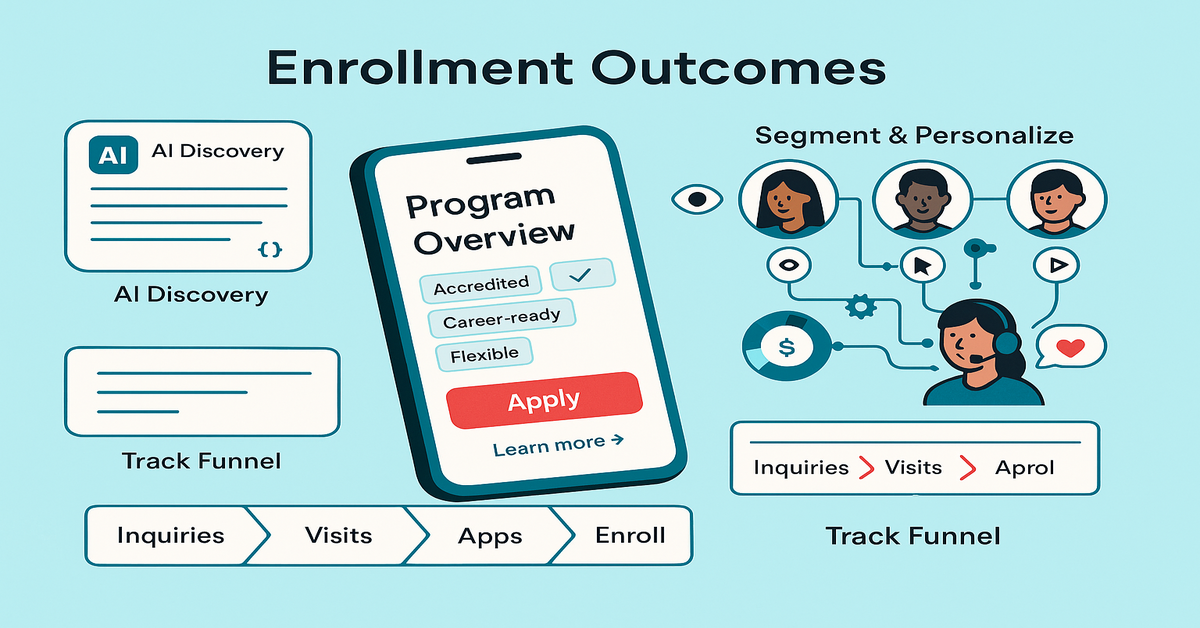
Enrollment growth will come from integrating AI discoverability, mobile-first UX, and behavior-based segmentation, all anchored to clear enrollment goals. Institutions should identify intent signals and use them to personalize content and outreach across the student journey. Optimize content for AI answer engines with structured data, authoritative facts, and canonical pages. Design program pages for quick mobile scanning with clear differentiators and paths to deeper information. Build dashboards and workflows that track inquiries, visits, application starts, and conversions, instead of clicks. Diversify lead sources, review channel mix against outcomes, and pair automation with timely human follow-up and empathetic messaging.
Read the article here (Author: Will)
Top Takeaways
- Start with outcomes. Define enrollment goals, map intent signals, and track inquiries, visits, application starts, and conversions with dashboards and workflows.
- Increase discovery by optimizing for AI answer engines using structured data, authoritative facts, and canonical pages. Convert on mobile with scan-friendly program pages, clear differentiators, and simple paths to deeper info.
- Segment dynamically based on behavior to personalize messaging and allocate budget precisely. Diversify lead sources, review channel mix against outcomes, and pair automation with timely human follow-up and empathy.
Grow enrollment with AI discovery mobile UX and behavior segmentation. Track inquiries visits apps conversions. #HigherEd #AI #EdMarketing

From Prestige to People
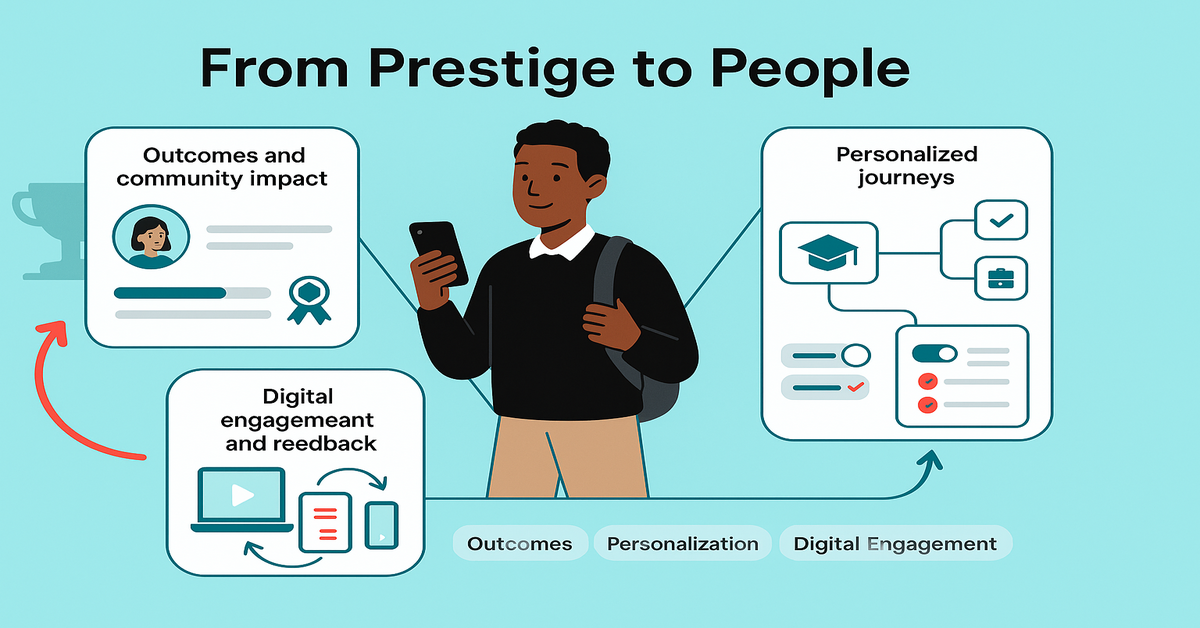
Higher education institutions face rising pressure to prove relevance and value to learners, employers, and communities. The path forward is a shift from prestige-driven messaging to human, audience-centered storytelling that reflects real needs and outcomes. Marketers should prioritize student needs, personalized experiences, and digital engagement, replacing assumptions with insights from audience behavior and feedback.
Read the article here (Author: evolllution.com)
Top Takeaways
- Lead with audience-centered stories that highlight real outcomes and community impact, not institutional prestige.
- Design communications around student needs and personalized journeys, using data to tailor messages and experiences.
- Invest in digital engagement across platforms to meet audiences where they are and validate assumptions through continuous feedback.
Shift from prestige to audience stories proving outcomes and impact. Personalize with data and engage online. #HigherEd #StudentSuccess
Conclusion
The throughline is clear. Engineer findability, design for mobile, personalize with behavior data, and tell human stories tied to outcomes. This week, audit your content for AI readiness, rebuild one program page for mobile scanning, and map two new intent signals into your dashboard. Pair every automated touch with a planned human follow-up, and capture feedback to refine messages. Keep iterating, because the institutions that learn fastest will enroll first.