AI now writes the shortlist before students ever click, and trust beats hype every time. This week’s articles converge on a clear mandate. Make your facts machine readable, verifiable, and consistent everywhere they appear. Canonical program pages, clean schema, and third party citations are emerging as the new rankings. In a world of zero click answers, the most citable institution gets the first look, and often the last word.
But discovery is only half the game. Decisions still happen in human spaces and on your site. From relationship first admissions to student led UGC, credibility is built through conversations, hospitality, and stories that feel real. Meanwhile, your web presence must act like a distributed network, showing up in AI tools, directories, and communities that buyers already trust. The articles push us to widen our lens and treat traffic as one touchpoint, not the whole journey.
Finally, the bridge between visibility and enrollment is conversion architecture. Answer first content, clear CTAs, and guided next steps that respect intent. Cross functional alignment across marketing, IT, academics, and admissions turns scattered signals into a coherent path. And while AI can help students find you, privacy and accuracy still require institutional stewardship. With that, let’s distill the week into practical takeaways you can act on now.
Key Takeaways
- Win AI shortlists with structured, machine readable program pages, consistent citations across the web, and fresh, citable proof on cost, outcomes, and accreditation.
- Treat visibility as distributed. Show up in AI tools, directories, and peer communities, and measure multi channel engagement rather than just traffic.
- Build conversion architecture on site with answer first content, clear CTAs, and guided paths from awareness to inquiry or application.
- Make admissions personal with a 30 60 90 rollout that upgrades campus hospitality, deepens counselor relationships, and scales empathetic conversations.
- Elevate student UGC as a trust engine with authentic creators, high trust video formats, coordinated moderation, and proper permissions.
- Align marketing, IT, academics, and admissions to enable AI discovery (schema, FAQs, open robots.txt) and to detect intent earlier while safeguarding student privacy.
Controversial Ideas
- Rankings are losing relevance. AI will favor institutions with the most verifiable, structured facts over brand prestige.
- Chasing web traffic is a vanity play. Optimize for buyers who may never visit your site at all.
- Blocking AI crawlers is self sabotage. Let reputable bots index your content for a faster path to qualified demand.
- Polished brand videos persuade less than student shot clips that answer real questions in their own words.
Win AI Shortlists with Trust and Structure
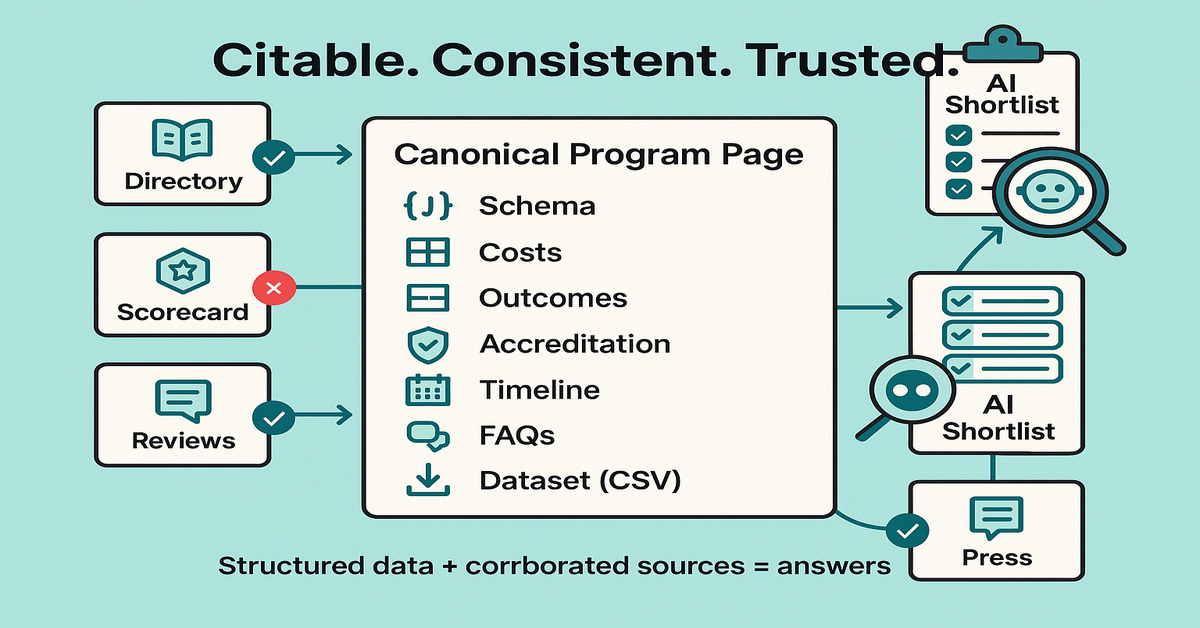
AI recommendation systems now build shortlists by cross checking your program facts across the web, prioritizing structured data, consistency, and third party proof over traditional rankings. To surface in answers, institutions need canonical program pages with machine readable details on costs, outcomes, accreditation, and timelines. These pages should be reinforced by aligned directories, scorecards, listings, media, and authentic reviews. Fresh, transparent datasets and clear FAQs make information citable and reduce risk for AI systems. Treat your site as one signal among many, and cultivate authoritative citations and press so claims are verifiable across sources. The goal is to be the most citable, consistent, and trusted option.
Read the article here (Author: Will)
Top Takeaways
- Create one canonical page per program with clean schema, FAQs, transparent cost and outcomes tables, and downloadable datasets so facts are machine readable and citable.
- Build a consistent entity footprint off site. Accurate listings, authoritative citations, reviews, and press help AI corroborate your claims across multiple sources.
- Keep details fresh and aligned everywhere. Prioritize verifiable proof over marketing copy to earn AI citations and placement in shortlists.
AI shortlists now trust verified facts not hype Build canonical program page with schema FAQs costs outcomes and aligned reviews. #SEO #AI

Relationship Driven Admissions Playbook
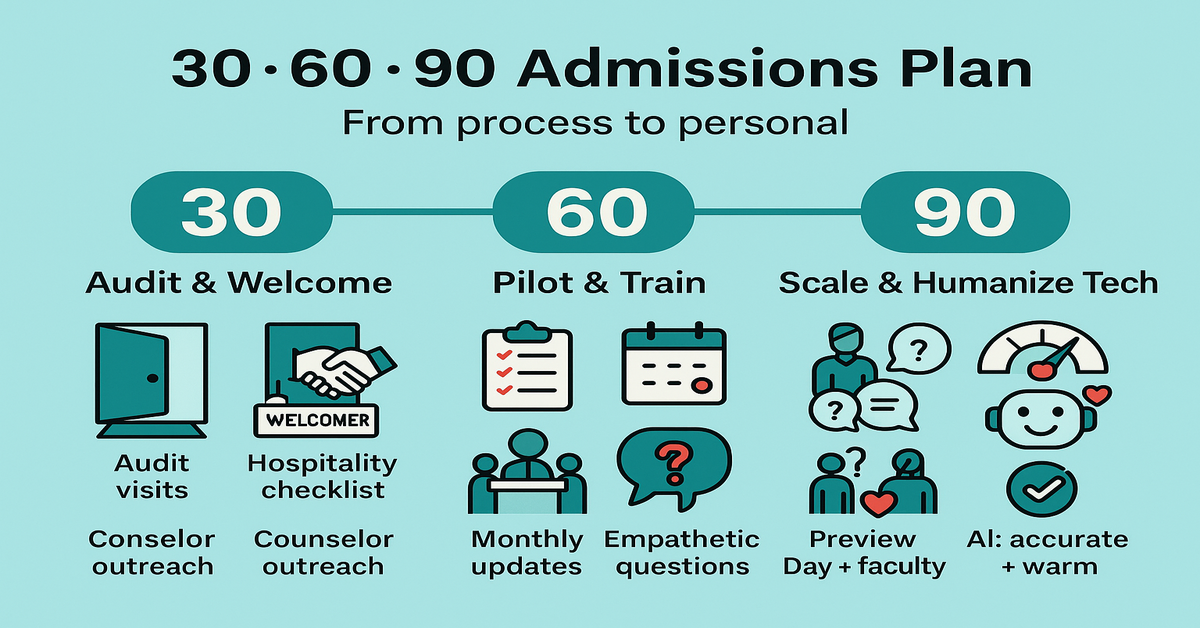
This article outlines a 30 60 90 day plan to make admissions more personal and effective. In the first month, audit campus visits for warmth versus process, personally connect with key high school counselors, and set a hospitality checklist. By 60 days, run a small pilot event, add monthly counselor updates, and train staff to ask open ended, empathetic questions. At 90 days, scale to a full preview day with faculty, collect feedback on how students felt, and review AI and tech tools to keep messaging accurate and human.
Read the article here (Author: Mariah Tang, Chief Content Marketing Officer)
Top Takeaways
- Shift from procedural to personal by auditing visit experiences, creating hospitality checklists, and training staff to use open ended, empathetic questions.
- Invest in counselor relationships with personalized outreach and consistent monthly communication to build a strong referral pipeline.
- Use a 30 60 90 rollout. Pilot small events, then scale with faculty involvement, while measuring how students feel and ensuring tech supports accuracy and warmth.
30 60 90 plan for personal admissions. Audit visits, engage counselors monthly, pilot and scale, measure feelings. #HigherEd #Admissions
Win Decisions in a Zero Click World
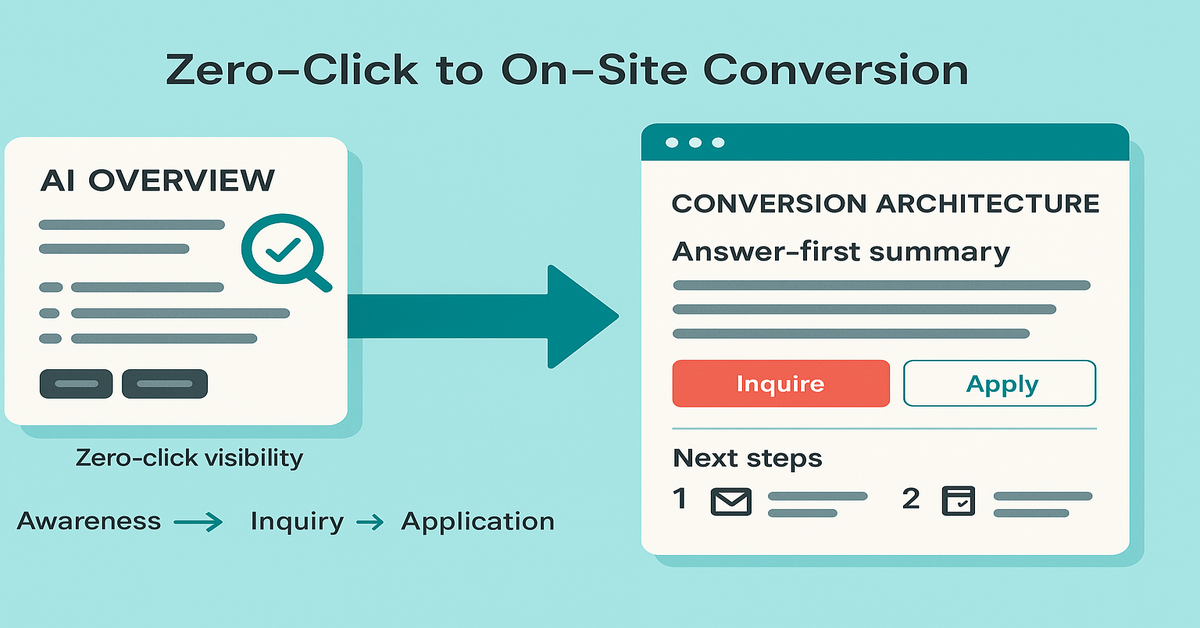
Zero click search, fueled by AI overviews and rich SERP features, answers queries before a click. The website still determines outcomes. EducationDynamics argues for conversion architecture. Pages should capture intent once visitors arrive. Institutions should pair authoritative, AI citable content with conversion focused experiences that guide students from awareness to inquiry or application. Practical elements include concise, answer first copy, clear calls to action, and obvious next step paths. Visibility inside zero click results is necessary but not sufficient. The win happens on site where students evaluate, compare, and decide.
Read the article here (Author: John Weaver)
Top Takeaways
- Zero click results raise the stakes for SERP visibility, but final decisions still happen on your site, where evaluation and conversion occur.
- Design conversion architecture. Use concise, answer first content, strong CTAs, and guided paths that move prospects from awareness to inquiry or application.
- Adopt GEO and AEO practices so AI can cite your authoritative pages, and connect those answers to conversion focused pages with clear next steps.
Zero click search answers first but the win is on your site. Use AI citable content strong CTAs and clear paths to apply. #HigherEd #SEO
When Buyers Skip Your Site
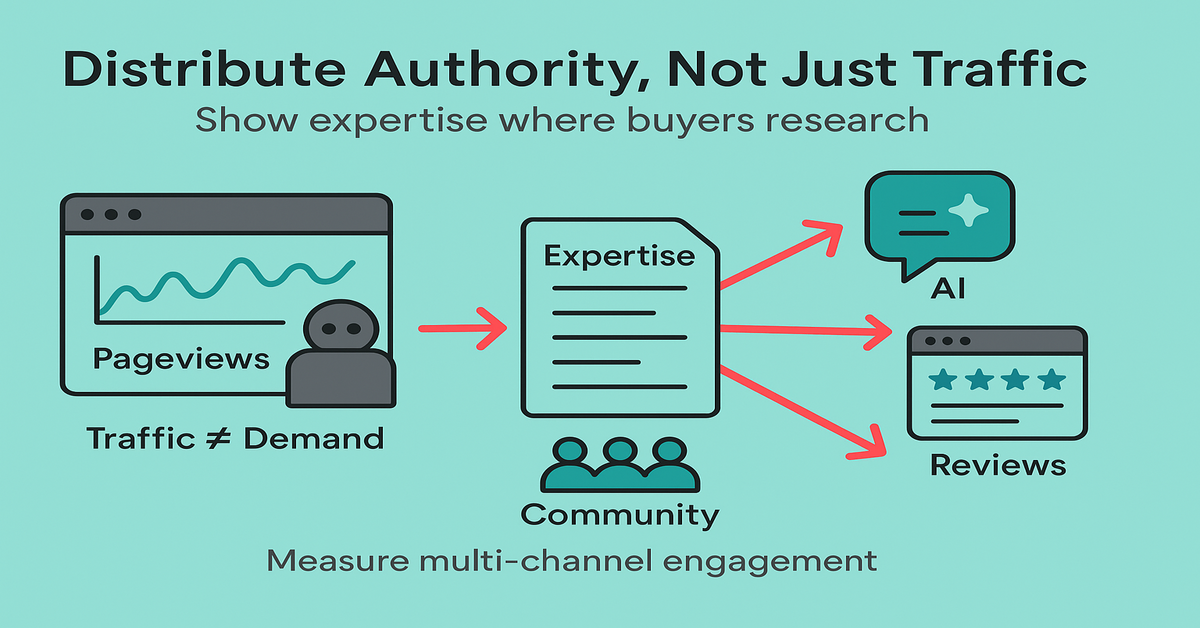
Website traffic is a poor proxy for demand because many buyers research through AI tools, peer communities, and review platforms before ever visiting a vendor’s site. Traditional metrics like sessions and pageviews can be distorted by bots and overlook off site evaluation. The article argues for shifting from traffic generation to authority distribution, making expertise discoverable wherever buyers are. That includes formatting content for AI consumption, actively participating in relevant communities, and tracking engagement across multiple channels. While a well built website still matters, it should be viewed as one component of a broader, distributed digital presence.
Read the article here (Author: evolllution.com)
Top Takeaways
- Traffic alone misleads. Significant buyer evaluation now happens off site through AI, communities, and reviews.
- Shift from driving clicks to distributing authority by making content AI friendly and showing up where buyers already research.
- Measure multi channel engagement and keep the website strong, but treat it as one touchpoint in a distributed journey.
Traffic is a poor demand signal. Distribute authority in AI tools, communities, reviews and measure omnichannel impact. #B2B #DemandGen #AI
Student UGC Builds Trust
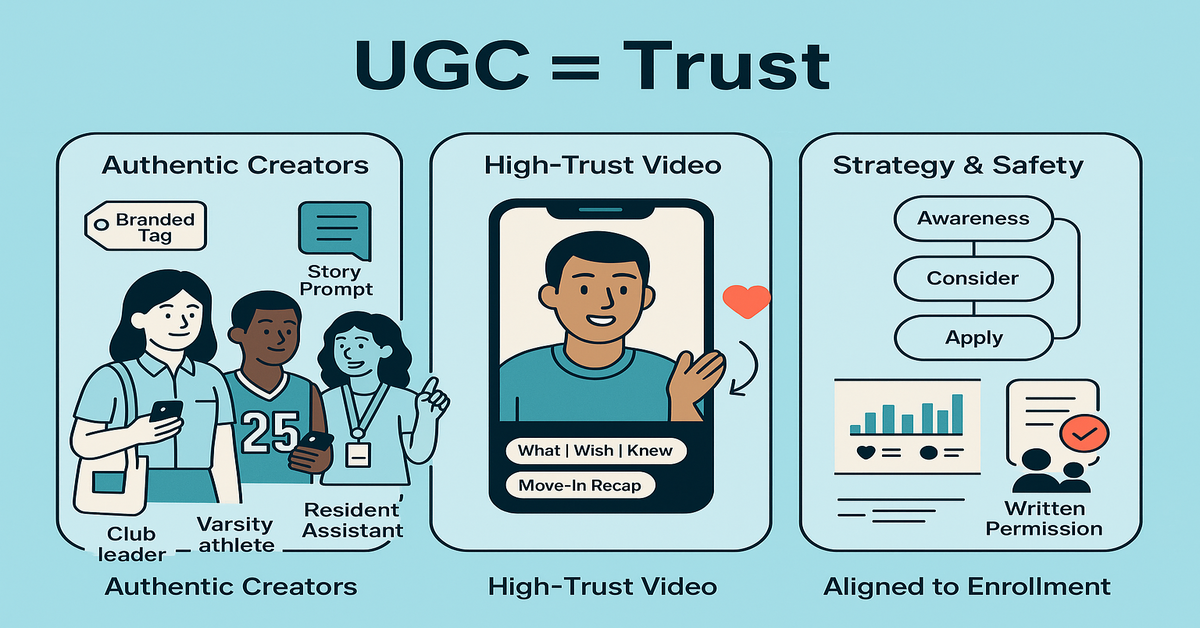
User generated content in higher education is the currency of trust, helping universities build credibility with prospective students. This guide outlines how to design a UGC strategy that students believe. Identify authentic student creators, start small with storytellers like club leaders or athletes, and encourage participation with a branded hashtag and campus storytelling. Favor authentic video formats such as Q&As, what I wish I knew clips, and move in recaps. Treat UGC as a core content pillar, align themes to enrollment cycles, and reshare tagged content to amplify reach. Ensure cross team coordination to moderate, track, and measure engagement and enrollment impact, and always secure written permission, especially when minors are involved.
Read the article here (Author: Keystone_edu)
Top Takeaways
- Find and empower authentic student creators. Start with a small cohort and drive participation using a branded hashtag, reshares, and campus storytelling prompts.
- Make UGC a core pillar aligned to enrollment stages. Prioritize high trust video formats like Q&As, what I wish I knew clips, and move in day recaps.
- Coordinate marketing, admissions, and communications to moderate, track, and measure engagement and enrollment impact, and secure written permissions to protect participants.
UGC builds trust in higher ed. Start small with student creators. Use Q and A video. Track results and get consent. #UGC #HigherEd
Be Seen In AI College Search
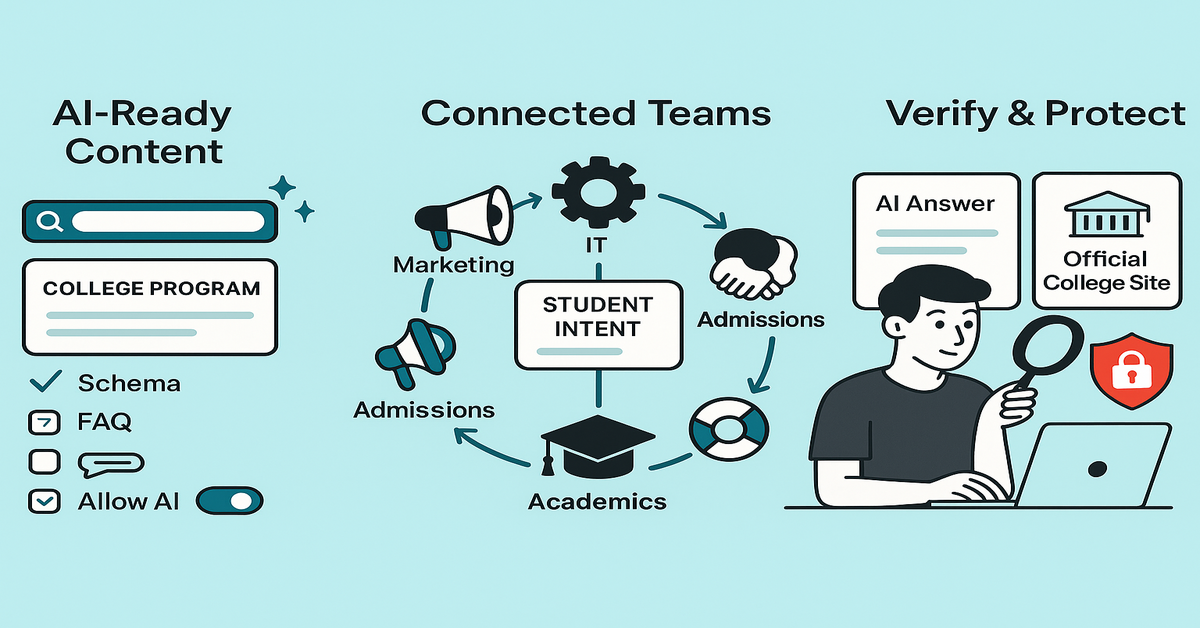
As students turn to AI tools to research colleges, institutions risk losing visibility if they rely on traditional SEO and web traffic alone. To be surfaced by AI, colleges need clear, current, and structured content. Update program pages, use question led organization, add schema markup and FAQs, and set robots.txt to permit AI crawlers. Beyond content, aligning marketing, IT, academics, admissions, and student services helps detect student intent earlier and deliver a more connected recruitment experience. Students should verify AI generated answers against official college sources and protect their privacy when using public AI tools.
Read the article here (Author: evolllution.com)
Top Takeaways
- Optimize for AI discovery with updated program pages, question driven content, structured data and FAQ schema, and robots.txt that allows AI crawlers.
- Align marketing, IT, academics, admissions, and student services to identify student intent earlier and create a seamless recruitment journey.
- Students should cross check AI answers with official college websites and avoid sharing sensitive personal data in public AI tools.
AI is the front door for colleges Update programs, use FAQ schema, allow AI crawlers. Students verify and protect data #HigherEd #AISEO #AI
Conclusion
The week’s signal is unmistakable. Pair citable facts with human connection, and guide every curious glance toward a confident decision. Audit program pages for structured data and consistency, open the door to reputable AI crawlers, and rebuild key pages for swift, clear next steps. Train admissions teams for warmth and empathy, recruit student creators to tell the truth well, and track impact across the channels your prospects actually use. Choose one quick win to implement this week and one system level shift to plan for this quarter. Then share your progress with the team to keep momentum high.