The ground under higher ed marketing shifted again this week. Prospective students and families are choosing with thumbs and prompts, not campus tours alone. Trust, AI visibility, and personalization are no longer edge tactics, they are the operating system. Institutions that adapt their brand and content to this reality are the ones making the shortlist.
Across the insights, a clear theme emerges. Be discoverable, credible, and complete at the moment of intent. That means evolving beyond campus-centric branding into value propositions that travel across the digital journey. It also means architecting content for humans and machines with plain-language labels, structured data, and proof points. Page one SEO still matters, but so does how you appear in ChatGPT, Gemini, Perplexity, and YouTube. If AI cannot confidently cite you, your program may never enter consideration.
We also saw how mission-first storytelling accelerates giving, while seamless marketing-to-admissions handoffs prevent drop-off. Personalization and mobile-first, conversational experiences are quickly becoming table stakes, especially for Gen Alpha. And organic social, maintained with consistency and care, compounds trust in the background. With that in mind, here are the week’s most actionable takeaways.
Key Takeaways
- Recenter your brand around clarity, relevance, and flexibility so it resonates across digital-first journeys, not just on campus.
- Build intent-driven, interlinked content that blends facts, context, and credibility signals, supported by student-centered information architecture.
- Compete in AI-driven discovery. Audit how you appear across Google, ChatGPT, Gemini, Perplexity, and YouTube, and prioritize page one SEO with structured, citable content.
- Make value unmistakable by sharing transparent costs, outcomes, and career connections that address both student and parent priorities.
- Design mobile-first, personalized experiences with conversational interfaces and data-driven guidance, measurable engagement lifts follow.
- Tighten operations. Define a clean marketing-to-admissions handoff, track interactions in the CRM, and strengthen organic social communities to sustain trust.
Controversial Ideas
Controversial Ideas:
- Campus-life-first branding is becoming a liability. Lead with outcomes, flexibility, and digital experience or risk irrelevance.
- If AI cannot cite you, you do not exist, optimizing for AI understanding should outweigh clever design flourishes and internal jargon.
- Radical transparency on cost and outcomes will outperform prestige messaging, even for selective institutions.
- Paid media cannot buy trust at scale, redirect more budget to organic community building and student voices.
Rethink Higher Ed Branding
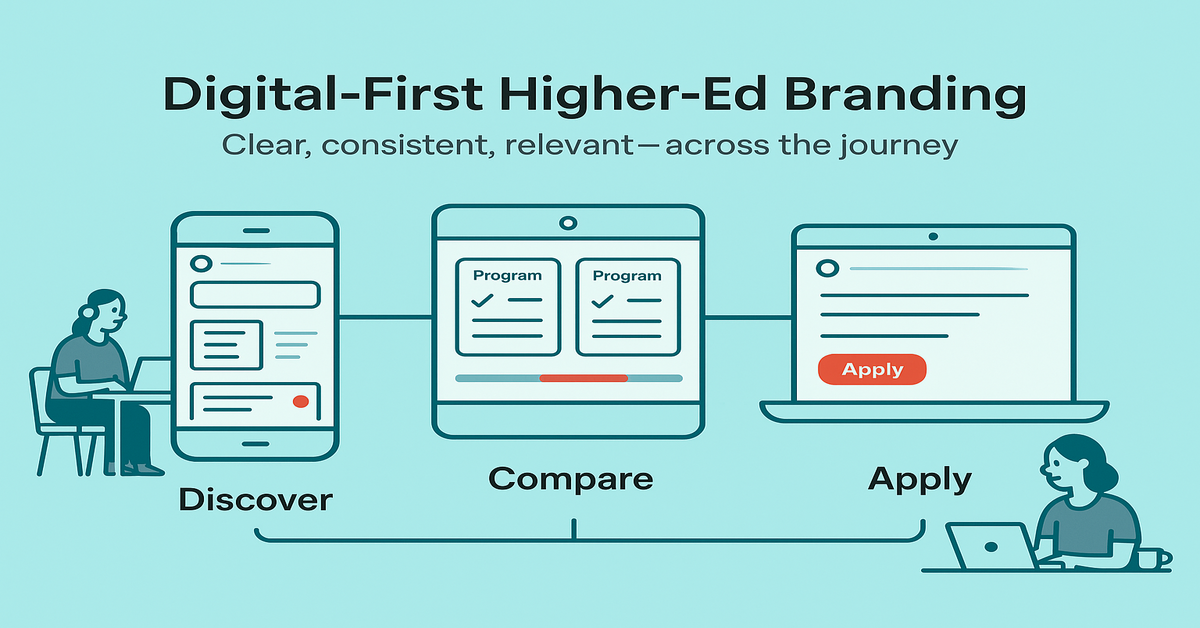
Traditional campus-centric appeals no longer guarantee enrollment, especially for online learners. As students discover, compare, and apply in digital environments, colleges must evolve their branding to be relevant, flexible, and meaningful beyond on-campus experiences. Effective higher-ed marketing now centers on clear, adaptable messaging that resonates across the entire digital journey.
Read the article here (Author: Libby Morse)
Top Takeaways
- Traditional messaging built around campus life can miss online learners, refresh your brand to reflect their priorities and realities.
- Ensure branding is flexible and consistent across digital touchpoints so it engages students from discovery to application.
- Focus on relevance and clarity in your value proposition to stand out as students compare options in increasingly digital spaces.
Campus hype no longer converts. Win online learners with clear value and consistent branding from search to apply. #HigherEd #OnlineLearning

Intent Driven Content Ecosystems
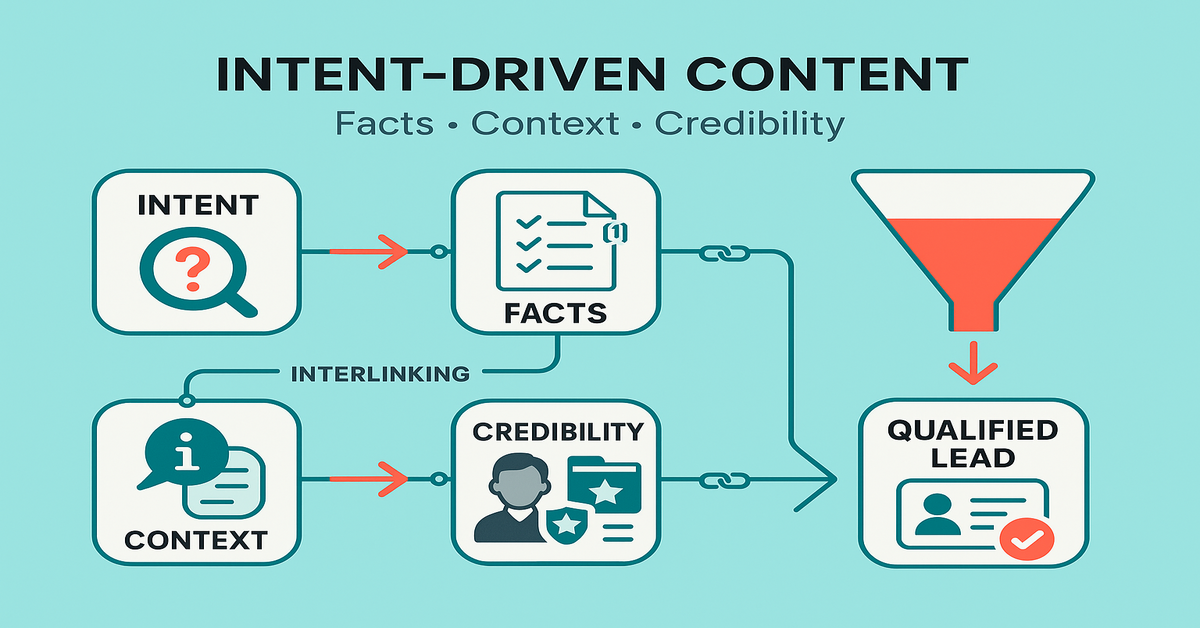
Create interconnected, intent-driven content that combines verified facts, contextual explanations, and credibility signals to fully address complex buyer questions. By meeting searcher intent with depth and trust, you reduce friction in evaluation and guide prospects confidently. The result is higher-quality, better-qualified leads and stronger performance across the content journey.
Read the article here (Author: Will)
Top Takeaways
- Map content to user intents across the journey and interlink assets to answer complex queries end to end.
- Blend facts, context, and credibility signals (citations, expert voices, case studies) to build trust and clarity.
- Aligning content with buyer intent improves qualified lead quality by reducing uncertainty and accelerating decisions.
Answer complex buyer questions with intent driven content that blends facts context and proof. Win better qualified leads. #B2B #LeadGen
Fuel Giving With Mission Driven Messaging
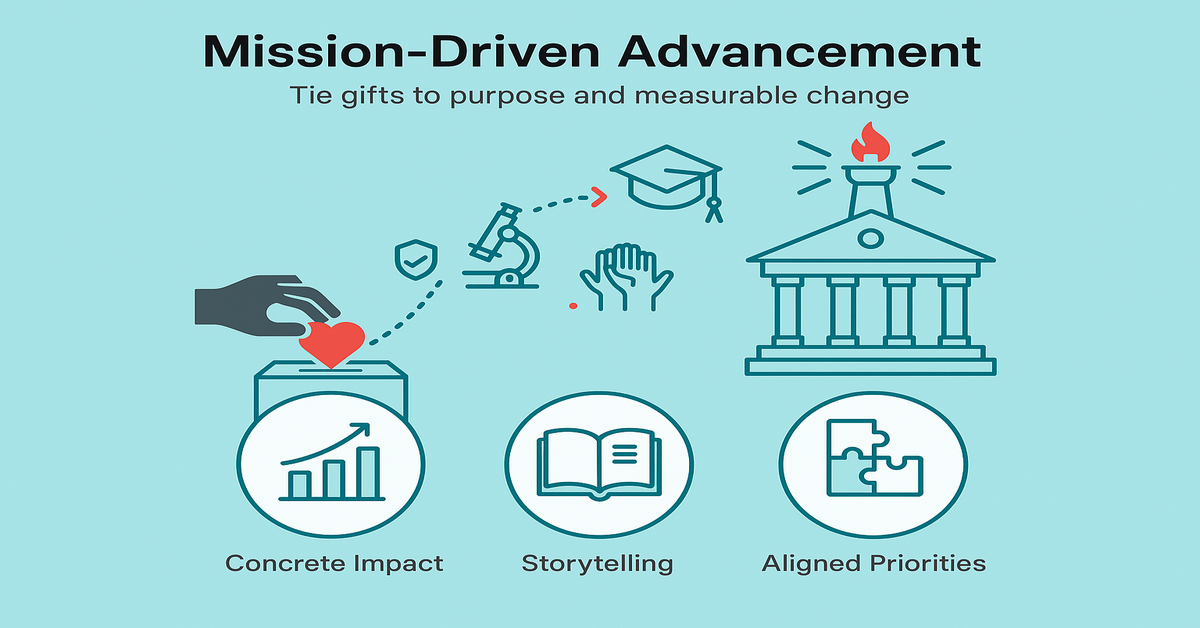
Mission-driven advancement messaging in higher education strengthens donor engagement by tying gifts directly to an institution’s purpose and impact. The most effective strategies spotlight mission and tangible outcomes, use compelling stories to illustrate donor impact, align appeals with donor motivations and institutional priorities, and cultivate trust and long-term connection. By clearly showing how support advances the mission and changes lives, advancement teams can inspire giving and improve fundraising results.
Read the article here (Author: Emily Denny)
Top Takeaways
- Lead with mission and concrete outcomes so donors see how their gifts produce meaningful, measurable impact.
- Use storytelling to illustrate real differences their support makes and help donors envision the change they enable.
- Align messages with donor motivations and institutional priorities to build trust, deepen connection, and sustain long-term engagement.
Lead with mission and measurable impact to inspire giving. Stories and donor fit build trust and long term support. #HigherEd #Fundraising
Be Where Students Search
Students now discover programs across AI tools and traditional search, so visibility at the discovery stage determines whether you make the consideration set. Audit how your institution appears in Google, ChatGPT, Gemini, Perplexity, and YouTube, identify gaps and refine relevance. Keep program pages current and trustworthy, and structure content with clear headings, schema, and factual language AI can cite. Despite AI’s rise, page one of Google still drives consideration and clicks, and strong organic rankings correlate with AI Overview visibility. With half of prospects using AI weekly, often before visiting your site, if you are not visible in AI-driven results, you are likely not being considered.
Read the article here (Author: UPCEA)
Top Takeaways
- Audit and monitor your AI presence. Run prospect-style queries in Google, ChatGPT, Gemini, Perplexity, and YouTube, track how you are displayed or excluded, and close gaps.
- Optimize program pages for AI and humans. Keep outcomes, costs, deadlines, and credentials current, and use semantically rich headings, structured data, and precise, citable language.
- Prioritize page one SEO. Most students favor top results, organic visibility correlates with AI Overview inclusion, and if you are not visible in AI search, you are not being considered.
Half of prospects use AI weekly before your site. Audit Google ChatGPT Gemini Perplexity YouTube. Win page one or be ignored. #HigherEd #SEO
Build Trust on School Websites with EEAT
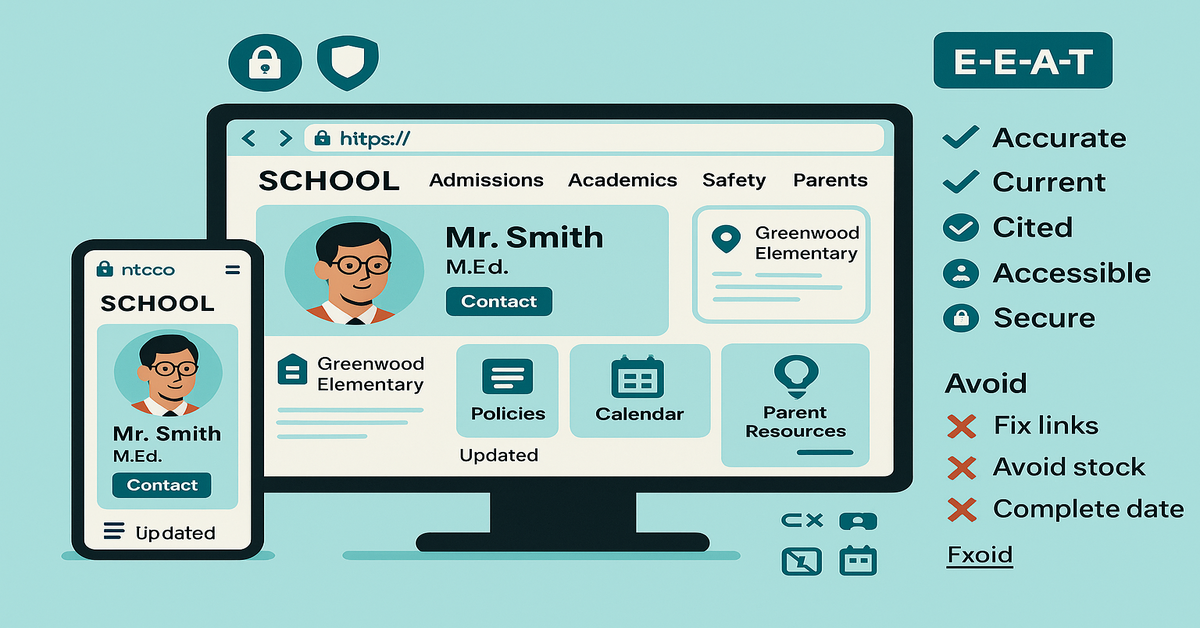
School websites earn trust by demonstrating Experience, Expertise, Authoritativeness, and Trustworthiness across content and design. The guide explains how to show real experience through staff bios, credentials, and authentic imagery, keep information current, clarify site ownership, and make contact details easy to find. It emphasizes accurate, helpful pages for admissions, academics, safety, and parent resources, with citations to authoritative sources when needed. Security and accessibility are essential, along with trust signals like consistent branding, clean navigation, mobile-friendly layouts, readable typography, professional photography, and transparent dates. Common pitfalls include outdated calendars, broken links or forms, vague claims, and incomplete policies. Trust is proven through clear ownership, accuracy, visible expertise, and ongoing maintenance.
Read the article here (Author: RGI Team)
Top Takeaways
- Showcase real people and clear ownership, keep content accurate and current, and cite authoritative sources to demonstrate EEAT.
- Make trust visible with secure, accessible, user-friendly design, HTTPS, protected forms, consistent branding, clean navigation, mobile-first layouts, and transparent dates.
- Prevent trust erosion by fixing broken links and forms, avoiding generic stock imagery and vague claims, and keeping calendars and policies complete and aligned across pages.
School sites build trust with EEAT. Show real staff, clear ownership, HTTPS, mobile friendly, current info, fix broken links. #EEAT #K12
Build for Gen Alpha
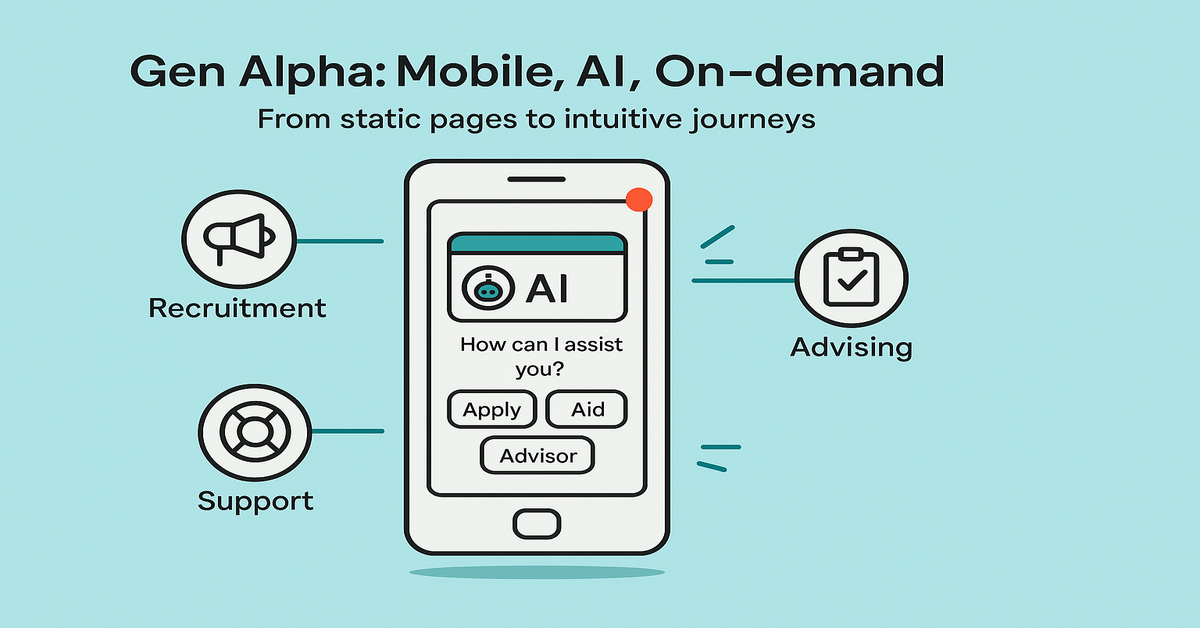
Gen Alpha expects fast, personalized, mobile-first, and AI-supported digital experiences, making traditional browsing-centric university websites insufficient. To attract, inform, and support this cohort, institutions must redesign engagement around intuitive, on-demand interactions powered by data and AI. The Preparing for Gen Alpha on Campus report urges higher education to retool recruitment, communications, and student services to meet these expectations.
Read the article here (Author: @terminalfour)
Top Takeaways
- Shift from static websites to intuitive, mobile-first journeys with conversational interfaces and proactive nudges.
- Use AI and data to deliver rapid, personalized guidance across recruitment, advising, and student support.
- Rebuild engagement models around on-demand, frictionless interactions rather than page-by-page navigation.
Gen Alpha expects fast personalized mobile AI help. Colleges must replace static sites with on demand chat and nudges. #HigherEd #AI #EdTech
Personalized Higher Ed Websites Boost Engagement
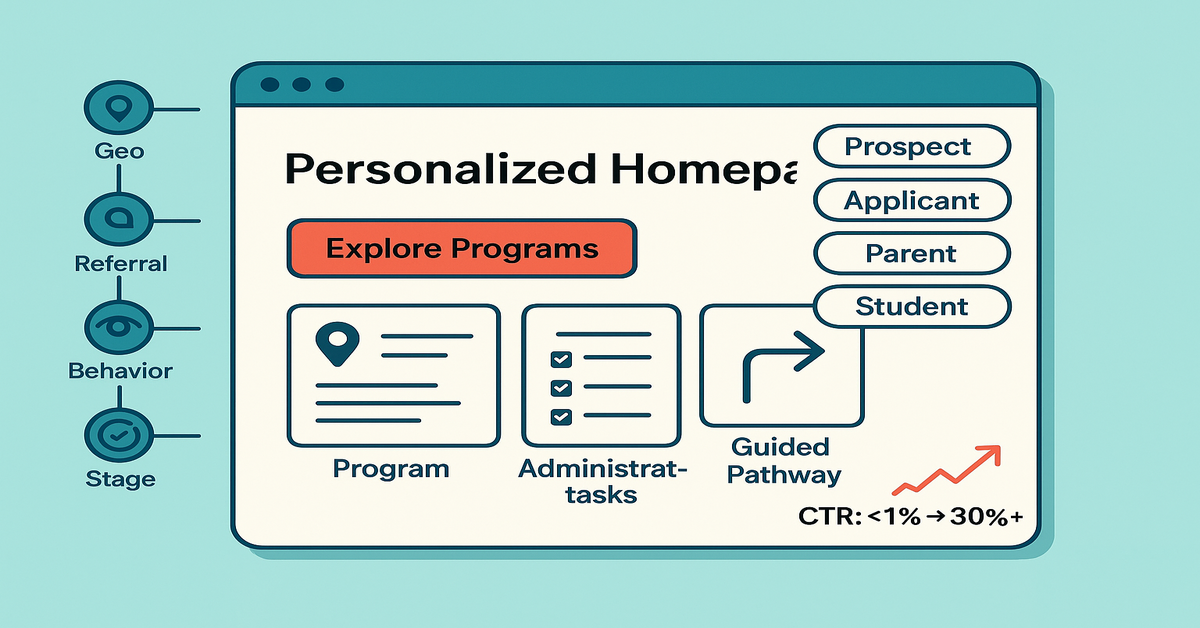
Website personalization transforms generic higher ed sites into responsive, student-centered experiences. By adapting content, imagery, calls to action, and pathways to signals like location, referral source, browsing behavior, and application stage, institutions surface relevant programs and guide each visitor along a customized journey. Students now expect tailored digital interactions, and schools that extend personalization into student administration see stronger engagement and retention. Results can be significant. Personalized homepage modules have raised click-through rates from under 1% to over 30% in some deployments. The core message is simple. Make the site feel built for the individual to improve experience, enrollment, and outcomes.
Read the article here (Author: moderncampus.com)
Top Takeaways
- Use visitor signals, geolocation, referral source, pages viewed, and application stage, to dynamically tailor content, imagery, CTAs, and pathways.
- Design customized journeys for distinct audiences, prospects, applicants, parents, current students, to surface relevant programs and administrative tasks, boosting engagement and retention.
- Measure impact and iterate. Personalized homepage blocks have lifted click-through rates from under 1% to over 30% in higher ed deployments, translating to stronger enrollment and student outcomes.
Personalize higher ed sites with location referral and behavior. CTR rose from under 1% to over 30% #HigherEd #EdTech #Personalization
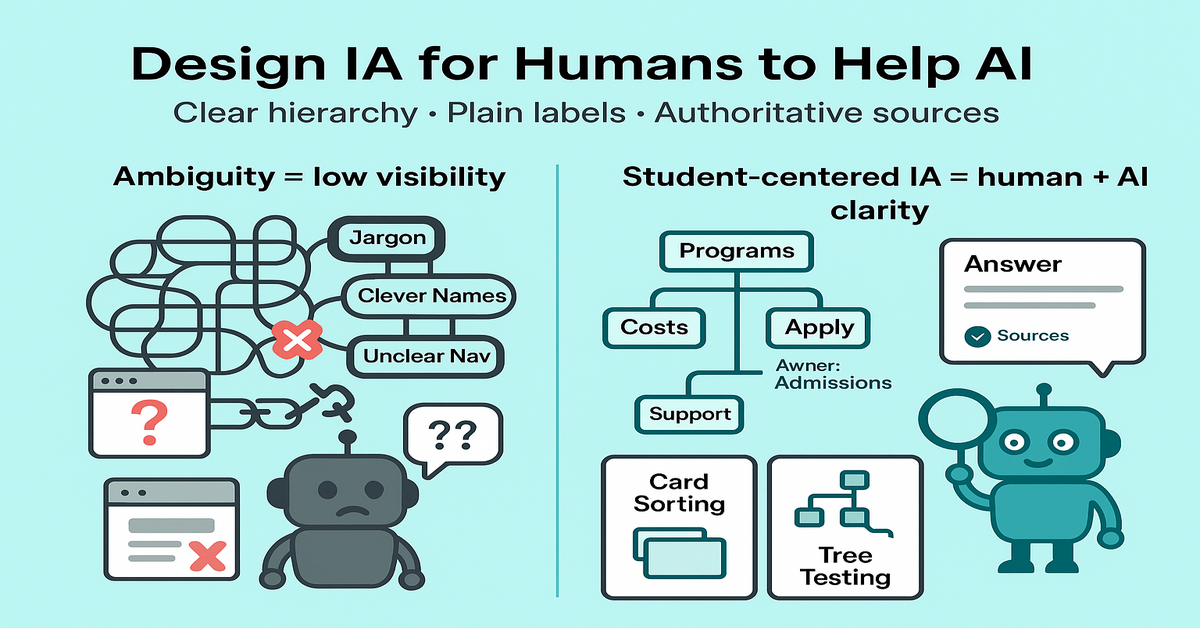
Clear Information Architecture Wins Humans and AI
Strong, student-centered information architecture boosts both usability and AI visibility by organizing, labeling, and connecting content so people and crawlers can find and trust it. A clear hierarchy supplies context, while plain-language labels beat internal jargon or clever names. If navigation confuses students, bots read it as ambiguity, which can yield inaccurate AI summaries of your institution or cause systems to skip your site in favor of clearer competitors. To improve results, assign explicit content ownership, provide concise fact-based answers with authoritative sources, and validate structures with real users through card sorting and tree testing.
Read the article here (Author: Kirstin Swagman)
Top Takeaways
- Design IA for humans to help AI. Logical hierarchy, student-centered labels, and authoritative sourcing make content discoverable and citable.
- Ambiguity hurts. Confusing structures lead to misrepresentation in AI or reduced visibility compared with clearer competitors.
- Act now. Define content ownership, write concise factual content, and test navigation with card sorting and tree testing to confirm real user behavior.
Student first IA boosts UX and AI visibility. Use plain labels cite sources assign owners test with card sorting and tree testing. #UX #AI
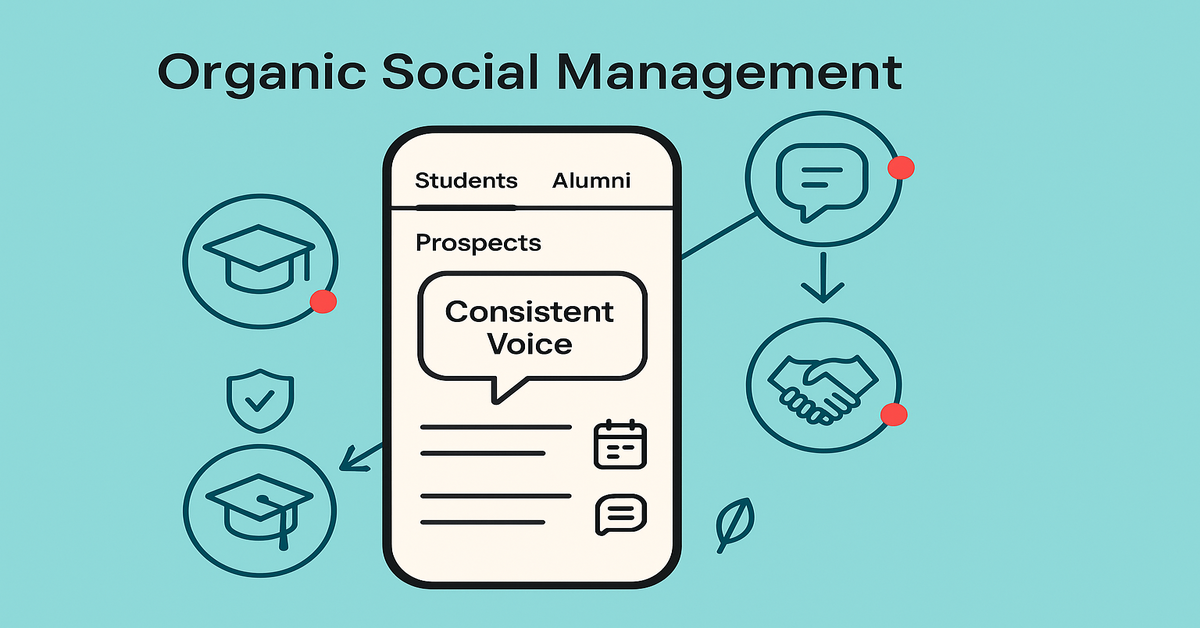
Organic Social Media Support for Schools
This service strengthens a school’s organic social presence by partnering with internal teams. It manages student and alumni groups, nurtures prospect engagement, and unifies community messaging. The focus is on consistent voice, relationship-building, and day-to-day moderation without reliance on paid media.
Read the article here (Author: John Michael Szczepaniak)
Top Takeaways
- Collaborate with campus teams to manage and moderate student and alumni groups, keeping communities active, safe, and on brand.
- Increase prospect engagement with planned content, timely responses, and ongoing conversation management to build relationships and interest.
- Align messaging and guidelines across channels to protect reputation and deliver a consistent voice for the school.
Keep student and alumni groups active safe and on brand. Grow prospect interest with organic social no paid ads. #HigherEd #SocialMedia
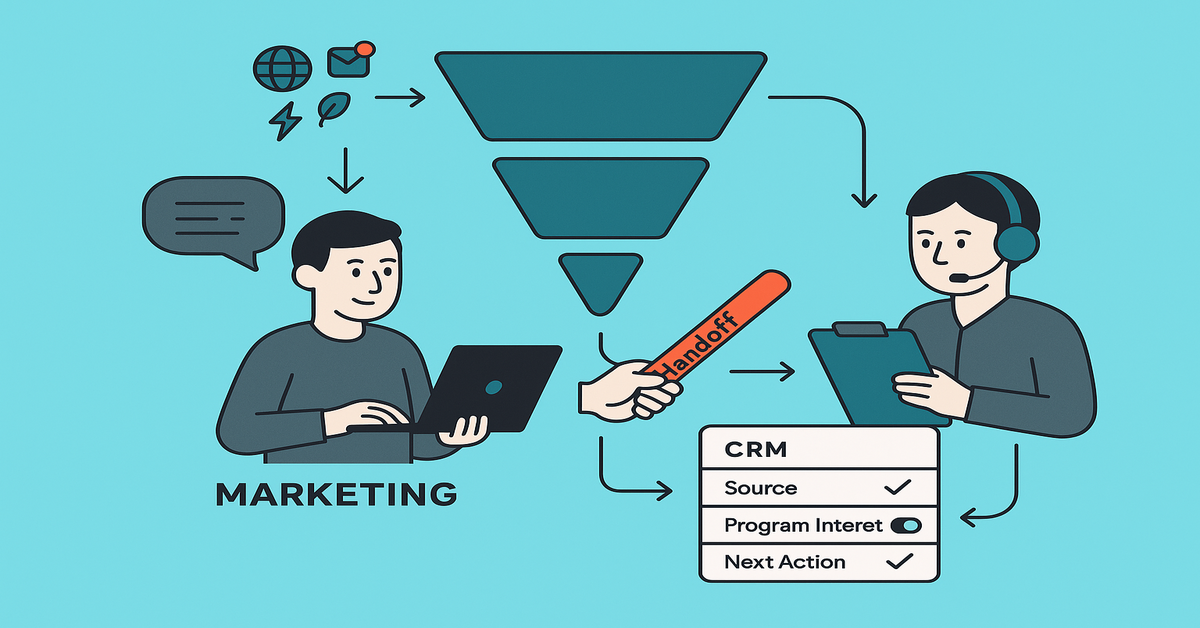
Seamless Admissions Handoff
Schools should create a clear handoff between marketing and admissions so qualified prospects are guided smoothly through the recruitment funnel. Marketing manages first responses and brand voice, while admissions engages when conversations become program, admissions, or student specific. Social media follow-up must tie into the broader funnel, with fast responses, smart triage, and ongoing nurturing. All interactions and transitions should be tracked in the CRM with accurate source, program interest, and next actions to replace ad hoc communication and improve visibility. This coordination strengthens outcomes from inquiries to applications and enrollment.
Read the article here (Author: Diana Salazar)
Top Takeaways
- Define roles and a clean handoff. Marketing handles initial responses and brand voice, admissions steps in for program or student specific questions.
- Make social media follow-up part of the funnel. Respond quickly, triage inquiries, route to the right advisor, and continue nurturing with relevant content.
- Track every interaction and handoff in the CRM with correct source, program interest, and next action to improve visibility and conversion across the pipeline.
Boost enrollment with clean marketing to admissions handoff fast social replies and CRM tracking of source and next steps. #HigherEd #CRM
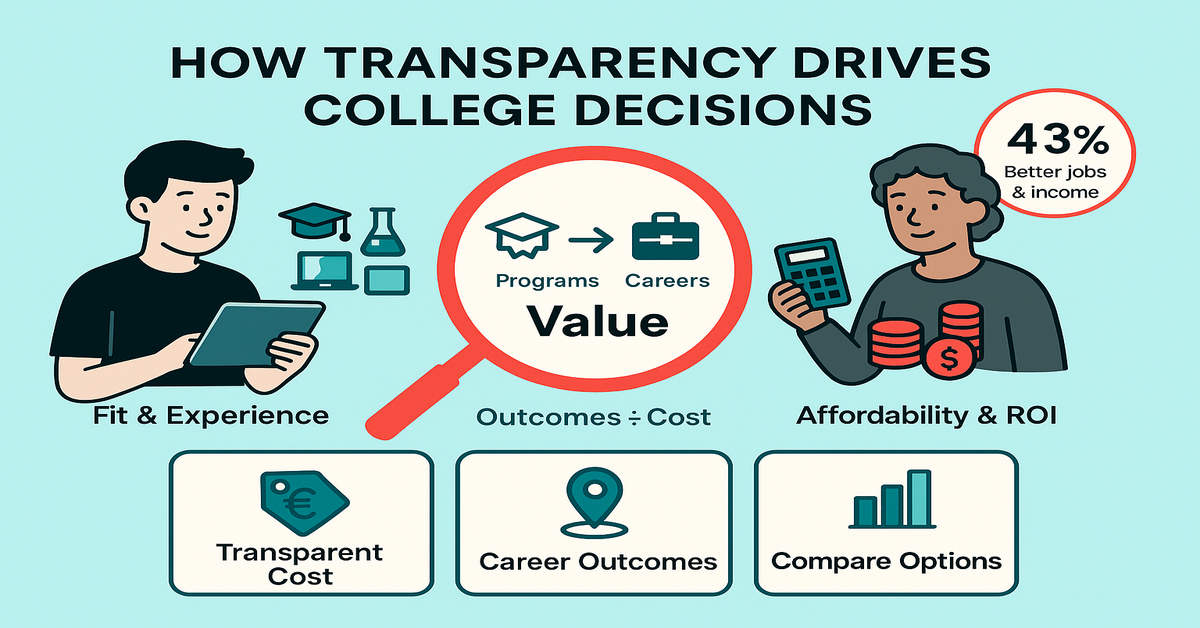
Transparency Wins Enrollment
Families comparing colleges want clarity on cost, outcomes, and how options stack up. As they move from browsing to deciding, students prioritize program fit, preparation, and experience, while parents focus on affordability, ROI, and long-term results. Together, they weigh personal goals against financial realities, making value the central lens. Survey data shows 43% see the primary benefit of a degree as access to better jobs and higher income. Institutions that clearly connect programs to career outcomes and provide transparent pricing and results build confidence and speed decisions, turning transparency into a competitive enrollment advantage.
Read the article here (Author: Annice Deweese)
Top Takeaways
- Share cost, outcomes, and comparisons early and plainly to reduce uncertainty and move families from interest to action.
- Address the dual decision lens. Students seek fit, preparation, and experience while parents prioritize affordability, ROI, and long-term outcomes.
- Make value transparent by linking programs to career paths, earnings, and outcomes. Clarity here is a powerful enrollment advantage.
43% see degrees as a path to better jobs and income. Win enrollment with clear costs and career outcomes upfront. #HigherEd #ROI #Admissions
Conclusion
This week’s throughline is unmistakable. Trust grows where clarity, proof, and usability meet. From AI-aware content and clean information architecture to personalized journeys and disciplined handoffs, the institutions that win are engineering confidence at every click. Take the next step now. Audit your AI visibility, tighten your value story, stand up a personalization pilot, and publish outcomes with courage. Your future students, donors, and stakeholders are already deciding. Make it easy for them to choose you.