Enrollment is increasingly won in the space between a search query and a submitted application. This week’s stories point to a single throughline. Align strategy, content, and operations around trust, relevance, and measurable outcomes. AI is changing discovery, but the winners ground answers in verified data, speak plainly to real questions, and prove ROI in enrollments, not clicks. The institutions that prioritize this discipline are already converting more intent and spending less to do it.
Across the funnel, precision beats generality. Parents and students need separate journeys, messaging, and budgets. Each campus should be treated as a distinct local brand with its own presence and reviews. Web redesigns only work when accessibility, mobile speed, SEO‑safe migrations, and the right CMS are planned up front instead of bolted on later. As zero‑click and AI surfaces grow, your on‑site experience must pick up the conversation smoothly when prospects finally arrive.
Pipeline strength depends on starting earlier and staying personal. That means ninth grade touchpoints and transfer pathways that reduce friction. Data and analytics should direct priority programs, target mobility patterns, and expose bottlenecks. Operations should streamline admissions, aid, and registration. Post‑click speed and clarity now decide whether ad dollars become applications, especially as more students apply without ever inquiring. With that context, let’s distill the week’s biggest lessons you can act on immediately.
Key Takeaways
- Make content AI‑ready and trustworthy. Answer real questions in conversational language, cite verified institutional data, and build schema‑rich pages that earn long‑tail and AI citations.
- Segment ruthlessly. Build distinct funnels, messaging, and budgets for parents versus students to raise relevance and conversion quality.
- Win the post‑click moment. Use program‑specific landing pages, fast personalized follow‑up, and friction‑free application and registration workflows.
- Protect and grow discoverability. Invest in campus‑level local SEO, authoritative content clusters, and SEO‑safe migrations anchored by the right CMS and governance.
- Measure what matters. Use full‑funnel attribution, track a six‑month baseline, and tie spend to applications, enrollments, and cost per enrolled student.
- Build a stronger domestic pipeline. Engage students earlier, spotlight value and outcomes, and deepen high‑school and community college partnerships guided by analytics.
Controversial Ideas
- Mixing parent and student messaging wastes money. Some institutions should shift half their budget to parent‑only campaigns.
- Brand consistency should not trump results. Treating each campus as a separate local brand may outperform a single unified identity.
- High CTR is a vanity metric. Pause top‑click campaigns that do not produce applications or lower cost per enrolled student.
- Unsourced AI content is risky. Publishing lots of AI‑generated content without institutional data and citations is riskier than publishing less, slower, and fully sourced.
AI That Drives Enrollment
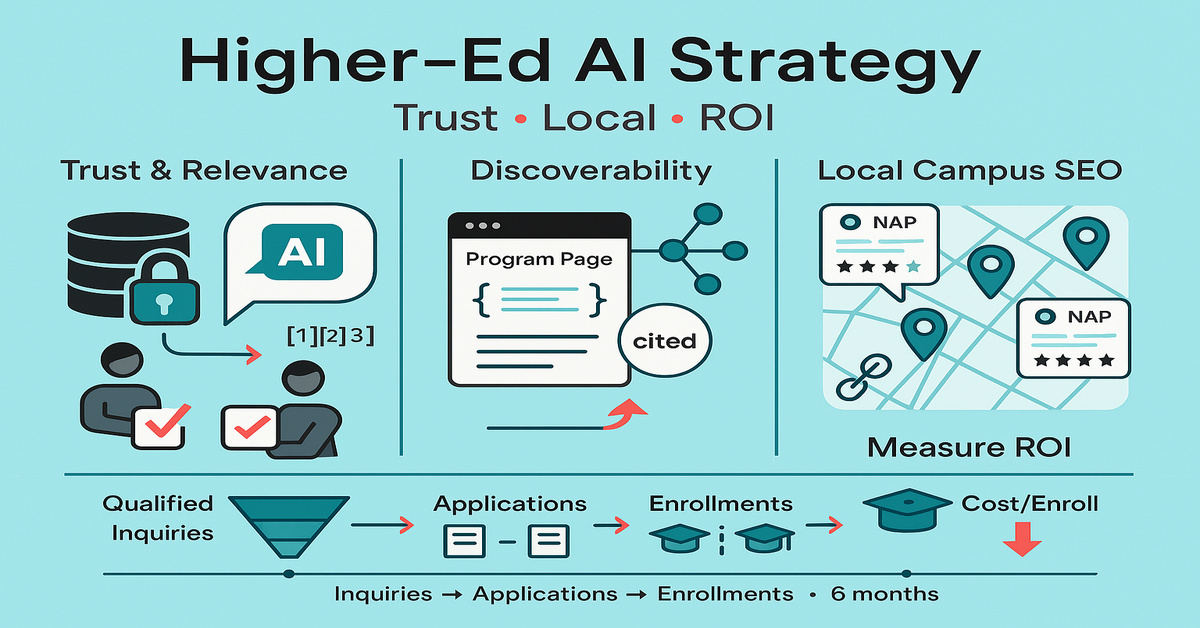
Successful higher‑ed AI strategy should be built on trust, relevance, and measurable ROI. Judge success by enrollment outcomes rather than vanity metrics. Ground AI outputs in verified institutional data, require citations, and keep humans in the loop to reduce hallucinations.
Boost discoverability with schema‑rich program pages, authoritative content clusters, and faculty PR to win long‑tail queries and AI citations. Treat each campus as a distinct local brand using separate Google Business Profiles, unique landing pages, consistent NAP, reviews, and hyperlocal links.
Measure ROI through funnel metrics, including qualified inquiries, organic program rankings, AI citations, and conversion rates. Track a baseline and post‑change performance for about six months. Then document an internal playbook. Tie AI spend directly to qualified demand, applications, enrollments, and especially cost per enrolled student.
Read the article here (Author: Will)
Top Takeaways
- Prioritize trust and relevance. Ground AI in verified institutional data with citations and human review. Publish schema‑rich, authoritative content that earns long‑tail wins and AI citations.
- Treat each campus as a local brand. Use its own Google Business Profile, unique landing pages, consistent NAP, reviews, and hyperlocal links.
- Measure what matters. Track funnel metrics over six months, and tie AI spend to applications, enrollments, and cost per enrolled student.
Ground higher ed AI in verified data with human review Track 6 months tie spend to apps and enrollments and cost per enrolled #HigherEd #AI

Separate Parent and Student Campaigns
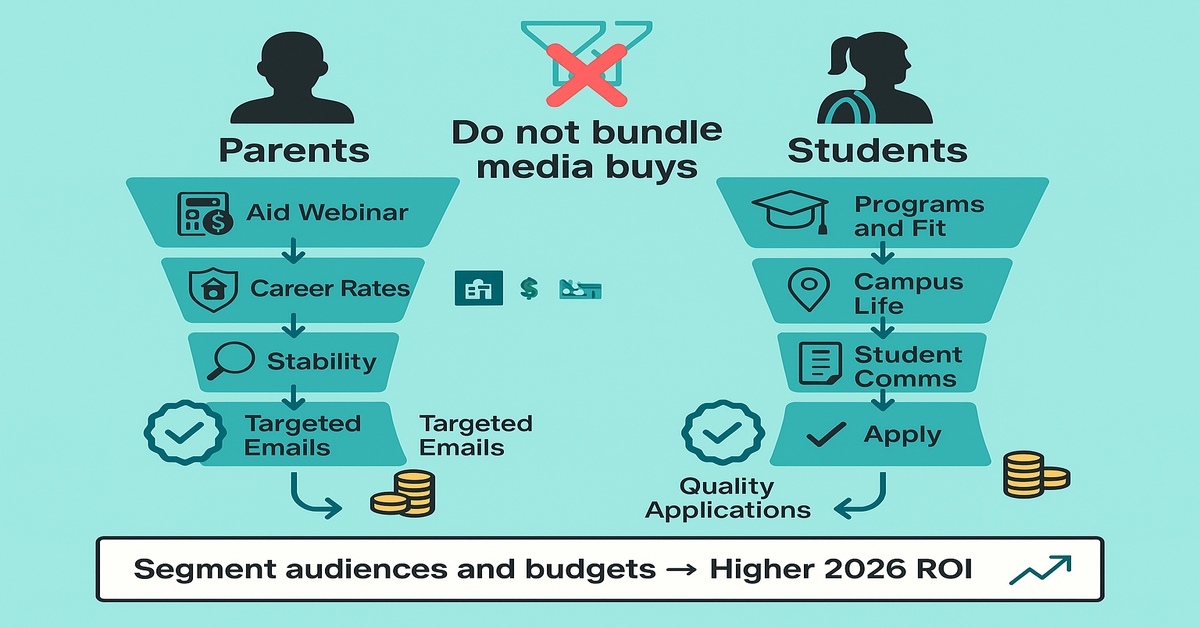
Parents are key influencers in college decisions, but they should not share the same recruitment funnel as students. Their questions center on outcomes, financial aid pathways, career placement, and institutional stability. These needs are best met by targeted campaigns.
Create parent‑specific touchpoints like financial aid webinars, ROI‑focused landing pages, and dedicated email sequences. When parent and student content are bundled into the same media buy, you pay to reach two audiences with different priorities. That weakens performance for both. Segment your audiences, tailor messaging, and allocate budget separately to lift relevance, conversion quality, and overall return on your 2026 recruitment spend.
Read the article here (Author: Sarah Russell)
Top Takeaways
- Build distinct funnels and messaging for parents and students to align with their different decision drivers and avoid mixed signals.
- Serve parents outcome‑focused content. Highlight financial aid pathways, career placement rates, and institutional stability via webinars, ROI landing pages, and targeted emails.
- Do not combine audiences in one media buy. Segment content and budgets to improve efficiency and results.
Split parent and student funnels to lift 2026 ROI. Give parents outcomes aid and placement. #HigherEd #Admissions
Higher ed website redesign essentials
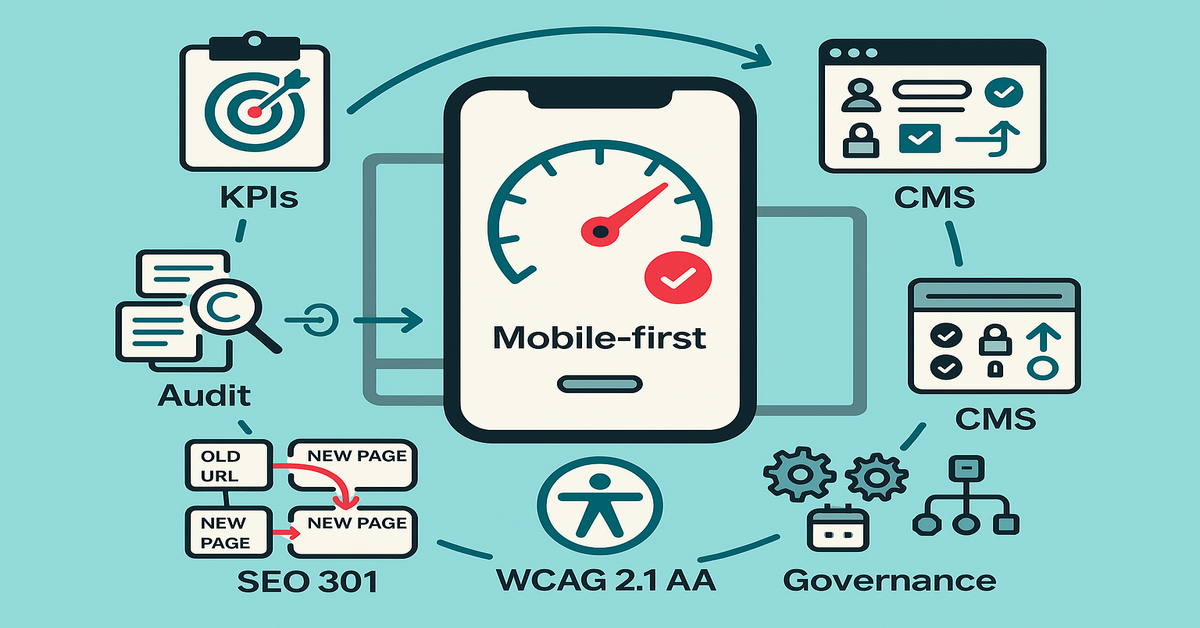
Successful higher ed web redesigns start with measurable goals and a clear picture of current content and performance. Map stakeholders and decision rights to prevent conflicts. Evaluate the CMS early since it controls publishing speed, permissions, and guardrails.
Build accessibility in from day one to meet WCAG 2.1 AA deadlines. Prioritize a fast, responsive mobile experience because most prospects research on phones. Protect SEO by planning content migration and a thorough redirect map.
Design for long‑term scalability with governance, integrations, and editing workflows that will perform in year three, not just at launch.
Read the article here (Author: moderncampus.com)
Top Takeaways
- Set measurable goals. Audit what exists, and map stakeholders with clear decision rights to avoid ambiguity and conflict.
- Select and evaluate the CMS early. It determines publishing speed, permissions, and guardrails. Pair it with a detailed migration and redirect plan to protect SEO.
- Bake in accessibility. Meet WCAG 2.1 AA, and design a fast mobile‑first experience. Plan for scalability so the site improves over years, not just at launch.
Make higher ed redesigns last with clear goals, early CMS pick, WCAG 2.1 AA, mobile first, and SEO redirects. #HigherEd #Accessibility
Stronger Domestic Enrollment Pipeline
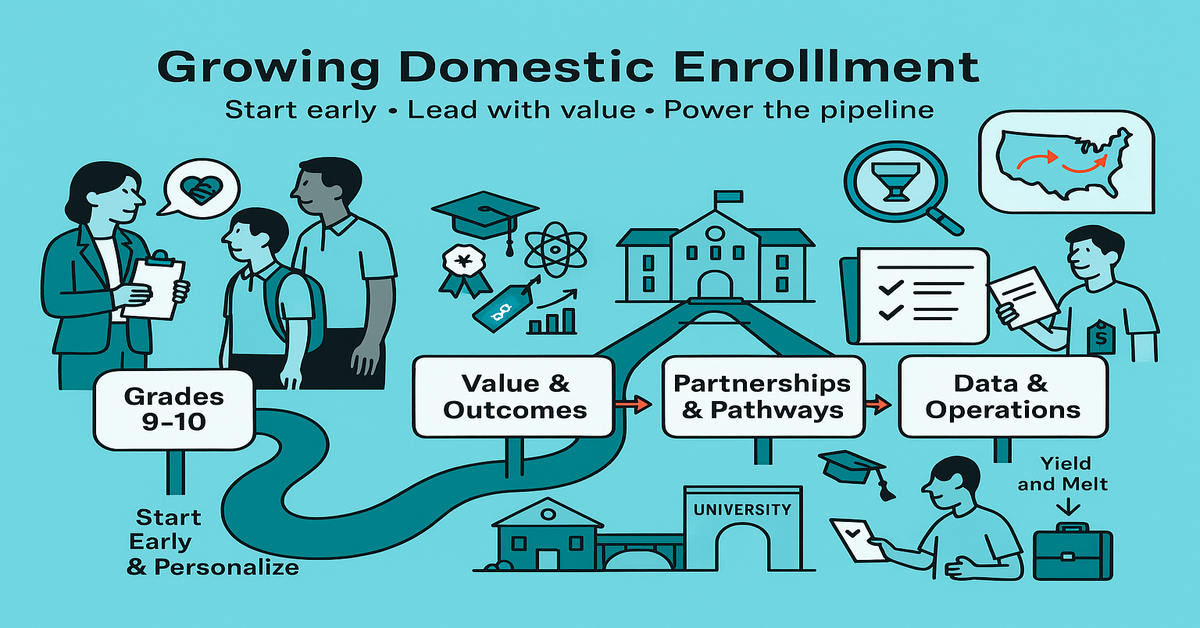
US universities can raise domestic enrollment by engaging students earlier, starting in grades 9 and 10. Maintain consistent, personalized communication with students and families. Institutions should spotlight academic and financial value, prioritize high‑demand programs, refresh curricula, and make career pathways explicit.
Build deeper partnerships with high schools and community colleges through articulation agreements and transfer pathways to widen and smooth progression. Use data and analytics to target interstate mobility patterns, identify funnel bottlenecks, and set realistic goals.
Streamline admissions across enrollment, financial aid, and academics. Provide clear affordability messaging and support services to reduce melt and improve yield. Competition is intensifying, with many four‑year schools needing roughly 20 percent application growth over five years just to maintain modest gains.
Read the article here (Author: quadc.io)
Top Takeaways
- Start earlier and personalize. Engage students in grades 9 and 10, and include families to build momentum long before senior year.
- Lead with value and outcomes. Prioritize high‑demand programs, transparent costs and aid, and clear graduation‑to‑career pathways to boost yield and cut melt.
- Power the pipeline with partnerships, data, and operations. Deepen feeder school and community college pathways, target interstate mobility, streamline admissions and aid, and use analytics to fix funnel bottlenecks and set realistic goals.
Many 4 year schools need 20 percent application growth in 5 years. Engage grades 9 and 10 show value and streamline aid. #HigherEd #College
AI Ready Student Recruitment Strategy
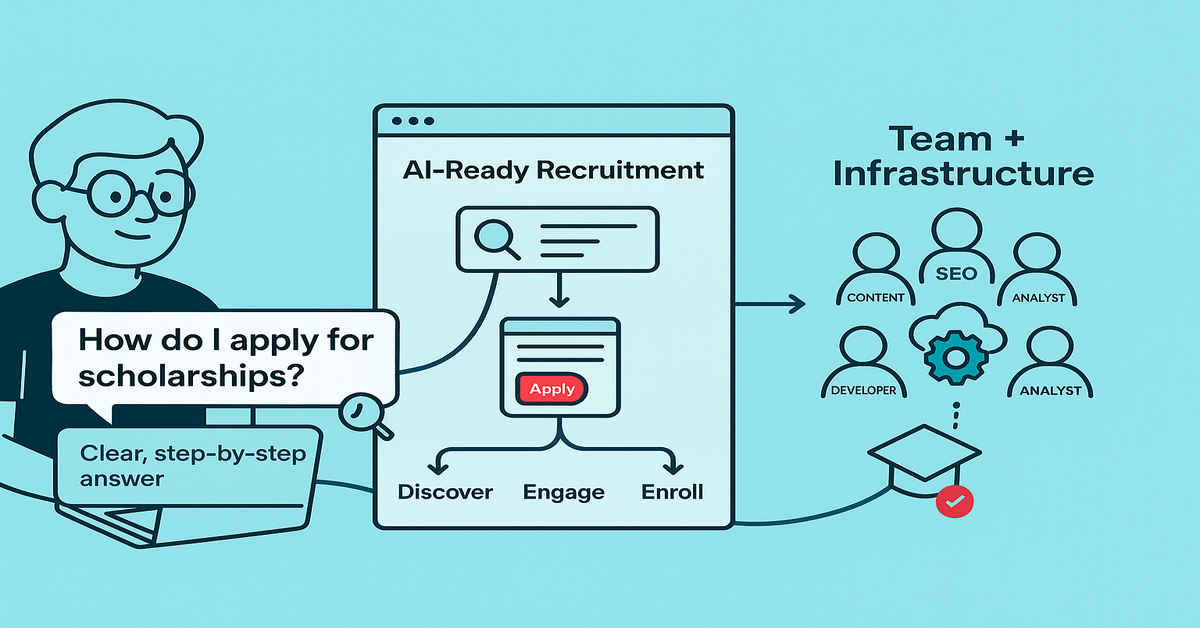
This article outlines an AI‑ready digital strategy for higher education recruitment focused on discovery, engagement, search visibility, and enrollment. Align content with how students actually search today. Prioritize clear, conversational answers to real questions over keyword‑only tactics.
Beyond visibility, optimize the on‑site experience to sustain interest and move prospects through the journey. Build the right cross‑functional team and technical infrastructure to support continuous improvement and AI‑driven workflows.
Read the article here (Author: @EAB)
Top Takeaways
- Rethink SEO for the AI era. Answer real student questions in natural, conversational language rather than chasing isolated keywords.
- Strengthen the on‑site experience. Ensure content and navigation support engagement from discovery to enrollment.
- Build the right team and infrastructure. Sustain AI‑ready content operations and iterate as search behaviors evolve.
Boost enrollment with AI ready content that answers real student questions and a site that converts. Build team and tech. #HigherEd #SEO
Turn Clicks into Applications
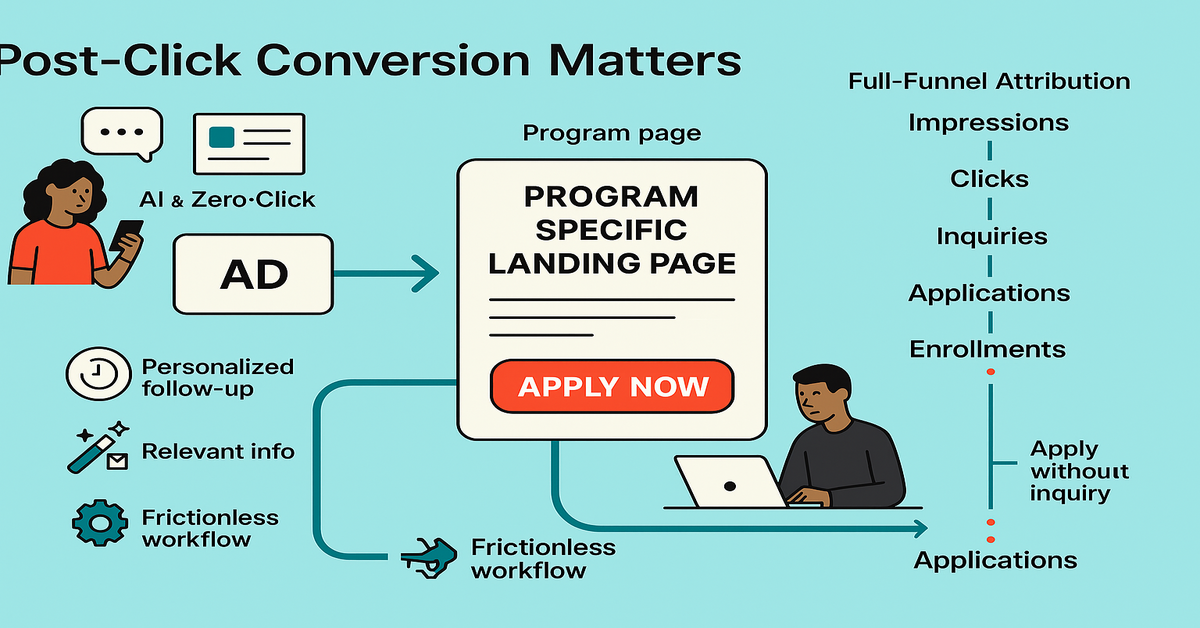
Clicks alone do not drive enrollments. What happens after the click does. Institutions improve click‑to‑application conversion by sending ads to program‑specific landing pages, following up quickly with relevant information, and streamlining policies and workflows from application to registration.
Targeting and messaging should reflect each prospect’s interests, motivations, and decision stage. Measurement must go beyond impressions and CTR to full‑funnel attribution that reveals which efforts lead to applications and enrollments. Student behavior is shifting. Nearly 10 percent now apply without ever submitting an inquiry. Many research programs through AI and zero‑click channels before visiting an institution’s site. To capture this demand, schools need seamless post‑click experiences and analytics that connect marketing to outcomes.
Read the article here (Author: Sarah Russell)
Top Takeaways
- Optimize the post‑click journey. Use program‑specific landing pages, accelerate and personalize follow‑up, and remove friction across application and registration workflows.
- Match targeting to intent and stage. Measure with full‑funnel attribution to see which campaigns actually produce applications and enrollments.
- Adapt to changing research behavior. Plan for applicants who never inquire, and build strategies for AI and zero‑click environments to engage prospects before they reach your site.
Clicks don’t enroll. Optimize post click and full funnel attribution. 10% apply with no inquiry. #HigherEdMarketing #AI #Enrollment
Conclusion
Enrollment growth now hinges on disciplined segmentation, trustworthy AI‑ready content, and seamless post‑click experiences backed by solid operations. If you do nothing else this week, audit one program page, one parent touchpoint, and one workflow step to remove friction and add proof. Set a six‑month benchmark and tie every dollar to applications, enrollments, and cost per enrolled student. Then iterate, because the institutions that learn fastest will win next year’s class.